
Will Google have a stake in Minnesota's budding data center industry?
Go Deeper.
Create an account or log in to save stories.
Like this?
Thanks for liking this story! We have added it to a list of your favorite stories.


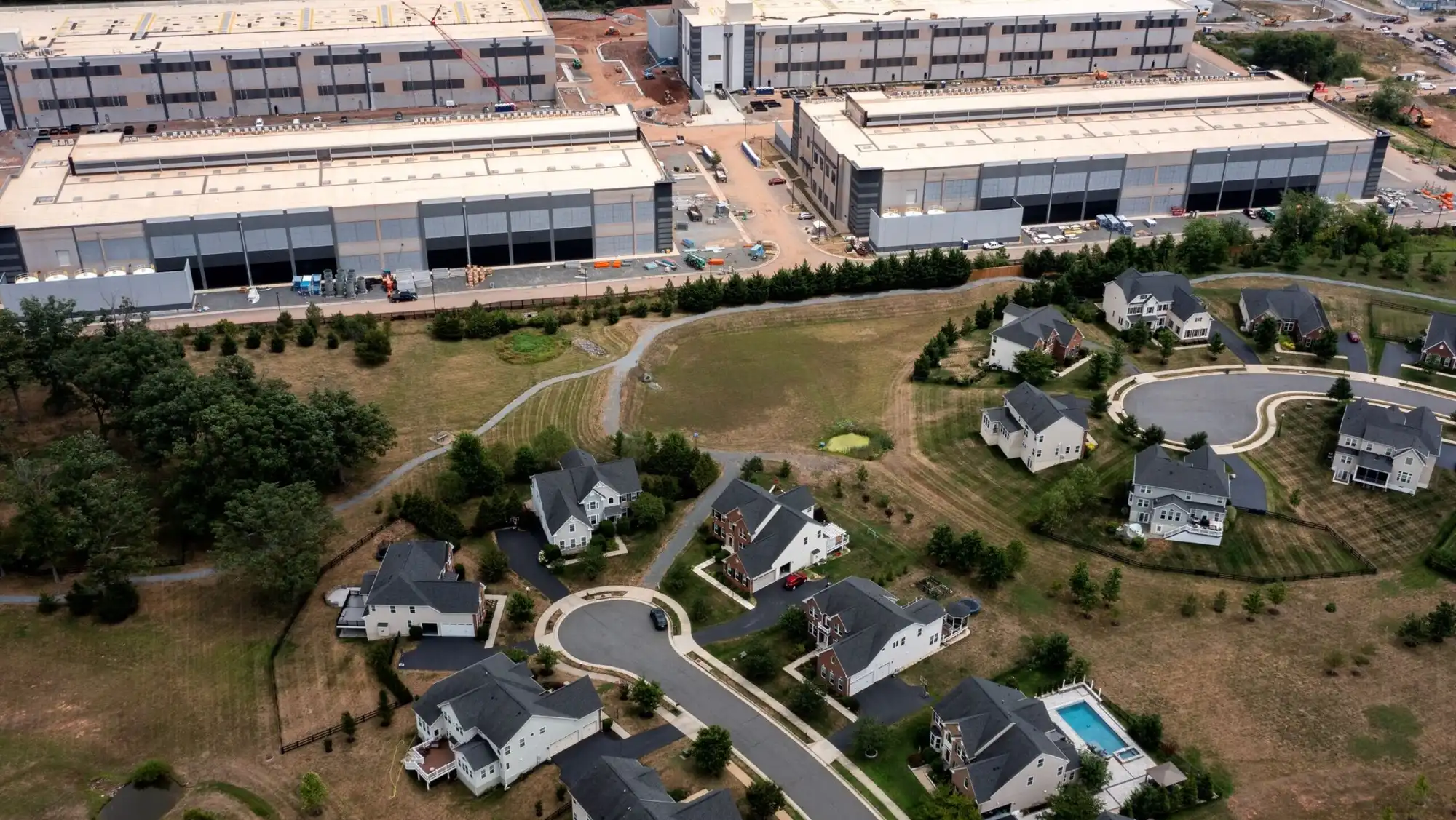
Across the country, technology companies are searching for land to build large-scale data centers, or physical facilities that house the computers for cloud services and artificial intelligence. About 10 tech giants, such as Microsoft and Meta, have proposed data centers in Minnesota to support their growing AI networks.
The Minnesota Star Tribune has found that Google may also be looking for land to build a data center in Minnesota, according to emails obtained through a public records request.
For more, MPR News host Nina Moini talks with the Minnesota Star Tribune’s Walker Orenstein, who reported the story.
Use the audio player above to listen to the full conversation.
Subscribe to the Minnesota Now podcast on Apple Podcasts, Google Podcasts, Spotify or wherever you get your podcasts.
We attempt to make transcripts for Minnesota Now available the next business day after a broadcast. When ready they will appear here.
Turn Up Your Support
MPR News helps you turn down the noise and build shared understanding. Turn up your support for this public resource and keep trusted journalism accessible to all.
Audio transcript
WALKER ORENSTEIN: Thank you so much for having me on.
NINA MOINI: Tell me a little bit more about these documents that you discovered that indicated these plans Google may have.
WALKER ORENSTEIN: Yeah. I've been trying to track the development of these large scale data centers in Minnesota, so I put in a records request with state economic development officials in March. And I was specifically looking for Google documents, because Google, unlike some of the other companies, like Meta Platforms or Amazon, has shown a lot of interest in Minnesota and, in fact, ramped up some lobbying, but they have not actually said, we want to build here, or in fact, they haven't been concrete about, well, we really plan a data center in Minnesota.
And so I was trying to see if they were talking to state officials at all. And so I lodged that records request in March, and it took the state almost four months to get back to me. And they got back to me, basically, three pages of documents, and those three pages were, basically, a brief email describing a meeting.
And that meeting was between Minnesota economic development officials and Google about a potential Pine Island data center. Pine Island is a small city north of Rochester. And so the documents really didn't say anything more than that, other than the fact that Google was invited and that it was a data center negotiator with experience in real estate acquisition and development, who was the official with Google, who was slated to join that meeting.
NINA MOINI: So why do you think that there is so much a secrecy around the construction of data centers? Is Google more secretive, you think?
WALKER ORENSTEIN: Yeah. It depends on the company. Some are more forthcoming with the information, and some are less forthcoming with information. I think there's a number of factors at play. One is that when some of these companies are looking to develop or buy land, they feel like it's helpful to them to, say, not pay Google prices for a plot of land, but rather pay more typical prices for a plot of land.
They may also see a host of other reasons. If they're, say, deciding between a few places or not totally sold on a place, maybe they want to stay in the background before they're totally ready to go with a proposal. In some cases, there are companies who advance data center sites and do some of the regulatory work ahead of time, but they don't necessarily have a buyer, a tech company, that will operate the site later on, lined up yet.
And so sometimes, maybe they're looking for one. And so maybe Google is, say, looking at a couple sites. And so we just don't even really yet who the company is that would eventually operate that data center. So there's a lot of reasons, but Google really has been among the more secretive companies that I have worked with thus far.
NINA MOINI: And there are other data centers that are popping up or that are being talked about as technology changes and society changes in these ways. Do you expect more sites to be built in the next few years, or how are people deciding where exactly to build?
WALKER ORENSTEIN: Yeah. Data centers have been popping up around the country, but in places where there are big hubs for data centers. So think like Northern Virginia, Chicago, the Bay area. Some of those kind of major markets are getting oversaturated. And these data centers take up so many resources. They take up a lot of land. They take up a lot of energy. And so now, we're starting to see tech companies spill into secondary markets, and so we would be kind of a secondary market.
And what the data centers are after is-- again, they're after land. They're after proximity to power infrastructure and, frankly, just availability of power infrastructure. So the land costs are almost secondary. So for them, they're really looking for places that have a bunch of power ready to supply these energy hungry data centers. There are other factors.
Like they say, Minnesota is nice, because its weather is cooler, and so that can cut down on cooling costs. Being close to a place like the Twin Cities Metro is helpful to have good workers, things like that. But generally speaking, when I'm looking at where I see proposed data center sites, the proximity to electric infrastructure within Minnesota seems at a paramount.
NINA MOINI: So a part of the reason that these data centers do receive so much attention is because they're going to change the area that they are in. They bring jobs. There's construction. Also, you alluded to some environmental concerns. What's your sense for how those, maybe, pros and cons-- if you want to call it that-- are being balanced?
WALKER ORENSTEIN: Yeah. They have definitely divided people. And in many cases, it's an issue in Minnesota that does not fall cleanly along partisan lines. There are Democrats and Republicans who are very supportive of data centers. They see it as this chance for economic development, huge amount of construction jobs. This Meta Platforms project is $800 million in Rosemount. That's the only large scale data center that's under construction. That's a huge amount.
But the Amazon project probably would have been significantly bigger. And Amazon had planned a data center in Becker, but then they suspended it. But we're talking in the billions of dollars of construction projects. These are huge. Then there's a lot of Democrats and Republicans who worry about things like either energy usage or the siting of them, if they're very close to residential areas.
There have been some towns who have not been happy about having these very, very large facilities. They just look like big warehouses. But some people complain about the noise and about other issues. Some people are concerned about the drain on local water resources, potentially. And so lawmakers this year passed kind of a first set of ground rules for the data center industry.
And they're not very intense regulations, but there was a lot of discussion back and forth between people who felt like we should do more to regulate them and people who thought we should do less to regulate them, or in fact, do more to attract them via tax incentives and things like that.
NINA MOINI: Yeah. Would you tell us a little bit more about what were some of the regulations or the new rules that lawmakers put into place?
WALKER ORENSTEIN: Yeah. So for the first time, Minnesota data centers will have to give some information extra to the state, a few extra considerations, essentially. It's a little bit loose about their water availability. They have to more or less consider water conservation, things like that. They will have to pay into a fund that helps pay for energy conservation projects, and that's things like upgrades to a home to help it retain heat better, things like that.
When it comes to the tax incentives, the data center industry wanted to extend a set of pretty lucrative tax incentives in Minnesota and also revamp them to make them a little bit easier for them to use. They would get upfront refunds in all cases versus instead of having to apply after the fact. And that was really a divisive issue at the legislature. By divisive, I just mean people really disagreed strongly over whether we should do that or not.
And in the end, we did not, in fact, do most of what the data centers wanted. They did extend it, but they also reduced some of the tax incentives specifically for energy sales. So it was kind of an interesting issue at the legislature and one that really brought all of these big tech companies into the legislature to do some pretty intense lobbying, including Google.
NINA MOINI: So it seems like this is kind of just the beginning of this exploding industry here in Minnesota and, really, across the country, like you said. And as time goes on, or maybe in the next legislative session, or maybe even at the federal level, what are you keeping an eye on?
WALKER ORENSTEIN: Yes. Well, one thing I'm keeping an eye on is whether this influx that seems to be coming to Minnesota will actually materialize. And I know this was kind of a critical legislative session for a lot of the companies who are deciding. They have a lot of states that really want these. A lot of states are very much willing to hand out tax incentives and other things. They're welcoming them with open arms.
So they were kind of looking curiously at Minnesota. Is this a place that we actually want to do business? And so some companies viewed what happened in Minnesota at the legislature this year as unhelpful. And we saw Amazon suspend a project in Becker. And now, the reasons for that they haven't been completely clear about, but I think it's fair to say that they weren't thrilled with the final legislative product.
But companies like Google seem to have received it better and understood it. And Google, in fact, likes Minnesota because of our carbon free energy regulations. They're a company that has their own corporate climate goals, and they see them as an alignment with ours. So for right now, I'm kind of watching to see, are more companies like Google, or are more companies like Amazon?
Will we start to see these materialize in big numbers and to the point where we will actually keep pace with our peer states? Like for example, we're even behind Iowa by quite a bit in developing these. Will the companies want to come here, or will they not want to come here? Will they see us as favorable or unfavorable? And how does the state continue to react to that?
NINA MOINI: Walker, thank you so much for your work and for sharing it with us. I appreciate your time.
WALKER ORENSTEIN: Thank you so much for having me.
NINA MOINI: That was Walker Orenstein, a reporter for the Minnesota Star Tribune.
Download transcript (PDF)
Transcription services provided by 3Play Media.

