
The Midwest is known as a 'Lost Region.' Scholars want to put it on the map.
Go Deeper.
Create an account or log in to save stories.
Like this?
Thanks for liking this story! We have added it to a list of your favorite stories.


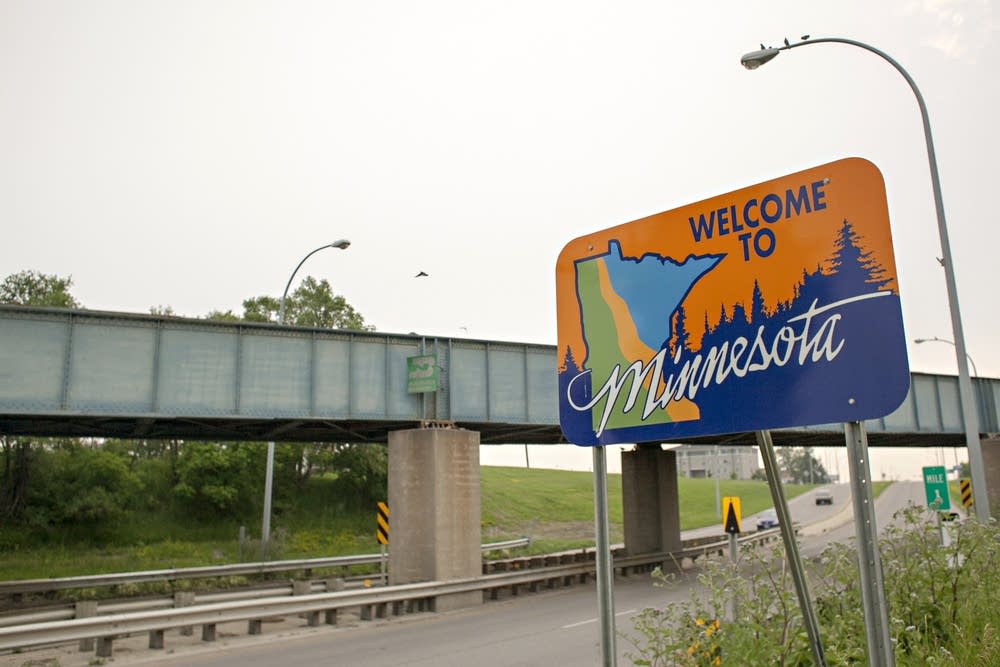
Minnesotans love talking about Minnesota and don’t miss a chance to put the state and the Midwest as a region on a pedestal. But if you ask people outside the Midwest, they may not even be able to point to Minnesota on a map.
A new conference is dedicated to making sure the Midwest is not forgotten. The goal of the “Lost Region Recovery Project Conference” is to grow the study of the Midwest. The conference will take place Saturday in Sioux Falls, S.D. MPR News host Nina Moini talked with its organizer, Jon Lauck.
Use the audio player above to listen to the full conversation.
Subscribe to the Minnesota Now podcast on Apple Podcasts, Spotify or wherever you get your podcasts.
We attempt to make transcripts for Minnesota Now available the next business day after a broadcast. When ready they will appear here.
Turn Up Your Support
MPR News helps you turn down the noise and build shared understanding. Turn up your support for this public resource and keep trusted journalism accessible to all.
Audio transcript
JOHN LAUCK: Thanks, Nina. Glad to be here.
NINA MOINI: I have to ask. Are you from the Midwest? Do you have that pride?
[LAUGHTER]
JOHN LAUCK: Absolutely. I grew up in a little town-- in a little town on a little farm by Madison, South Dakota. And so this-- I come by all of this naturally.
NINA MOINI: Awww, that's wonderful. Can you start by defining Midwest studies? I gotta say I don't remember. I grew up here in Minnesota. I don't remember studying a lot about the Midwest specifically. How do you define that?
JOHN LAUCK: Exactly. This is the problem. There's an enormous number of books and college courses and study centers focused on the American West and the American South, and of course, New England. You can't swing a dead cat up there without hitting a historical society or an old time library or someone focused on the American Revolution.
But we don't have that in the Midwest unfortunately. We don't have a big institute that studies the history of the region. We don't really even have that many professors at our major colleges including the University of Minnesota teaching the history of the Midwest.
But at the end of the 19th century, the Midwest was the biggest region in the country. It was the pacesetter region. It had an enormous role in American history, but we just don't know enough about it. And that's why we've pulled together a number of experts, and we're all going to get together in Sioux Falls, downtown Sioux Falls, in South Dakota this weekend and break bread and have one of those Edmund Fitzgerald porters and talk about the history of the region.
NINA MOINI: I wonder if you think about are going to be talking about the why like what contributed to the loss of studying the region. Why don't we have that as much?
JOHN LAUCK: Well, I think one of the things is it's just not as dramatic a history as some other places. Take the South, for example. The Civil War is obviously very prominent in Southern history. They're a defeated region. That creates a story of rise and fall and defeat that people are drawn to, that historians are drawn to.
But other places like the Midwest had a major role in these events like the Civil War. The first Minnesota regiment was sent off and won the battle at Cemetery Ridge and turned the tide in the Civil War and made possible Northern victory and the abolition of slavery. That story needs to be told, too, not just the story from one side of the equation. So that's a case we're trying to make at our conference.
NINA MOINI: And I liked a quote I read from I believe one of the presenters, a historian Mary Stockwell, when I was reading about the conference saying that the Midwest has not lost. It's truly the heart of America. That's not a sentimental thing. That's almost a scientific thing.
I feel like a lot of people don't have that appreciation. I want to know about the different presenters that you're going to have and where you're focusing in at the conference.
JOHN LAUCK: Well, we have a number of topics we're going to be covering. The first session is going to talk about the issue you just raised, and that is why has the Midwest disappeared. And one of our speakers is going to discuss the development of the idea of flyover country, and why that undermines Midwestern studies.
Another person's going to discuss the decline in geography and geographic studies in the United States, which certainly contributes to this problem. And then we're going to have other panels that break out on very specific issues about how exactly can we revive the region. What about some of the new historical angles on the region that we can develop. And there's going to be a few people talking about some of their more recent books on the region.
But one thing that occurred to me over the last couple of weeks, one way to talk about people's heartfelt interest in the Midwest, especially if you live here, is to look at the phenomena of the Edmund Fitzgerald revival because that shows to me how much interest there is in what goes on in this region. This is all an organic-- organically occurring phenomena, and probably the only reason we remember the Fitz is the Gordon Lightfoot song. It's certainly not something that's studied in our universities. It's certainly not been the focus of our history departments in the Midwest.
So I think that shows, number one, people want to know about this history, and, number two, we've failed in our public institutions focusing and highlighting Midwestern history. So I hope we can use the tragedy of the Fitzgerald to get people to focus on what's going on in the Midwest a bit more.
NINA MOINI: Well, so, John, I know you don't live in Minnesota, but I'm going to send you to mprnews.org because, boy, have we been covering the Edmund Fitzgerald of 50 years.
JOHN LAUCK: No, you have been covering.
NINA MOINI: And it's-- no, but there is so much there, and I learned so much. Just this past week, my wonderful colleague Dan Kraker in Duluth has been leading a lot of that coverage for us. But you're right. It's like where was-- what was I learning, and there are so many conversations about in particular how history is taught, what's missing, what isn't missing, who gets to decide.
Do you feel like the number of academics are out there? You mentioned the University of Minnesota, not to just pick on them, but there's one Minnesota professor presenting at your conference. Are there just-- are institutions not focusing enough on it, or are there not enough academics in the field?
JOHN LAUCK: I think that's a key problem. We're trying to develop a new pipeline of people who are experts in the region, so they can go out and get jobs at universities and write books and focus on the region. That's the idea.
But, boy, the field was on life support a few years ago, and there really wasn't much activity at all. But we have a new journal that focuses on the Midwest called Middle West Review. There's a new book on the history of the first 100 years of the Midwest called The Good Country that lays out a lot of the reasons why we need to more about this part of the country.
And so we made some progress, Nina, and we got a little momentum. But we need to keep it going. And we need people that are listening to Minnesota Public Radio to jump in and help us out and help row the boat as they say in Minnesota. But-- because we can do this, but we just need to make clear to our universities, hey, we want this taught.
If I'm a taxpayer in Minnesota and my kid is going to U of M, I would want them to at least have the opportunity to take a class on the history of the Midwest. And it's a big university. This should not be hard. We're not asking for the world. We're just asking that this class be offered once every three or four semesters so if people want to develop this interest, they can. And that's a small ask I think.
So hopefully the conference and everyone writing about it will-- that'll spread the word. C-SPAN's going to cover the conference so they can watch a large portion of the conference.
NINA MOINI: Awesome. Thank you so much John. All the best with the conference and your work. Thank you.
JOHN LAUCK: Thank you, Nina, and congrats to Minnesota on having the corona effect last night. We'll be watching tonight, too.
NINA MOINI: Thank you. That's John Lauck, editor of the journal Middle West Review at the University of South Dakota and the organizer of the Lost Region Recovery Project Conference.
Download transcript (PDF)
Transcription services provided by 3Play Media.

