
Essentia Health tribal relations director says rural and Native care go hand in hand
Go Deeper.
Create an account or log in to save stories.
Like this?
Thanks for liking this story! We have added it to a list of your favorite stories.


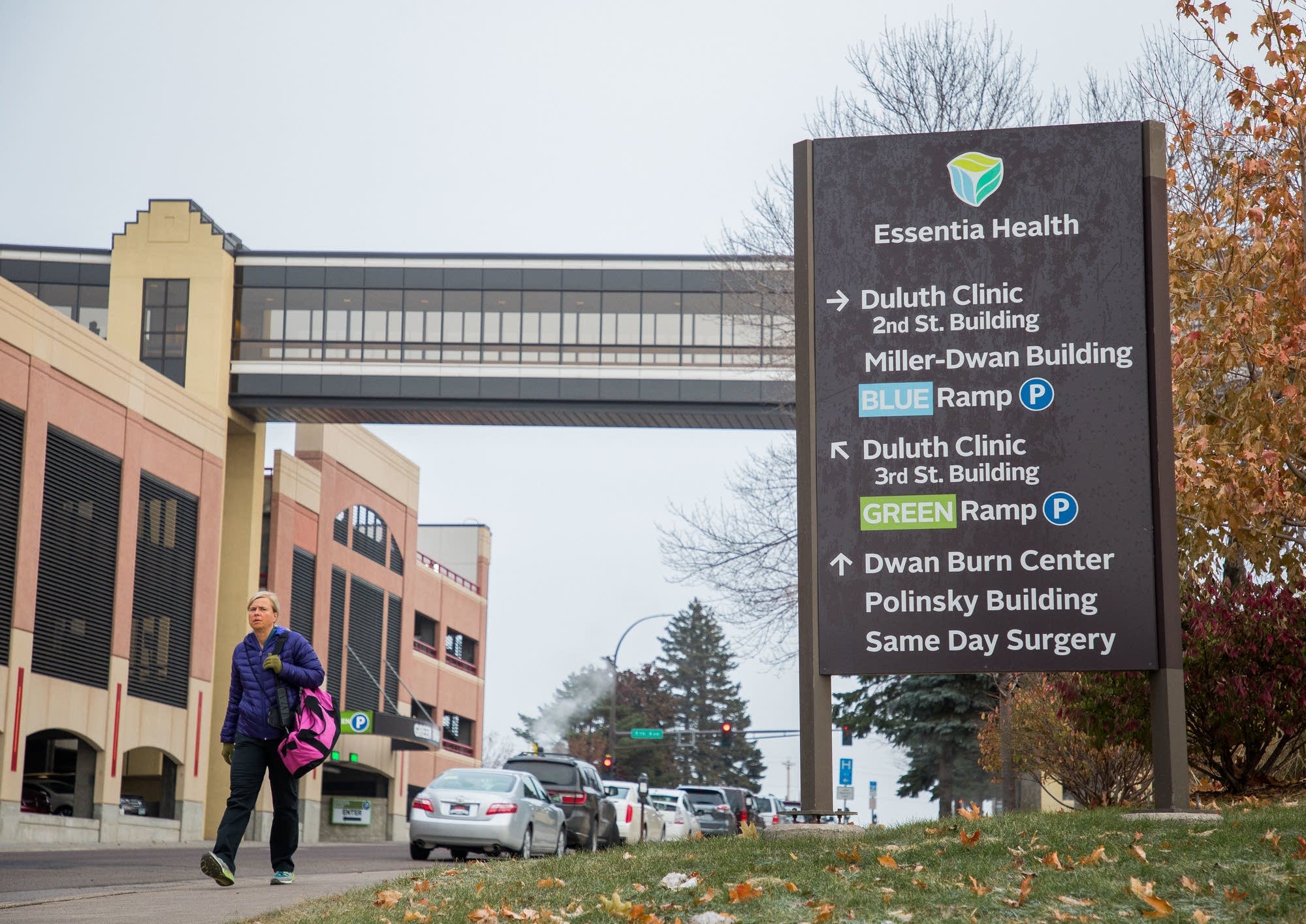
For the last six months, Samuel Moose has been working as the director of tribal government relations with Essentia Health. It’s a new role for the health care system that primarily operates in a rural area that includes 19 tribal nations.
It’s been a busy six months in the world of health care with cuts to Medicaid funding and hospital closures in greater Minnesota. Moose, a member of the Mille Lacs Band of Ojibwe, checked in with MPR News host Nina Moini about how it’s going.
Use the audio player above to listen to the full conversation.
Subscribe to the Minnesota Now podcast on Apple Podcasts, Spotify or wherever you get your podcasts.
We attempt to make transcripts for Minnesota Now available the next business day after a broadcast. When ready they will appear here.
Turn Up Your Support
MPR News helps you turn down the noise and build shared understanding. Turn up your support for this public resource and keep trusted journalism accessible to all.
Audio transcript
SAMUEL MOOSE: Good afternoon. Thank you.
NINA MOINI: I wonder if you would start by telling us a little bit more about your role. How has it been going, and what do you do?
SAMUEL MOOSE: Yeah, thank you. Well, the first six months have been a learning curve for me, just understanding Essentia's culture, their policies, the service area, familiarizing myself with the hospitals, their specialty care, especially those facilities that fall within tribal nations' service areas. And as you said, within Essentia's service area, it shares service area with about 19 sovereign tribal nations throughout North Dakota, northern Minnesota-- or North Dakota, northern Minnesota, and Wisconsin.
So probably the biggest focus for me in the first six months is really getting acclimated to the system itself, developing partnerships internally within the system, understanding those relationships, making sure our missions are aligning with the needs of tribal sovereign nations, reflecting on the unique needs of the patients that we serve, while also enhancing our understanding about the unique relationship of the federal government with tribal nations, Indian beneficiaries through the Indian Health Services, them as a payer seeking services within inpatient settings or specialty settings that they don't have access to or the resources to manage themselves, and also trying to figure out or lay the groundwork and incorporate tribal vision into this office, the Office of Tribal Relations.
NINA MOINI: I really love what you're saying about just having so much homework to do when you start within a system that you don't know. But you know you have goals that you want to accomplish, but you sort of have to learn all of these inner workings, right, and then kind of figure out where to go from there.
And you've had a lot of experience prior to your work with Essentia. You served as a health and human services commissioner for the Mille Lacs Band of Ojibwe, executive director of tribal relations for the Minnesota Department of Children, Youth, and Families, among other roles. Do you feel like all of these other roles that you've held and all these other places that you've been have really prepared you for this current role?
SAMUEL MOOSE: Yeah, I think they were all essential. I think managing tribal health systems for the past 25 years, understanding the care, understanding the delivery, understanding our relationship and the federal trust responsibility of the federal government through treaties to tribes, understanding a lot of the services that we receive resources for don't always meet our community's needs. So, really, I've always identified a need for partnership with the larger health systems, like Essentia.
So I think all those roles have led me to really, when I first saw this role, of really thinking like, yeah, I could make a difference in that area. I could support Essentia in building out this work of creating meaningful partnerships with tribes, of creating synergy between the two systems. Both the systems find themselves in rural America. And like you said, the resources that are currently being looked at, that are currently being deployed from the federal level are low. They're dissipating, and they're impacting our service system.
NINA MOINI: Those are some of the challenges that I'm sure you're facing now. But I do wonder if you've seen a lot of growth over your career as well and in your time of just service to others about how people even talk about roles like being a liaison between different groups of people and different systems? Do you think people are becoming more open to providing culturally supportive, specific care?
SAMUEL MOOSE: Yeah. I think systems are definitely including tribes. I think tribes have done a great job at elevating, becoming visible, sharing their story, identifying potential partnership, seeking partnership. And I think we've seen a response from organizations like Essentia. I think the state of Minnesota has done some great work with regards to elevating their work through tribal liaisons, tribal directors of tribal relations, of the government-to-government relationship between the state of Minnesota and Minnesota tribes. So I think there's been a lot of work over the last 10 or 20 years to elevate that and create space for it.
NINA MOINI: And I wonder, too-- you mentioned this a little bit, but talking about the intersection of rural and tribal care needs. We've talked a lot about it on this show, but people, unless you're living in an area, you may not know what some of the specific challenges to care might be. Would you talk a little bit about just maybe a few of the challenges that you're trying to really tackle head on at this point that tend to more impact rural and tribal communities?
SAMUEL MOOSE: Well, oftentimes with the advocacy that we do, we often start time-- start with regards to the resources that come to Indian country. Like I said earlier, tribes had ceded vast territories of land through treaties. Within those treaties, there was an obligation by the federal government to provide health care.
Unfortunately, Essentia finds itself in two areas, the Great Plains area and the Bemidji area, that are the lowest-funded regions within the Indian Health Services. A study that was done some years back identified that within those regions, the federal government was providing appropriations to cover about 38% the level of need funding for the healthcare obligations of those tribes to American Indians and Alaskan Natives, which is, of course, like I said, a treaty and trust responsibility of the federal government.
So it's really difficult for those tribes to deploy healthcare services that are oftentimes needing to meet some of the communities with the highest health disparities, greatest geographic region of needing to travel for health care. So just totally, again, really important for tribes in the systems of care in rural America to kind of partner and make sure that we can serve those underserved communities. We can make sure that we're meeting people's care, that it's culturally appropriate care. It's sensitive care. Yeah.
NINA MOINI: Yeah, those are all a part of it. And just lastly, Samuel, you talked about some of the more positive changes you've seen in the last maybe decade or so. I wonder if we were to think a decade into the future what you would want to see and what you would think would be a successful trajectory for a role like yours?
SAMUEL MOOSE: I think for us in the next probably two to three years, I think-- and even into the decade-- is just creating strong relationships with the 19 sovereign tribes within our region. I think there's a lot that both tribal health care and Essentia can share with regards to how their systems impact the region's health care. I think it would be great for myself and our program, our office, to become a trusted partner, that tribes have another source of reliable information that they can utilize.
We're looking at the care delivery models that we provide. We're looking at health statistics, population health, and can continue to share information that is meaningful to tribes that they can use to plan, to strategize about how to utilize their resources, that we can help to support bringing additional resources into rural America that can support both Essentia and each of our 19 tribal nations. I think building a blueprint of how we partner and coordinate care, I think those things are definitely achievable, and those are things that I'd like to see maybe not in a decade but in the next, probably, three to five years with regards to this work.
NINA MOINI: Amazing. All right, Samuel, thank you so much for stopping by Minnesota Now and telling us about your work. I really appreciate it.
SAMUEL MOOSE: Thank you.
NINA MOINI: That was Samuel Moose, the tribal government relations director at Essentia Health.
Download transcript (PDF)
Transcription services provided by 3Play Media.

