
Sale of planned Appleton ICE detention center to federal government raises tax base concerns
Go Deeper.
Create an account or log in to save stories.
Like this?
Thanks for liking this story! We have added it to a list of your favorite stories.


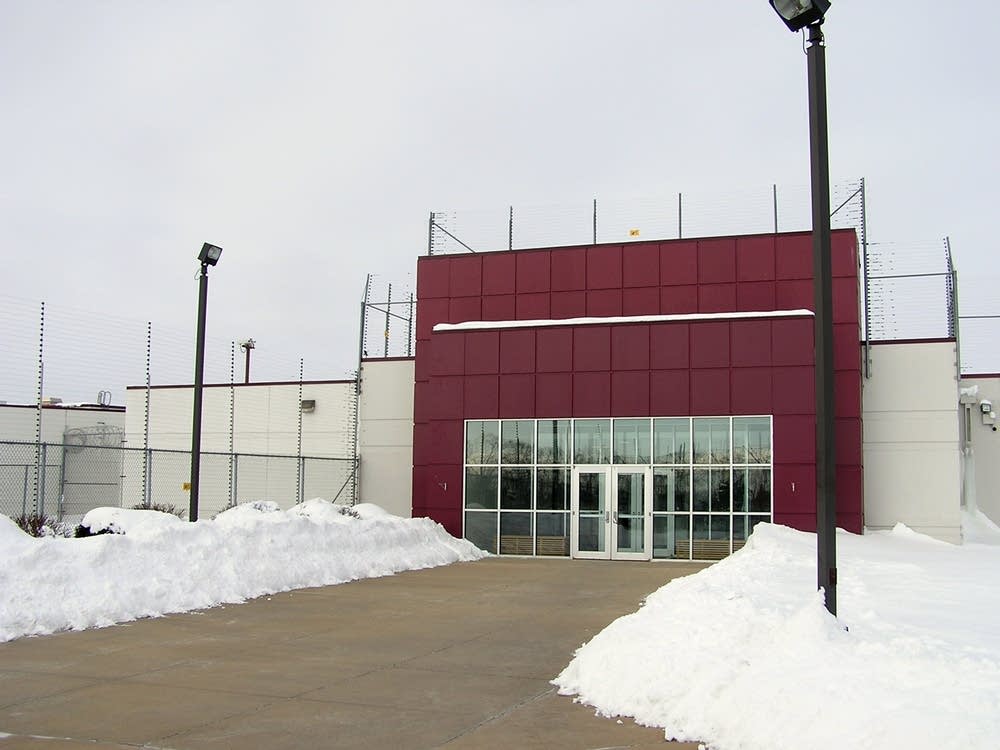
It’s been a busy week in the small western Minnesota town of Appleton. First, the town learned the Department of Homeland Security is moving forward with plans to detain immigrants in a shuttered private prison nearby.
Then, CoreCivic, the company that owns the prison, announced it is selling it to the federal government. It’s expected to open this fall as an ICE detention center.
CoreCivic will still manage the facility. But, as federal property, it may be exempt from taxes that currently support Appleton’s budget.
Appleton City Council member Jim Massee joined to talk more about what impacts this could have.
Use the audio player above to listen to the full conversation.
Subscribe to the Minnesota Now podcast on Apple Podcasts, Spotify or wherever you get your podcasts.
We attempt to make transcripts for Minnesota Now available the next business day after a broadcast. When ready they will appear here.
Turn Up Your Support
MPR News helps you turn down the noise and build shared understanding. Turn up your support for this public resource and keep trusted journalism accessible to all.
Audio transcript
CoreCivic will still manage the facility. But as federal property, it may be exempt from taxes that currently support Appleton's budget. Joining me to talk about this is Appleton city council member Jim Massee. Thank you for your time this afternoon, Council Member Massee.
JIM MASSEE: Thank you for having me.
NINA MOINI: So the prison has been closed since 2010, but it's still part of the local tax base. Can you give us a sense for how much it does contribute to the area?
JIM MASSEE: Well, as far as the city portion, their tax payments are about 30% of our revenue.
NINA MOINI: So as you were-- yeah, as you're considering that, are you already beginning to talk about what that would mean in terms of city services or still sort of processing the news, or what are you all doing as a city council members?
JIM MASSEE: Well, I guess, basically, we know what you know. Right now, we're waiting for a MOU from CoreCivic as far as--
NINA MOINI: Is that memorandum of understanding? Just want to clarify.
JIM MASSEE: Memorandum of understanding to have a better idea of, going forward, what's going to happen. Because, obviously, from a city's point of view, we can't-- I don't know how we deal with that loss of revenue.
NINA MOINI: OK, and there are a lot of conversations happening right now. And you're really trying to look at this, I understand, from just the angle of how is the city going to function as a council member? What might happen or may not happen? But what are you hearing from community members, in general, about a detention center opening there?
JIM MASSEE: Well I don't hear a lot, but it's a mix. Obviously, the economic impact would be helpful. We're looking forward to that. But I think a lot of people are also not happy with the way we ended up with detainees. So the process that entailed having detainees in the first place. So it's a mix.
NINA MOINI: Sure. Some listeners may not have heard much background on the prison that used to operate there. I'm assuming you've lived in Appleton for a long time. Do you remember much about the prison there and its kind of relationship to the town and the impact of whenever it closed?
JIM MASSEE: Well, yeah. I mean, it came out of the farm crisis in the '80s, and all these little towns-- farm towns were looking to diversify their base because we pretty much relied entirely on the farm economy.
And so, somewhere along in those discussions, this proposal to build a prison came about, and it happened. And we built a 500 and some bed facility. And then, CoreCivic purchased the prison probably six or seven years later, roughly. And then, they added on, making it a 1,600 bed. So they added on quite a bit.
And they employed 400-ish employees, and of course, that has a huge impact on your community, on housing and sales to the bars and restaurants and grocery stores and hardware stores. It's huge. And they were a good partner. They did some things. It wasn't real negative. So I think, in general, everybody was happy to have him here. There was support. The hospital got some business. So, it was good for the community.
So when they closed, it was a big kick in the butt.
NINA MOINI: Sure.
JIM MASSEE: And we've been struggling, I would say, to try and determine what we can do, and we just don't have a lot of other options. So having this come about is huge for us economically.
NINA MOINI: Do you think it could-- when you say huge, do you think it could lead to more jobs, more people coming to that area, or also huge in the sense that you might be losing some of that tax revenue?
JIM MASSEE: Well, yeah, I mean, kind of both. My hope is that there will be some kind of a plan in the MOU that keeps us relatively whole on taxes. I don't know if that'll happen, but-- because the facility would certainly want the community to be stable so that they have a vested interest in the community being financially stable.
But it's huge just economically, and housing could be-- it's a five-year contract. I'm assuming there'll be federal employees since it's owned by the Bureau of Prisons. I don't know that. Those are some of the things we're waiting to see. So typically, those are higher paying jobs.
Some people maybe will want to-- our housing stock is pretty limited right now. So maybe some people would, hopefully, want to build. And so all those things are what you're looking for when you have an employer, and this is a big employer for us in the area.
NINA MOINI: And just lastly, Council Member Massee, are you hearing from any residents who might have concerns just based on some of the reporting that has been out there about various detention centers, across the country and reports of how people have been treated while they are inside of those detention centers? Are you having any conversations around just making sure that the conditions will be dignified and humane?
JIM MASSEE: Certainly, we understand that that's an issue. Obviously, our hope is that isn't how the detainees will be treated at this facility, but we won't really have any control over that. We won't have any say in, really, anything that goes on out there.
And so we're hoping that people that come out to protest do it peacefully, and we don't have to deal with some of the issues that other places have had to deal with.
NINA MOINI: All right, Council Member Massee. Thanks very much for your time. We appreciate it.
JIM MASSEE: Thank you. Have a good day.
NINA MOINI: You too. Jim MASSEE is a member of the Appleton city council.
Download transcript (PDF)
Transcription services provided by 3Play Media.

