
Minnesota's place on the climate change map
Go Deeper.
Create an account or log in to save stories.
Like this?
Thanks for liking this story! We have added it to a list of your favorite stories.


Climate scientists agree climate change has had two main impacts on Minnesota: It's warmer and more rain falls in big storms. And those effects are more pronounced here than in most other states.

• Climate Change in Minnesota: An MPR News special report
The average temperature in Minnesota has risen about a half degree per decade since 1970, which is when scientists noticed a more pronounced upward trend. That's higher than the national average and 19th among the 48 continental states.
Turn Up Your Support
MPR News helps you turn down the noise and build shared understanding. Turn up your support for this public resource and keep trusted journalism accessible to all.
For a calculator that looks closely at each state, use this tool created by Climate Central. (Note that Climate Central is still updating its numbers to reflect 2014 calculations.)
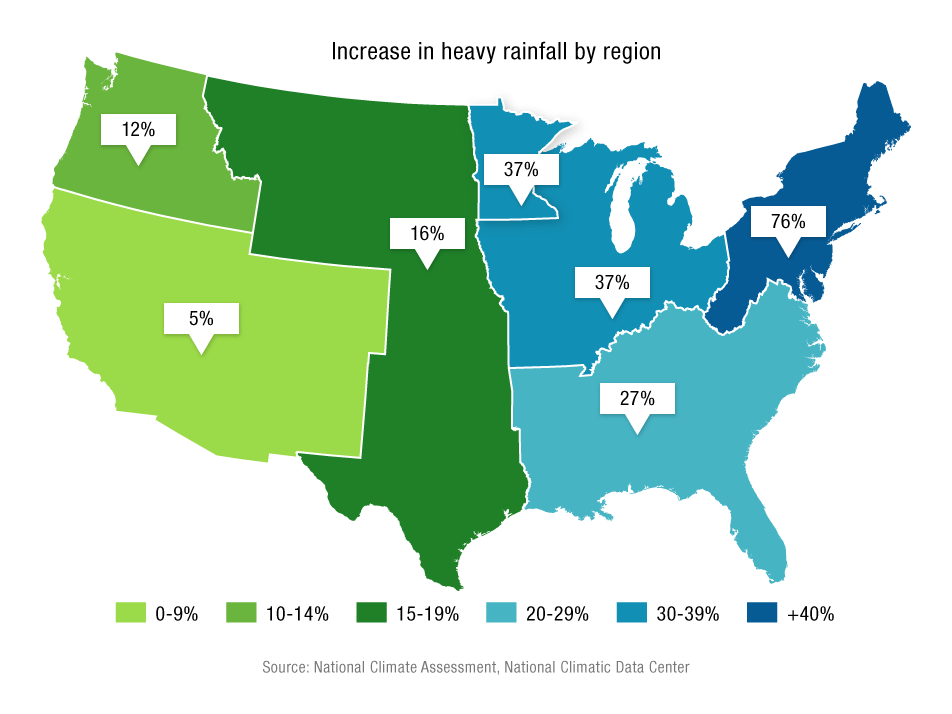
The amount of rain that falls in big storms has risen by about 37 percent in Minnesota since 1958. That figure matches the increase for the Midwest as a whole. It is less than the figure for the northeastern region of the United States but greater than every other part of the country.

