
First-of-its-kind publisher grows out of Minnesota Prison Writing Workshop
Go Deeper.
Create an account or log in to save stories.
Like this?
Thanks for liking this story! We have added it to a list of your favorite stories.


For more than a decade, the Minnesota Prison Writing Workshop has provided creative writing classes to people in Minnesota correctional facilities. That work has led to the creation of a first-of-its-kind national independent press.
Led by an editorial board of both people impacted by the carceral system and those without these experiences, Lost Kite Editions aims to publish writing from across genres and communities.
For more about the project, MPR News host Nina Moini talked with Mike Alberti, executive director of the Minnesota Prison Writing Project, and Zeke Caligiuri, a documentarian and Lost Kite Editions director of archives.
Use the audio player above to listen to the full conversation.
Subscribe to the Minnesota Now podcast on Apple Podcasts, Spotify or wherever you get your podcasts.
We attempt to make transcripts for Minnesota Now available the next business day after a broadcast. When ready they will appear here.
Turn Up Your Support
MPR News helps you turn down the noise and build shared understanding. Turn up your support for this public resource and keep trusted journalism accessible to all.
Audio transcript
Mike Alberti and Zeke Caligiuri are here to tell us about Lost Kite. Mike is the Executive Director of the Minnesota Prison Writing Workshop, and Zeke is a documentarian and Director of Archives at Lost Kite Editions. Thank you both for joining us.
BOTH: Thank you for having us.
NINA MOINI: Mike, I'd love to start with you. Would you talk a little bit about how Lost Kite Editions came to be? Just the connection to the Minnesota Prison Writing Workshop.
MIKE ALBERTI: Yeah, I'd be glad to. So as you said, MPWW, we have a 15-year long history of going in and providing creative writing classes and other educational opportunities in the prison system here in Minnesota. And through that work, we've been able to work with a number of incredibly talented and brilliant writers and artists and editors inside and to collaborate with them on various publication opportunities, ranging from internal program journals to a book that we published called American Precariat back in 2023. So it's really been a natural progression of this collaborative partnership between the community of writers coming in to prison from the outside and the community of writers that already existed in prison, and grows out of that ongoing partnership.
NINA MOINI: Zeke, can you tell us about the meaning behind the name Lost Kite?
ZEKE CALIGIURI: Yeah. So in the carceral system, a kite refers to a communication system. There are the kites that you write that are part of the mechanisms of the facility. It's the way you might write to get an appointment, a doctor's appointment, might write to get into an education program. It is something that is pretty well regulated.
But then there's a secondary kite system, which is what the incarcerated folks pass along amongst ourselves. Sometimes, those things have very important information in them. And there's this kind of idea too, and a notion around prison is that you have these human beings who've been lost behind the walls for a lot of years without the kind of contact to the world and to a broader literary organization in this sense, too. So it's really just a reference to the ways in which we all communicated with each other.
NINA MOINI: OK. That's good know. Thank you for that, that context.
And, Mike, we talked a little bit about all the different types of writing and works that exist. What kinds of writing will Lost Kite be focusing on publishing?
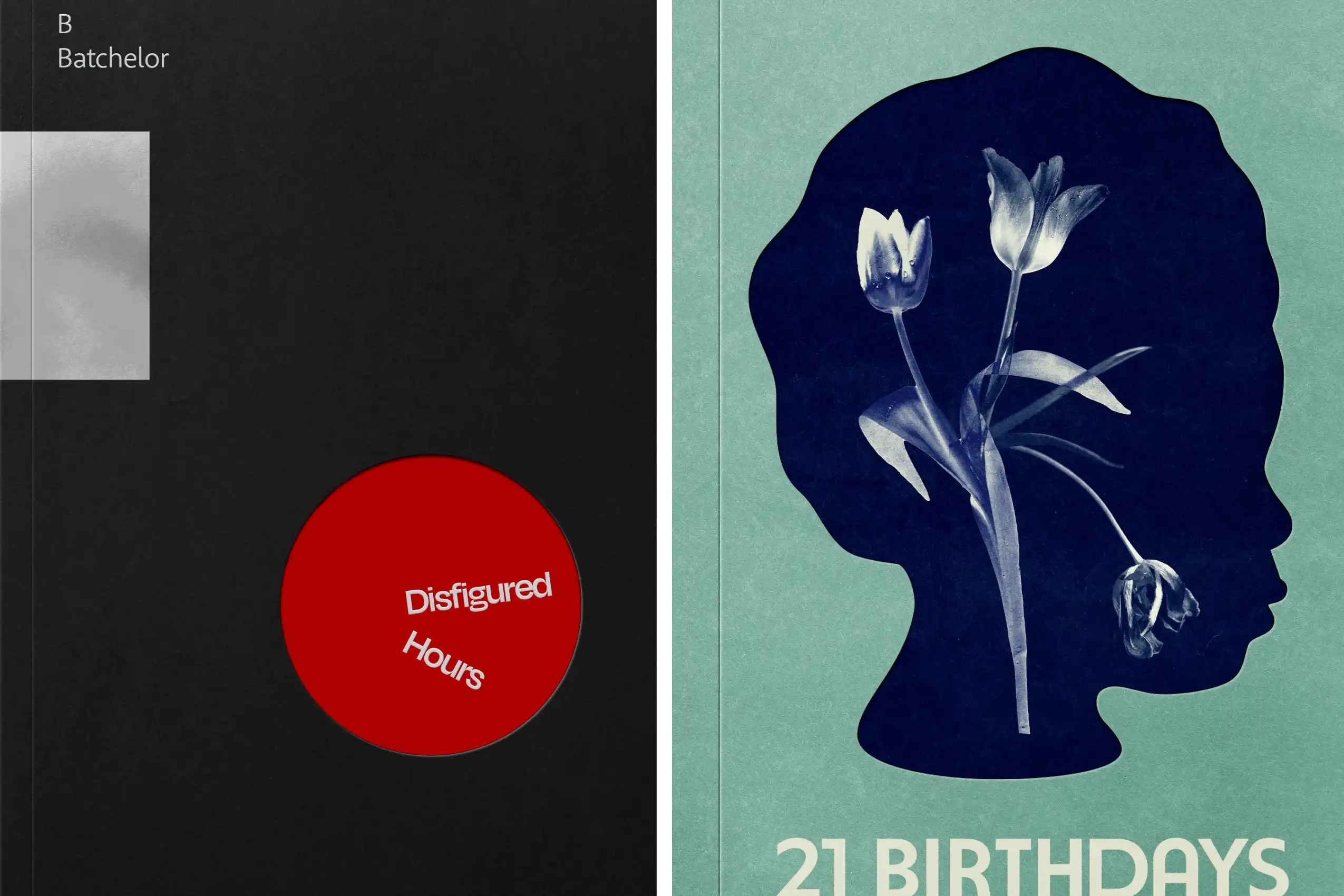
MIKE ALBERTI: Well, we're excited and proud to launch our press just this last month, with two inaugural titles. Those are our first two books. Disfigured Hours by Batchelor is an incredible poetry collection, and 21 Birthdays, by Kennedy Amenya Gisege, is a beautiful work of nonfiction, an essay length book. And we are now searching for what books will join our catalog going forward. We are open to a range of genres. Poetry, fiction, nonfiction, hybrid work.
Part of the benefit of being independent press is that, of course, we do want to sell books, and I hope people will. I hope some of your listeners might check out our website and see if, maybe, either of those titles, or both of them, might be a good companion for them going forward or for somebody that they know. But we're not beholden to only the strictures of the marketplace. So we also take into account our own editorial vision and our mission as well, when we're thinking about what kinds of work we want to publish.
NINA MOINI: Sure. And it's important that this is work that can resonate with people from all walks of life. I mean, even if they maybe don't have experiences of incarceration. But, Zeke, why is it so important to have people with experiences of incarceration sort of leading this editorial process, alongside people without those experiences? But why is that critical?
ZEKE CALIGIURI: Well, I mean, the written language has always been an essential part for incarcerated folks. It's one of the things that doesn't require as many resources. You have a pen. You have a pencil and a piece of paper.
And, there is- I mean, I spoke too just briefly a while back, is that there's very much a silencing of that population with the way, policies in the way, the structure of the systems have changed over the years. It's limited the ways in which human beings are able to receive these opportunities. I think a huge part of it certainly comes down to the fact that we are a group of folks, artists, and this thing that really matters to us have been for many, many years reaching out to different journals and hoping for publication.
And there are a different set of gatekeepers who are, they're deciding whether or not our voices, our stories, our experiences matter. And I think what mass incarceration showed us was that there are so many people coming in and out of this system that it is hard to be somebody who lives in this universe, who is not in some way impacted by the carceral system. And it's very interesting. And I mean, Mike mentioned earlier around this journal that we published for, I think, it's since 2014 now. And every year, we've been building people's editorial skills alongside of their own writing skills to write.
And then inevitably, we ended up publishing American Precariat through Coffee House Press a couple of years back. This is a natural progression to opening up and creating the opportunity for folks who are artists inside, who may not have the same access, to be able to have some say in what the literary landscape becomes.
NINA MOINI: Yeah. And, Michael--
ZEKE CALIGIURI: And really, that's a wonderful opportunity for them. I'm sorry.
NINA MOINI: No, that's OK. And, Mike, I would love to throw the last question to you here, just kind of building off of that. What's the unique contribution that you want to see Lost Kite making in the publishing landscape?
MIKE ALBERTI: Well, as Zeke put it, this is really the first enterprise, the first effort of its kind that integrates people who have been impacted by the carceral system and people who haven't at that level of decision-making, at the editorial level, into every process. So other national presses have made opportunities available from time to time to feature people who are in prison or who have been in prison, but those people are generally not actually making the decisions about what the press publishes, about what edits happen, about what the books look like, about the publicity. All of those different things. Lost Kite Editions is the first press to make those opportunities possible, which we're really proud and excited for.
And we think that the distinct insight that folks who have experienced incarceration have into the immediate hour of art into the importance of art in people's lives, especially as a mechanism for survival, we think that, that insight is going to shape what we end up publishing well into the future. And we're so excited to see what kinds of voices and writing and writers that, that process ends up surfacing going forward.
NINA MOINI: All right, Mike and Zeke, thank you both so much for sharing about this important work.
MIKE ALBERTI: Thank you very much for having us.
NINA MOINI: Thank you. We've been speaking with Mike Alberti from the Minnesota Prison Writing Workshop and Zeke Caligiuri from Lost Kite Editions.
Download transcript (PDF)
Transcription services provided by 3Play Media.

