
After Artemis hype, Dark Sky Week aims to keep focus on the night sky
Go Deeper.
Create an account or log in to save stories.
Like this?
Thanks for liking this story! We have added it to a list of your favorite stories.


Space has been a major topic of conversation lately, after four astronauts flew a figure-eight around the moon and returned safely back to Earth last weekend. The Artemis II livestream may be over, but if we are lucky, we can find a window to the universe just by looking up.
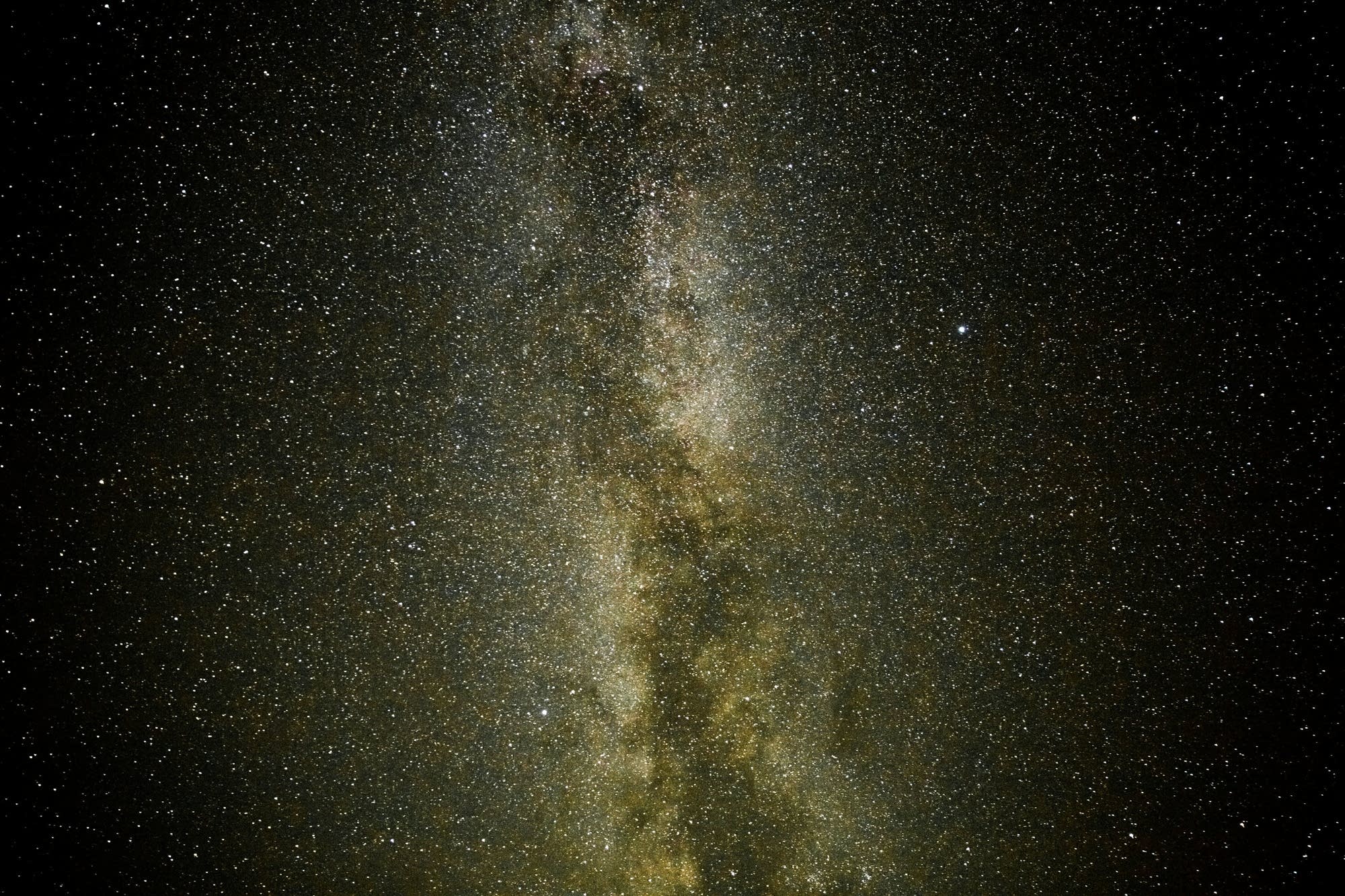
This week is International Dark Sky Week, which began in 2003 to raise awareness of not only the beauty of nighttime, but also the artificial light that can erase it.
Gov. Tim Walz recently signed a proclamation recognizing Dark Sky Week in Minnesota for a third year in a row. And Voyageurs Conservancy, the non-profit partner of Voyageurs National Park in northern Minnesota, is leading a series of programs focused on the night sky. MPR News guest host Kelly Gordon talked with the group’s associate director, Breanna Trygg.
Use the audio player above to listen to the full conversation.
Subscribe to the Minnesota Now podcast on Apple Podcasts, Spotify or wherever you get your podcasts.
We attempt to make transcripts for Minnesota Now available the next business day after a broadcast. When ready they will appear here.
Turn Up Your Support
MPR News helps you turn down the noise and build shared understanding. Turn up your support for this public resource and keep trusted journalism accessible to all.
Audio transcript
International Dark Sky week began in 2003 to raise awareness not only of the beauty of nighttime but also the artificial light that can erase it. Governor Tim Walz recently signed a proclamation recognizing Dark Sky Week in Minnesota for a third year in a row. It's this week in case you're wondering, and Voyageurs Conservancy-- Voyageurs Conservancy-- there we go-- the nonprofit partner of Voyageurs National Park in Northern Minnesota, is leading a series of related programs. That group's associate director, Breanna Trigg, joins me now. Hi, Breanna.
BREANNA TRIGG: Hello.
INTERVIEWER: I understand last night was the first of five stargazing events running through Saturday. Were the skies clear? Did people see things?
BREANNA TRIGG: No, it was cloudy and rainy though we--
INTERVIEWER: Shoot.
BREANNA TRIGG: Are always prepared for that. So we have an indoor program first, and then we get outside with the telescope.
INTERVIEWER: OK. So you have a certification though as an International Dark Sky Park, which is very cool and rare. So can you explain what that is and how you got it?
BREANNA TRIGG: Yeah. So we work with Dark Sky International. We became a certified dark sky park in 2020, and it really does take a lot of work and documentation. We had to prove that we had dark skies by actually using dark sky monitors to measure the darkness around different locations in the park. We had to show that we were actually maintaining that, and at Voyageurs National Park, the incredible team who manage the facilities changed out light bulbs, made sure we had shielded lights, things like that, across over 90% of our lighting within the park so that we could certify. And then, of course, to maintain it, we have to offer educational programming throughout the year to get people connected to those dark skies.
INTERVIEWER: Are you the only official dark sky area in Minnesota?
BREANNA TRIGG: We aren't. We actually-- our neighbors with a dark sky sanctuary, which is the Boundary Waters Canoe Area Wilderness. And then our neighbors to the north in Canada, the Quetico is also a certified dark sky area. So combined our three regions, which are all right next to each other, is one of the largest certified dark sky areas on the globe.
INTERVIEWER: Wow, that's really cool. And that for so many people who've traveled to that area, it probably isn't a huge surprise because you do have an unprecedented view of the night sky. So I have to ask, did the Artemis II mission give momentum do you think, to Dark Sky Week? Does it feel different this year?
BREANNA TRIGG: I think it is something that everyone is talking about and just how inspirational listening to those astronauts looking back to Earth that really I think connects to a lot of people, and when they get up then they're to Voyageurs National Park and we're out with our conservancy educator looking up at the sky, just that sense of connection to the galaxies beyond us that we feel so much closer to those stars after watching that event.
INTERVIEWER: Yeah. What-- let's just talk about that a little bit. What do people get out of being able to see those dark skies? What does it do to us?
BREANNA TRIGG: Oh, yeah. Well, 80% of Americans can't see the Milky Way from their backyard, so it really is a major impact, this light pollution. That chance to see dark skies, they're so important for multiple reasons, definitely for humans, for our human health. It helps us sleep. It helps us feel healthier when we have that time, that true rest, in darkness.
Right now, it's spring migration for bird species heading back North, and they need those dark skies to navigate. But then also just I think for us as humans, our connection to the millennia of culture that has come before us where we've built these connections, these stories in the skies, and really having that connection to that sense of wonder and that sense of awe and learning those stories from the generations before.
INTERVIEWER: Yeah. Let's talk a little bit about light pollution because that's the other side of the coin of this. So we are, of course, daytime creatures. That's how we've evolved. So in these days, many of us depend on artificial light at nighttime. So when does that light become light pollution?
BREANNA TRIGG: Oh, what a good question. I think it's important to think about that light is a tool that we use every day exactly as you said. We really depend on it for ability to see, to feel comfortable, to feel safe. And there are ways that we can do that really well using light responsibly and still maintain that darkness.
So I think things to think about with light pollution, which is really worsened since the 1950s, and a lot of times when we put lights out, we put that light everywhere. We just put out a bulb pointing up into the sky and hope that it's going to really light everything we need.
INTERVIEWER: Indiscriminate light. Yes.
BREANNA TRIGG: Exactly. So things to think about would be shielding that light so it's pointing exactly where you need to see. And we have-- we do educational programs with students where they actually build models of lights that reduce light pollution, and they get to experiment with a bunch of different materials, and it's amazing to see even just using this little pen light and a ping pong ball. When you direct the light downward actually get brighter light where you're looking for it, and it doesn't diffuse as much into the sky. And then you reduce that light pollution going up. So there's a lot of ways that, thinking about the temperature of the light, that we can reduce light pollution even in our neighborhoods to allow us to have that deeper connection to the night sky.
INTERVIEWER: What about headlights and streetlights, those sorts of things? Is it that same sort of idea if we can shield it more, it would be better for light to reduce light pollution?
BREANNA TRIGG: Yes, exactly. And there are multiple cities across the country who do a really good job of building in that shielding and thinking about what light bulbs they are using. It was really fun to see what happened at the park when the park team really turned their attention to having those very safe spaces for visitors and reducing the light that's going up into the sky.
INTERVIEWER: So for those of us who maybe would want to still get up to Voyageurs for this Dark Sky Week, tell us what's going to be happening the rest of this special occasion.
BREANNA TRIGG: Yeah. We have nightly programs through the 18th. They start at-- they're going to be held at the Rainy Lake visitor center with Jessie Gates, who is our dark sky educator ambassador. And the programs start indoors, and you have a program just learning about light pollution, learning about what we can see in our skies.
And then you go outside and we have a telescope that we affectionately call Big Mama, a very large telescope, 18-inch, that you can really see deep space objects. And you can see those stars up close. I was looking through it once and saw Jupiter, and you could see very clearly the moons circling Jupiter. So it's just really incredible to get out there.
And we have-- I've been looking at the weather. I think we have a few clear nights coming up, so I think they're going to be a lot of chances this week still to be able to see the sky. And Jessie is incredible at getting everybody out there and making sure even if there's just a gap in the clouds, you get the telescope out and see what you can see.
INTERVIEWER: That's very, very cool. Thanks for joining us, Breanna.
BREANNA TRIGG: Yeah. Hope to see you all up at Voyageurs.
INTERVIEWER: Yeah. Breanna Trigg is the associate director of Voyageurs Conservancy. If you're near the Rainy Lake visitor center, you can attend one of their International Dark Sky programs as she just said all this week in the evenings through Saturday.
Download transcript (PDF)
Transcription services provided by 3Play Media.

