
Inside the Twin Ports gay bar that helped fuel LGBTQ+ rights activism in northern Minnesota
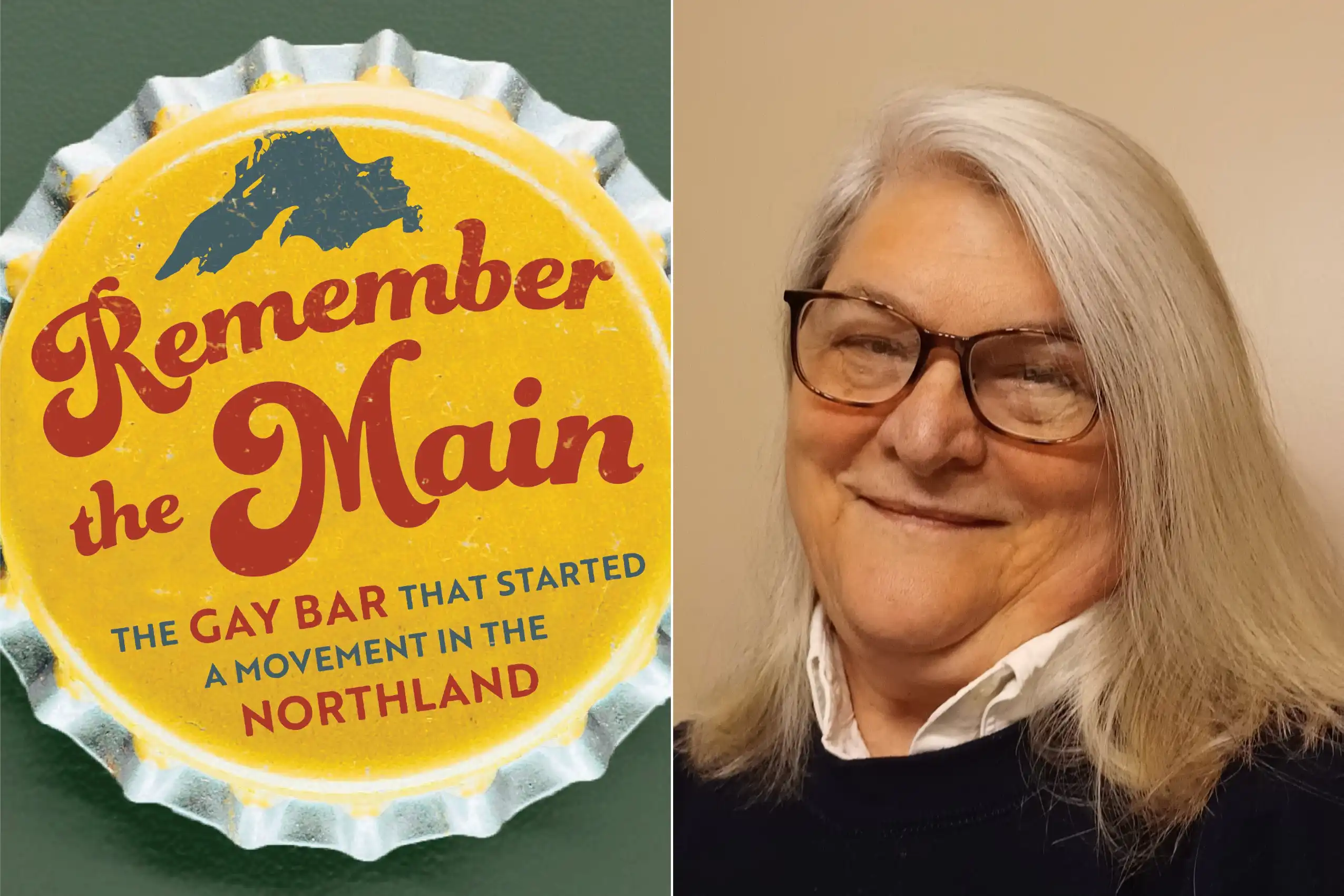
Meg Gorzycki wrote "Remember the Main: The Gay Bar That Started a Movement in the Northland." It tells the story of Bob Jansen, owner of Superior's The Main Club, a bar that opened in the 1980s.
Courtesy photos
Go Deeper.
Create an account or log in to save stories.
Like this?
Thanks for liking this story! We have added it to a list of your favorite stories.


Audio transcript
NINA MOINI: For decades, LGBTQ history in Minnesota has often been told through the lens of the Twin Cities. A new book out this month argues that some of the state's most important fights for LGBTQ rights happened more than 100 miles away in Duluth and Superior, Wisconsin.
The book is called Remember the Main-- The Gay Bar that Started a Movement in the Northland. It tells the story of Bob Jansen, owner of the Main Club, a gay bar that opened in the '80s. Meg Gorzycki writes that the bar served as a refuge and organizing hub for LGBTQ people in the northern part of the state during a time when being openly gay often came with significant risk. Meg is on the line to talk about her book. Thanks so much for being with us, Meg.
MEG GORZYCKI: Well, thank you, Nina. I appreciate your interest in the work.
NINA MOINI: Absolutely. I wonder how you first came to know the Main Club and Bob Jansen's story. And what made you decide this is a story worth me spending my time writing about?
MEG GORZYCKI: Yes, I became aware of Bob Jansen when I was a student at the College of St. Scholastica. And he was the theater director at the time. And so I did some work with him. And then after I graduated, I tootled off to Pennsylvania for graduate studies.
And when I came back, all of a sudden, Bob didn't have a job anymore. He had been fired, fired for being gay. And he legally contested that. And in a settlement, the money that he won from that, he decided to use to start the Main Club.
And so I was unemployed at the time. I had to go back to school for a teacher's license. And I thought, well, put me to work, Bob. So he said, here's a paintbrush, and I'll pay you in beer. And as an unemployed person who wasn't making much eating money, I thought that was a great deal.
And so he took me under his wing, like he did so many other people, with getting me involved with political organizing, getting involved with fundraisers, getting involved with learning how to network with people and build coalitions.
And so we maintained a friendship for years. And even after I left for the San Francisco Bay area in 1985, we stayed friends. And when I retired about three years ago, I contacted him again. And I said, hey, I miss you. It's good to be home. We need to reconnect.
And so he talked about retiring and selling the bar and everything. And I said, Bob, has anybody ever done a story on this, a book? And he said, no, but that sounds interesting. So right away, we agreed that we had to go ahead and do this.
And I wanted to do this because I believed it was time to tell a positive, true story about what can happen when ordinary people do extraordinary things. And then in the process, they managed to spark reforms in our laws and redefine our values and institutional practices so that people stop hurting each other.
And Bob was a very, very effective organizer. And he was a consummate defender of Human Rights across all the different categories of populations. I like to say that one of the things that has always attracted me to Bob is that he's a social worker with a liquor license.
And he's such a quick study. He's fun to write about because he knows so much about how to organize, how to connect people, how to teach people about talking with adversaries and giving people confidence and a reason to collaborate not only because it was the right thing to do but because it's fun.
NINA MOINI: Yeah, ordinary people doing extraordinary things. That's what history is, I think. Can you paint us a picture of the main club? I mean, you mentioned a social worker with a liquor license. Like, what made it a place where people felt that they could come and pull up a seat and just talk about how to organize or whatever they were going through?
MEG GORZYCKI: Well, that's a good question. And I think that part of the original main club, which is the one I knew, the one that was down on Third Street in Superior. That was a climate in which Bob made sure that everybody who walked through the door was welcome, whether it was a homeless person who came into the bar on a cold Thanksgiving night and had nowhere to go. The potluck was always there. Help yourself.
He welcomed straight people, gay people, wherever they were on their journey. And he always said to people, I want people to feel the love and respect inside this bar that they should always feel on the outside of the bar. And he lived up to that ideal.
NINA MOINI: And I know that you've documented various difficult battles over LGBTQ rights in Duluth in the 1980s. Can you just remind folks who were not around then and don't have memories what the atmosphere was like and what we can continue to learn from that today?
MEG GORZYCKI: Mm-hmm. Yes, indeed, we have lots to learn. And that's something that I hope readers pick up when they read the book because I interviewed 30 people, mainly people of the Baby Boomer age, who have seen the history and who now recognize in hindsight that our generation was the bridge between, let's say, the Silent Generation of the first tentative activists back in the '50s and early '60s, and then of course, the activists that were far more vocal, far more out, and far more political in the 1990s and 21st century.
But what our generation really learned was how much we actually did change things by saying no to what was going on. And you have to remember, Nina, that in the first part of the 20th century, all the way through the latter part of the century, living in Minnesota was not always easy, not only if you were gay, but if you were Black, if you were Native American, if you were poor, if you were a woman.
And up on the Iron Range, there was a lot of tolerance for domestic violence. People joked about beating up women and sexual assault all the time. And it was very common for institutions and employers to practice discrimination.
So one of the really powerful things that happened was that we challenged that. The Program for Aid to Victims of Sexual Assault was started in 1974 by people like Rosie Rocco and Tina Welsch. We had Lois Jenson, who fought Eveleth Mining Company in 1988 and won a lawsuit for harassment.
We had Karen Thompson in 1983 fighting against Don Kowalski, who was fighting Karen's petition to take care of her partner, Sharon Kowalski, who had been badly injured in a car crash and who needed full-time assistance, and won the case. And so--
NINA MOINI: I see what you're saying. There are so many stories. It's not about saying-- it's not like Twin Cities against other-- or versus other places, but it's important to have historical record and documentation of how things were in different regions within a state, because even within a state, like you said, it's not monolithic, and everybody is not having the same experiences. So I think that's so important.
And I think it's great that you're going to take this story directly to the readers this month, starting with a launch event at the main club itself. So cool. What are you expecting that it will be like? How can people participate? Kind of bringing this history back to the people in the community where it happened.
MEG GORZYCKI: Yeah, first of all, I want people to be proud of what they accomplished. I want them to that they did accomplish something. As I say, I believe our generation was a bridge. I believe Bob Jansen played a tremendous role in that.
And I want readers to see themselves in the story, not just the people who were there, but I want any reader of any generation to look at the story and say, wow, I need to think more about what it means to be a great person. There's a lot of information here about how I can develop and reach my potential to be better than I ever thought I could be.
NINA MOINI: Meg, thank you so much for coming by Minnesota Now and sharing your work with us. We really appreciate it and wishing you best with the launch.
MEG GORZYCKI: Thank you so much, Nina. Pleasure to be here.
NINA MOINI: Meg Gorzycki, author of Remember the Main-- The Gay Bar that Started a Movement in the Northland. Meg again will be celebrating the book's release at the Main Club in Superior this Saturday. She'll also be at Magers and Quinn in Minneapolis on June 16, and at Drury Lane Books in Grand Marais on June 27.
The book is called Remember the Main-- The Gay Bar that Started a Movement in the Northland. It tells the story of Bob Jansen, owner of the Main Club, a gay bar that opened in the '80s. Meg Gorzycki writes that the bar served as a refuge and organizing hub for LGBTQ people in the northern part of the state during a time when being openly gay often came with significant risk. Meg is on the line to talk about her book. Thanks so much for being with us, Meg.
MEG GORZYCKI: Well, thank you, Nina. I appreciate your interest in the work.
NINA MOINI: Absolutely. I wonder how you first came to know the Main Club and Bob Jansen's story. And what made you decide this is a story worth me spending my time writing about?
MEG GORZYCKI: Yes, I became aware of Bob Jansen when I was a student at the College of St. Scholastica. And he was the theater director at the time. And so I did some work with him. And then after I graduated, I tootled off to Pennsylvania for graduate studies.
And when I came back, all of a sudden, Bob didn't have a job anymore. He had been fired, fired for being gay. And he legally contested that. And in a settlement, the money that he won from that, he decided to use to start the Main Club.
And so I was unemployed at the time. I had to go back to school for a teacher's license. And I thought, well, put me to work, Bob. So he said, here's a paintbrush, and I'll pay you in beer. And as an unemployed person who wasn't making much eating money, I thought that was a great deal.
And so he took me under his wing, like he did so many other people, with getting me involved with political organizing, getting involved with fundraisers, getting involved with learning how to network with people and build coalitions.
And so we maintained a friendship for years. And even after I left for the San Francisco Bay area in 1985, we stayed friends. And when I retired about three years ago, I contacted him again. And I said, hey, I miss you. It's good to be home. We need to reconnect.
And so he talked about retiring and selling the bar and everything. And I said, Bob, has anybody ever done a story on this, a book? And he said, no, but that sounds interesting. So right away, we agreed that we had to go ahead and do this.
And I wanted to do this because I believed it was time to tell a positive, true story about what can happen when ordinary people do extraordinary things. And then in the process, they managed to spark reforms in our laws and redefine our values and institutional practices so that people stop hurting each other.
And Bob was a very, very effective organizer. And he was a consummate defender of Human Rights across all the different categories of populations. I like to say that one of the things that has always attracted me to Bob is that he's a social worker with a liquor license.
And he's such a quick study. He's fun to write about because he knows so much about how to organize, how to connect people, how to teach people about talking with adversaries and giving people confidence and a reason to collaborate not only because it was the right thing to do but because it's fun.
NINA MOINI: Yeah, ordinary people doing extraordinary things. That's what history is, I think. Can you paint us a picture of the main club? I mean, you mentioned a social worker with a liquor license. Like, what made it a place where people felt that they could come and pull up a seat and just talk about how to organize or whatever they were going through?
MEG GORZYCKI: Well, that's a good question. And I think that part of the original main club, which is the one I knew, the one that was down on Third Street in Superior. That was a climate in which Bob made sure that everybody who walked through the door was welcome, whether it was a homeless person who came into the bar on a cold Thanksgiving night and had nowhere to go. The potluck was always there. Help yourself.
He welcomed straight people, gay people, wherever they were on their journey. And he always said to people, I want people to feel the love and respect inside this bar that they should always feel on the outside of the bar. And he lived up to that ideal.
NINA MOINI: And I know that you've documented various difficult battles over LGBTQ rights in Duluth in the 1980s. Can you just remind folks who were not around then and don't have memories what the atmosphere was like and what we can continue to learn from that today?
MEG GORZYCKI: Mm-hmm. Yes, indeed, we have lots to learn. And that's something that I hope readers pick up when they read the book because I interviewed 30 people, mainly people of the Baby Boomer age, who have seen the history and who now recognize in hindsight that our generation was the bridge between, let's say, the Silent Generation of the first tentative activists back in the '50s and early '60s, and then of course, the activists that were far more vocal, far more out, and far more political in the 1990s and 21st century.
But what our generation really learned was how much we actually did change things by saying no to what was going on. And you have to remember, Nina, that in the first part of the 20th century, all the way through the latter part of the century, living in Minnesota was not always easy, not only if you were gay, but if you were Black, if you were Native American, if you were poor, if you were a woman.
And up on the Iron Range, there was a lot of tolerance for domestic violence. People joked about beating up women and sexual assault all the time. And it was very common for institutions and employers to practice discrimination.
So one of the really powerful things that happened was that we challenged that. The Program for Aid to Victims of Sexual Assault was started in 1974 by people like Rosie Rocco and Tina Welsch. We had Lois Jenson, who fought Eveleth Mining Company in 1988 and won a lawsuit for harassment.
We had Karen Thompson in 1983 fighting against Don Kowalski, who was fighting Karen's petition to take care of her partner, Sharon Kowalski, who had been badly injured in a car crash and who needed full-time assistance, and won the case. And so--
NINA MOINI: I see what you're saying. There are so many stories. It's not about saying-- it's not like Twin Cities against other-- or versus other places, but it's important to have historical record and documentation of how things were in different regions within a state, because even within a state, like you said, it's not monolithic, and everybody is not having the same experiences. So I think that's so important.
And I think it's great that you're going to take this story directly to the readers this month, starting with a launch event at the main club itself. So cool. What are you expecting that it will be like? How can people participate? Kind of bringing this history back to the people in the community where it happened.
MEG GORZYCKI: Yeah, first of all, I want people to be proud of what they accomplished. I want them to that they did accomplish something. As I say, I believe our generation was a bridge. I believe Bob Jansen played a tremendous role in that.
And I want readers to see themselves in the story, not just the people who were there, but I want any reader of any generation to look at the story and say, wow, I need to think more about what it means to be a great person. There's a lot of information here about how I can develop and reach my potential to be better than I ever thought I could be.
NINA MOINI: Meg, thank you so much for coming by Minnesota Now and sharing your work with us. We really appreciate it and wishing you best with the launch.
MEG GORZYCKI: Thank you so much, Nina. Pleasure to be here.
NINA MOINI: Meg Gorzycki, author of Remember the Main-- The Gay Bar that Started a Movement in the Northland. Meg again will be celebrating the book's release at the Main Club in Superior this Saturday. She'll also be at Magers and Quinn in Minneapolis on June 16, and at Drury Lane Books in Grand Marais on June 27.
Download transcript (PDF)
Transcription services provided by 3Play Media.

