
GLP-1 weight loss drugs to become cheaper for some under temporary Medicare program
Go Deeper.
Create an account or log in to save stories.
Like this?
Thanks for liking this story! We have added it to a list of your favorite stories.


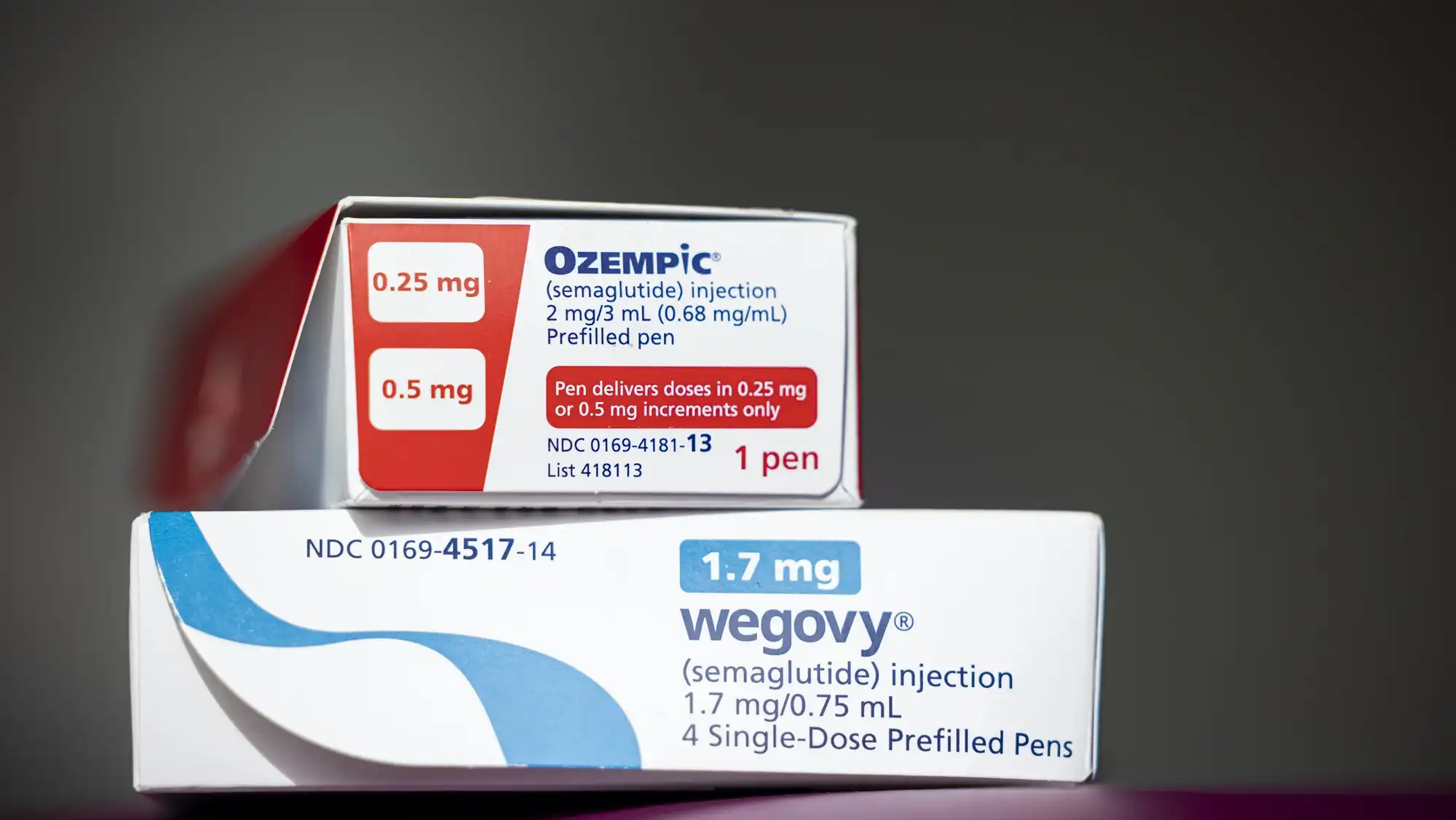
Starting July 1, Medicare will begin a new pilot program that will allow some users to access popular GLP-1 weight-loss medications at a reduced cost. Originally developed to treat diabetes, GLP-1 medications like Wegovy have exploded in popularity.
Dr. Carolyn Bramante is an associate professor at the University of Minnesota Medical School who specializes in obesity and weight loss. She joined MPR News host Nina Moini to talk about how GLP-1 drugs have changed medicine and what broader access for older Americans could mean.
Use the audio player above to listen to the full conversation.
Subscribe to the Minnesota Now podcast on Apple Podcasts, Spotify or wherever you get your podcasts.
We attempt to make transcripts for Minnesota Now available the next business day after a broadcast. When ready they will appear here.
Turn Up Your Support
MPR News helps you turn down the noise and build shared understanding. Turn up your support for this public resource and keep trusted journalism accessible to all.
Audio transcript
CAROLYN BRAMANTE: Yeah, thanks for having me.
NINA MOINI: I feel like there still is a lot to learn about GLP-1s, and people who maybe aren't using them maybe don't a lot about them. So I want to be clear-- this Medicare pilot program is a pilot program. It will start July 1 and end December of 2027. And it's not a full guarantee that everyone who wants to use these GLP-1s for cheap can do so using Medicare.
But if you would tell us, generally speaking, why do you think Medicare is looking into offering reduced-price GLP-1s to its recipients? And remind us how it works.
CAROLYN BRAMANTE: Yes, I'd love to give a little context. So having obesity is not someone's fault. It's a biologically-complex imbalance of the body's energy regulatory systems. But obesity can cause many diseases. And obesity medicine specialists and researchers have known this for a long time. And we have been using safe and effective and inexpensive treatments for a long time as well.
The new GLP-1 medications are very effective, and they have also made more people in medicine and outside of medicine aware of the harms that obesity can have. Because the GLP-1 medications have been studied in long-term, randomized clinical trials and have also focused on other disease outcomes besides weight, like arthritis and obstructive sleep apnea.
So now with those other outcomes, like you said, Medicare is starting this pilot program to understand if these medications lead to overall cost savings.
NINA MOINI: Why might older adults in particular benefit from greater access to these GLP-1s?
CAROLYN BRAMANTE: Well, I think there's no thought that older adults are the only individuals who will benefit. But some studies have focused on adults with a history of Major cardiovascular disease. Those cardiovascular events usually occur in older adults. And so you're going to see those higher-risk patients be older, and then those cost-benefits from preventing strokes and heart attacks occur in older adults.
NINA MOINI: What else do you think doctors consider when they're prescribing GLP-1s to seniors? Are they thinking about things like muscle mass? Or what things do they take into account?
CAROLYN BRAMANTE: Yeah, so exactly, that's one of the concerns, especially in older adults, is that weight loss usually goes with losing muscle and fat-- fat tissue. And so you want to be careful about decreasing the loss of the skeletal muscle mass during weight loss. And so it is important that these medications are prescribed in the setting of a comprehensive weight management program so that patients can do the other parts of healthy weight management to maintain their health and their muscle mass.
NINA MOINI: Do you have a sense for how big of a cost barrier there is for seniors right now? I know we hear more seniors than ever are doing things like visiting food banks. They're on tight incomes. How big of a shift do you think we would see for seniors if Medicare made this pilot more permanent?
CAROLYN BRAMANTE: I do think that many would access GLP-1s who don't currently. That is a common reason why my senior patients can't use GLP-1 medications is because they don't have insurance coverage. Like I mentioned, we do have other obesity pharmacotherapy, so other medications that are safe and effective for weight loss in seniors and patients of all ages.
So if a patient is seeing someone with experience treating obesity, then they usually will be able to find a cost-effective treatment. So I don't want people to despair that if they can't access the GLP-1s via the Medicaid Part D program or another program, there are other ways to receive data-driven obesity treatment.
NINA MOINI: Sure. Yeah, no, that's a great reminder. And this is a pilot too. And so it lasts about one and a half years. Is that a typical length of time that someone might use a GLP-1? Or do you have concerns about someone taking advantage of the pilot and then suddenly not being able to afford the drug at some point if the pilot ends?
CAROLYN BRAMANTE: Right. So ideally, someone is seen in a clinical setting with long-term follow up. And they can achieve a slow, gradual weight loss, usually over the course of two years, potentially more, and then be seen for weight maintenance. So even though it's a time-limited pilot for now, I would not want individuals to try to take advantage of the highest doses possible and achieve a rapid weight loss.
You still want to have a slow, steady weight loss with slow dose titration. And then, again, they should be able to access other medications if they aren't able to continue the GLP-1s after the pilot program.
NINA MOINI: When it comes to GLP-1s, have you seen in your experience as a doctor or some of perhaps the trouble around the medication or downsides that might need more attention?
CAROLYN BRAMANTE: Well, there are gastrointestinal side effects that can occur, and patients should be made aware of that. We can often avoid some of those side effects if we increase the dose slowly and not just increase the dose once a month. And in the randomized trials of these GLP-1 medications, about 14% to 38% of participants didn't achieve at least 5% weight loss.
So while these medications are very effective and have been studied in long trials, there is a substantial portion who won't achieve at least 5% weight loss. But again, don't despair. We have other tools in the toolbox for treating obesity if someone hasn't achieved weight loss with a GLP-1.
NINA MOINI: Yeah. How do you think public perception or the conversation around GLP-1s has changed in just the past few years? Do you think that people are still looking at it as sort of a cheat pill or some of the narratives around it, or do you think that's improved?
CAROLYN BRAMANTE: Yeah, it's very interesting. Having obesity is one of the most visible diseases, and therefore it's highly stigmatized. And, unfortunately, people are stigmatized for having extra weight. They're stigmatized for losing weight. And so it is very challenging.
The increased number of effective obesity treatments, I think, has reduced the stigma against treating obesity a little bit more, in part because these trials have shown the other health benefits for treating obesity. And so I do hope that that stigma against obesity treatment continues to go down. But it is a very complex and a very real issue.
NINA MOINI: All right, Dr. Bramante, thanks so much for your time and sharing your expertise with us. We really appreciate it.
CAROLYN BRAMANTE: Thank you for having me.
NINA MOINI: That was Dr. Carolyn Bramante, associate professor at the University of Minnesota Medical School.
Download transcript (PDF)
Transcription services provided by 3Play Media.

