
As wildfires burn, Minnesota writer reflects on grief from seeing impacts of flames
Go Deeper.
Create an account or log in to save stories.
Like this?
Thanks for liking this story! We have added it to a list of your favorite stories.


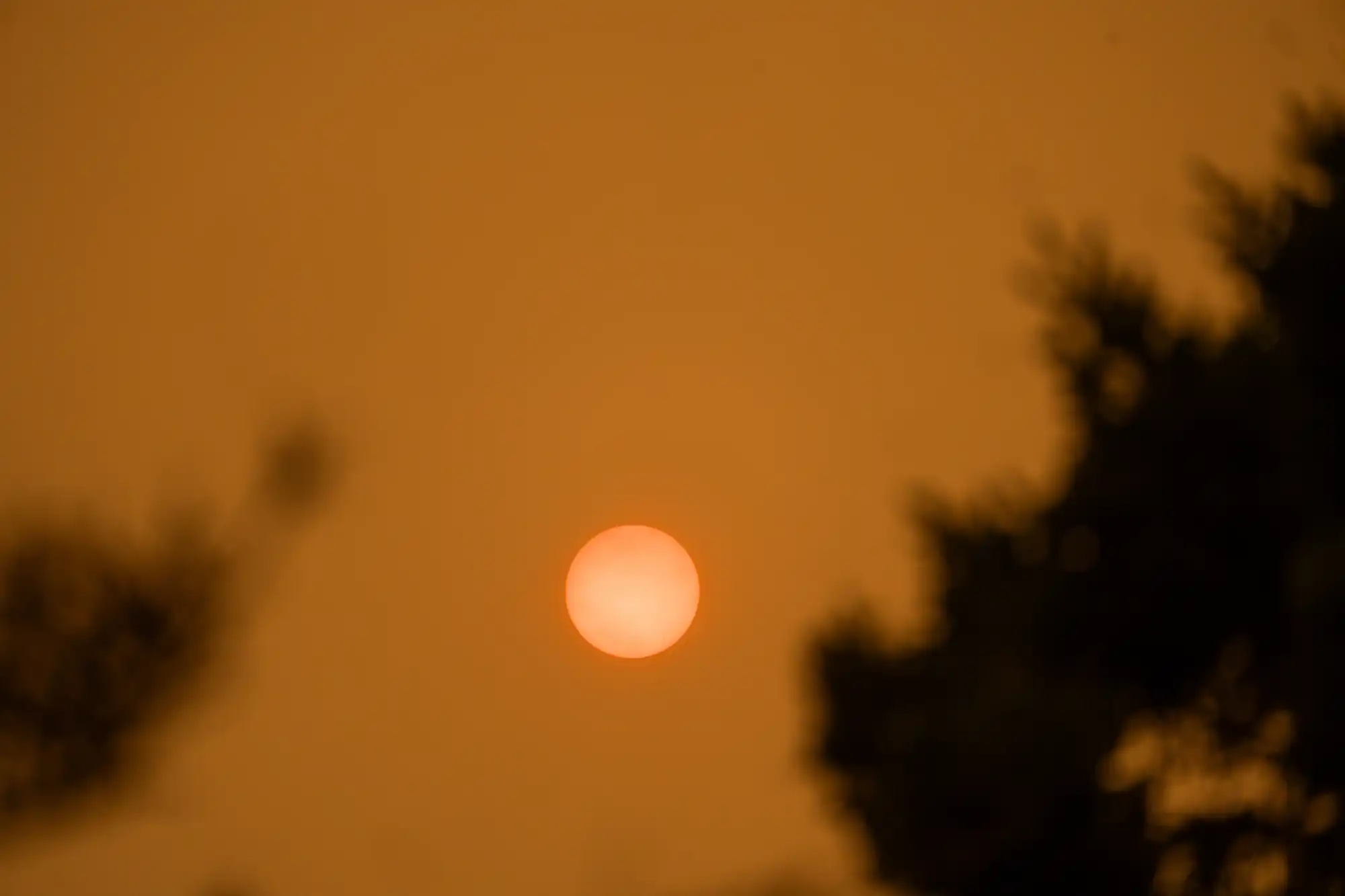
As wildfires continue to burn across northeastern Minnesota, many people are worried about the smoke and air quality, as well as the danger to communities and the damage left behind.

But for many who love the Boundary Waters Canoe Area Wilderness and the north woods, there's another overwhelming feeling: grief. Grief over watching a place filled with memories, traditions and a sense of peace change before their eyes. And not knowing when, or how, it will recover.
Duluth-based nature writer Stephanie Pearson experienced that firsthand. She was forced to evacuate a canoe trip in the Boundary Waters because of the fires. She just published an essay about it in Outside Magazine. Pearson spoke to Minnesota Now host Nina Moini about her piece.
Use the audio player above to listen to the full conversation.
Subscribe to the Minnesota Now podcast on Apple Podcasts, Spotify or wherever you get your podcasts.
We attempt to make transcripts for Minnesota Now available the next business day after a broadcast. When ready they will appear here.
Turn Up Your Support
MPR News helps you turn down the noise and build shared understanding. Turn up your support for this public resource and keep trusted journalism accessible to all.
Audio transcript
NINA MOINI: Our Minnesota Music Minute brings us a song all about the Boundary Waters. Jerry Vandiver is a Nashville-based artist but has written many songs about paddling the BWCA. This song is called, "Leave no Trace."
JERRY VANDIVER: (SINGING) There's and water speeds
And keep it wild
Leave it free
For those who walk hereafter me
From the desert sand to the glacier lakes
I'll make my mark and leave no trace
NINA MOINI: As these wildfires continue to burn across Northeastern Minnesota, many people are worried about the smoke, the air quality, plus, of course, the danger to communities and the damage left behind. But for many who love the Boundary Waters in the Northwoods, there's another overwhelming feeling of grief, grief over watching a place filled with memories, traditions, and a sense of peace change before their eyes, and not knowing when or how it will recover. Duluth-based nature writer Stephanie Pearson experienced that firsthand. She was forced to evacuate a canoe trip in the Boundary Waters because of the fires. She just published an essay about it in Outside magazine. Stephanie, thanks for coming back on Minnesota Now. It's good to have you.
STEPHANIE PEARSON: Thank you.
NINA MOINI: I found myself emotional reading the essay that you published. I thought about-- I felt like I could picture your whole life [CHUCKLES] growing up from being little, and then out there, with your niece and your sister. You're a big lover of the Boundary Waters and the North Shaw, to say the least. Can you talk a little bit more just about your connection to that place and what it means to you?
STEPHANIE PEARSON: Yeah, well, thank you. And that song you had, wow. That really hit a chord with me. [CHUCKLES] Yeah, no, I grew up in Duluth, and we have a family cabin on Lake Vermilion, which is just South and West of the Boundary Waters. And I worked as a guide up in the Boundary Waters for three summers during college and spend as much time as I can up there in the summers. Recently, a couple times a year, we go to the Boundary Waters and paddle. So yeah, it's a deep connection.
NINA MOINI: Yeah, and I can't tell you how many people to have said things like, I was just there a couple of weeks ago or that change. And so the situation you were in about a week and a half or so ago, you were canoeing, tell me a little bit, if you want to just summarize, what that trip was for you.
STEPHANIE PEARSON: Yeah, so we started-- our goal was Lac La Croix, which if you look at a map of the fires, it's directly in between the Thumb Fire, the Bear Trap Fire and the Cute fire. And it starts on the Echo Trail. And then it's a narrow river, the Moose River, which goes into Nina Moose Lake, which goes into the Nina Moose River, which goes into the Agnes Lake or Agnes Lake, and then up to Lac La Croix. And so you get to this gorgeous body of water, but it's a very narrow entry point.
And so it started out absolutely gorgeous, which wasn't really a flag, but the water was very warm. The temperature was very hot, which is pretty unusual in the Boundary Waters. I mean, oftentimes, obviously, there's storms and things like that. But it was a gorgeous trip until we saw plumes of smoke getting closer and closer. And we climbed a hill and saw that this Bear Trap fire, which is now very large, was getting larger and larger. And so we were never in imminent danger.
And luckily, we had the wind in our direction, but we started paddling a day out. And it was very surreal because there was no one else on these lakes that are normally busy. And we came to learn via text from my partner, who was back in Duluth, that the portion of this wilderness was closed and that we needed to get out of the Boundary Waters as quickly as we possibly could. So that's when panic set in.
NINA MOINI: Yeah, just that feeling in your stomach, I'm sure, even as people who are really familiar with the waters, still to have a little bit of fear like that it's not great. And now, you're dealing with-- so tell me this term solastalgia. I don't know if I'm saying that right. But I had never heard that until this article. And it's a specific kind of grief. And I'm sure many people will now use this term after having learned it. Tell us about it.
STEPHANIE PEARSON: Yeah, it's really interesting. It's something that I've talked to with my sister quite a bit about. And it was coined by a psychologist, an Australian psychologist, actually, or a philosopher, Glenn Albrecht. And he did a study on some teens in New South Wales about some of the drought that was happening in Australia back in the early 2000.
And the definition of it is it's instead of-- it's not nostalgia, the melancholia, or homesickness that you experience when you're separated from a home. It's the distress that is produced by environmental change impacting on people while they are directly connected to their home environment. So it's a feeling you have as you're watching your own environment change and the overwhelming grief that sometimes brings.
NINA MOINI: Yeah, there is a sense of loss there, and even though we all know fire is a natural part of the forest. And some of these ecosystems, they've renewed themselves over these thousands of years. But has this impacted at all the way you think about just that cycle of destruction and then renewal?
STEPHANIE PEARSON: Yeah, I think it has. And I'm not a stranger to forests in the Boundary Waters. I mean, if you paddle up on Seagull Lake, for example, a major portion of that was destroyed in 2007 in a blowdown and a fire. And it has regenerated since then. But I think the thing that's so different now is, as many of your experts have talked about on MPR over the days, is the intensity of these fires.
One of the fire experts from Arizona just said that he's seen nothing like it, and the fire is burning way down into the soil. And because of those things, I don't know what the natural regeneration is going to be like. And I think that's one of the reasons that people have increasing anxiety about these things, because you see these centuries-old trees that you've known your whole life, and they just might not have the conditions to grow back that they need. And so the ecosystem is changing.
NINA MOINI: Yeah, hearing the words unprecedented so much more often than we used to these days. I know lot of people. I was watching a video from a friend of mine who has a business in Downtown Ely. And she was saying, she was afraid for her livelihood, but she kind of felt a little odd talking about that when there's so much destruction in the forest, and there's obviously fear around people's homes, people's physical safety. How do you talk with others who love this area about? Just kind of balancing the nuance of all these different emotions and these different types of grief
STEPHANIE PEARSON: Yeah, I think it's a great question. And I think people come at it from so many different places. And I will say that I'm not up in Ely right now, and I'm not watching my livelihood go up in smoke. But I think a lot of the people who live up there or who go up there are people who want to be there. It's not an easy place to live. And so they are there because they love it so much. And one other thought that I have with all of this is that wilderness areas, I mean, we're so lucky as Minnesotans to have them.
But I have a friend who's a professor of recreation and wildlife management in Montana, and he talks about-- a lot about bequest value or non-use value. And these places are so important to us because we need to preserve them for the future. And it's like the American psyche. We need these places for the American psyche. And I think no matter how much you use them or if they're part of your livelihood, we all need them to exist for our own well-being.
NINA MOINI: Yeah, I totally understand what you're saying. I want us to end on a hopeful note if we can. Amid all this uncertainty, we're going to get another update at 1 o'clock today and carry that live for everyone from the forest service. But is there anything giving you hope right now? I feel like what you're saying is this area is of such value, and it is a reminder.
STEPHANIE PEARSON: Yeah, I have hope. I mean, the wildfire smoke has lifted. I know it's gone somewhere else. But I love the community efforts. I love how many wildfire fighters are up here. I think that people do care so much. And nature will ultimately regenerate itself. I truly believe that it may not be in the way we think or want, but it will happen.
NINA MOINI: Stephanie, thanks so much for sharing with us. We really appreciate it.
STEPHANIE PEARSON: Thank you.
NINA MOINI: That was Outside magazine writer, Stephanie Pearson.
Download transcript (PDF)
Transcription services provided by 3Play Media.

