
In new collection, 38 poets explore 'Past, Present and Future of Policing'
Go Deeper.
Create an account or log in to save stories.
Like this?
Thanks for liking this story! We have added it to a list of your favorite stories.


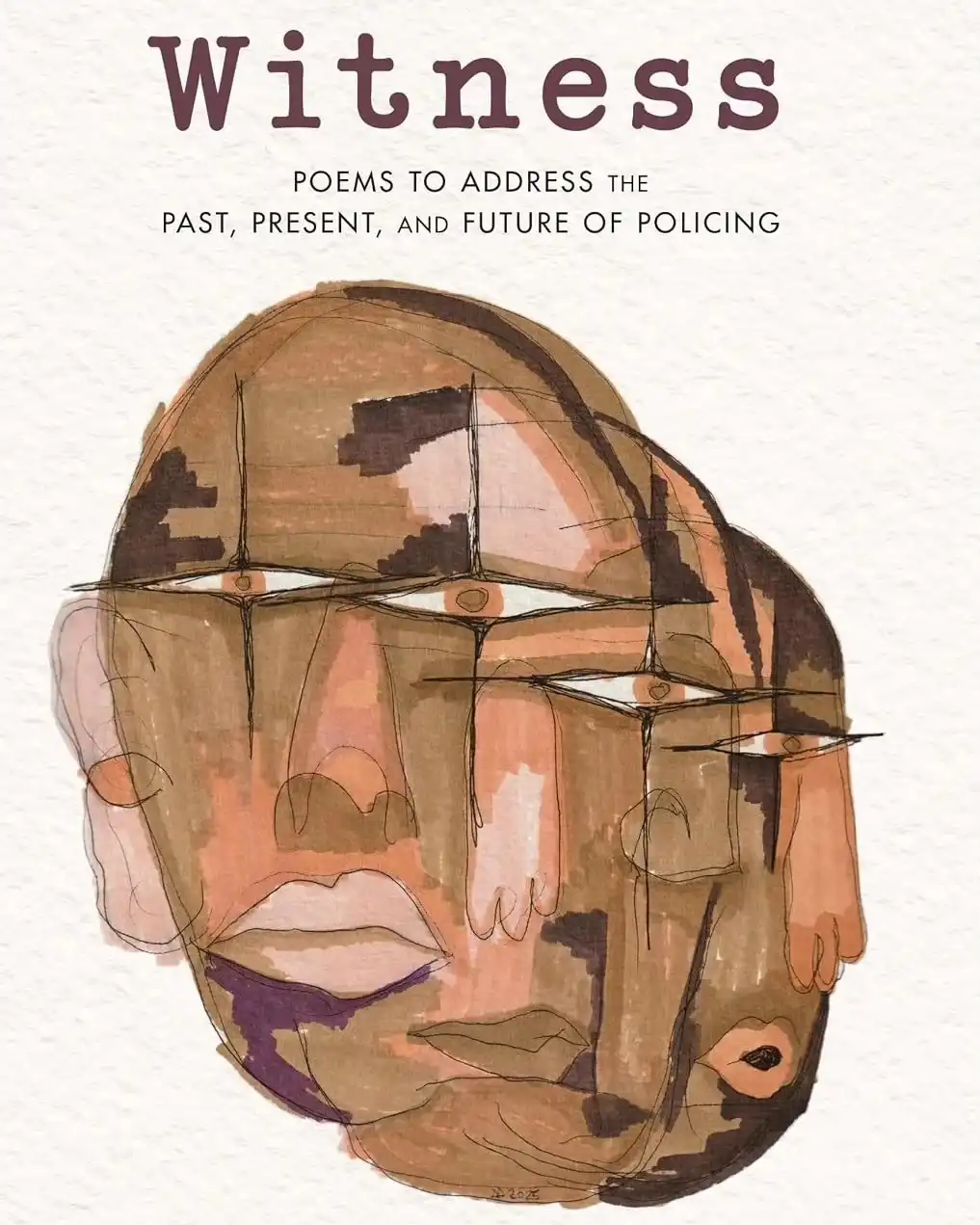
A pair of Twin Cities writers gathered the work of 36 other poets in a young adult collection that comes out Tuesday. The anthology is called “Witness: Poems to Address the Past, Present and Future of Policing.”
It includes work by celebrated Minnesota poets like Danez Smith and Kao Kalia Yang as well as big national names, like Ada Limón and Amanda Gorman. Several poets will read their work in a launch event Tuesday evening at New City Center in Minneapolis.
The project’s editors, Ari Tison and Ty Chapman, also contributed to the collection. They joined MPR News host Kelly Gordon to talk about it.
Use the audio player above to listen to the full conversation.
Subscribe to the Minnesota Now podcast on Apple Podcasts, Spotify or wherever you get your podcasts.
We attempt to make transcripts for Minnesota Now available the next business day after a broadcast. When ready they will appear here.
Turn Up Your Support
MPR News helps you turn down the noise and build shared understanding. Turn up your support for this public resource and keep trusted journalism accessible to all.
Audio transcript
It includes work by celebrated Minnesota poets like Danez Smith and Kao Kalia Yang, as well as big national names like Ada Limón and Amanda Gorman. The project's editors, Ari Tyson and Ty Chapman, also contributed their own work, and they joined me now to talk about it. Hi, Ari and Ty. Welcome to Minnesota Now.
ARI TISON: Thank you, Kelly.
TY CHAPMAN: Hello.
KELLY GORDON: Hi. So, Ari, let's start with you. Can you tell me what inspired you to create this collection, for young readers in particular?
ARI TISON: Yeah. I think as a young adult author already, I think there was something about speaking to young people and speaking the truth to young people. I think in our field, sometimes we make jokes about how young people, we need to speak the truth because they have the best dial on telling what is the truth and what isn't.
Yeah. So I think that really speaking to a young audience with honesty and candor has been one of the goals behind this book. And poetry is one of the ways to kind of intersect a lot of the heavy emotionality of our subject matter.
KELLY GORDON: And did it first start to come to you in 2020, I think, after George Floyd's murder?
ARI TISON: Yeah, after I grew up in South Minneapolis. Ty and I are both from the Twin Cities. And the book definitely was initially a response to George Floyd's murder. And Ty and I both felt, I think, that we had quite an abundance of local poets in the area. And the world had so much to say, which is good.
But also, it was kind of a place to allow our own local voices to speak into this subject. But then, of course, the book changed and grew from there. So now it's more national. As you mentioned, there are national poets in this piece, and it's not just about one kind of localized event, but many, of course.
KELLY GORDON: Right. And I love that you started kind of, you know, the roots are here, so we're going to start with the art here. So, Ty, we talked about George Floyd. But of course, since you started working on this anthology a few years ago-- Renee Good, Alex Pretti, there was Operation Metro Surge-- do those sorts of things also show up in the anthology?
TY CHAPMAN: A bit, yeah. Our publisher-- and we, of course, agreed-- wanted to speak pretty directly to Operation Metro Surge and the things happening in Minneapolis and in cities all across the nation. And so that was where we did loop in Amanda Gorman and her beautiful poem in response to the murder of Renee Good.
It's unfortunate because we coedited and wrote this anthology responding to, again as Ari said, one particular case of police violence. And since then, the book has only become more timely, which, frankly, you never want to see that when you're writing about subject matter such as this. But it does feel right for this work to be coming out at this time.
KELLY GORDON: So, Ari, this has been years in the making. Were you ever doubtful that it would actually come together?
ARI TISON: Oh, yeah, absolutely. I think doubtful may be a better way to put it for me. I was doubtful if it would get national attention because our book was submission to how we put the big five, big four publishers, which Ty and I both are familiar with. I think we had hoped that maybe a bigger press would pick it up, but the truth was that they were not willing to.
And so we were really-- Minnesota coming home, I guess, is beautiful because we went with a local press and went the other way. We brought in a lot of national voices. And so now the book is doing-- I think, already with prepublication, it's getting a good amount of attention already.
KELLY GORDON: Yeah, appropriate. Yeah. So I know that you both contributed your own work to the collection. Ty, could you read one of your poems that's in the book and just give us a flavor for it?
TY CHAPMAN: Yeah, absolutely. Ari and I both contributed one poem each. Mine is titled They Tried to Bury the Neighborhood. It is dedicated to the Twin Cities and the Rondo neighborhood specifically.
They tried to bury the neighborhood,
But ain't we still here?
Stubborn and lovely
So many dandelions sprouting fuzzy heads
Catching wind and drifting skylines
Ain't they try to sunder bud from stem
To pave lands we grow from,
Fragment and border
Bury all that soft and giving
Ain't we still here?
Corralled by crosswalks, high rises and I-94
Ain't there more granola shops than ma shops In soil we made roots?
Ain't dirt we spring from turning dry, bitter, and stingy?
Don't it take more than give?
Names drifting, tween breezes, autumn leaves brought from distant land then oft
Wigs blown back still budding for false prophecies
Spectracide boys good and old wilt groves to patches
But ain't we still here?
Blooming through potholes, reaching for sun-touched skylines
Digging toes in Earth that soft and giving
Ain't the elders teach us how to lay new roots?
Digging deep and spreading, coupling network spell
Floyd town, Castiel, and Wrightville.
Pavement cracked and buckling, new growth surging for fresh air
Ain't we still here?
KELLY GORDON: Wow, I have literal chills. Do you want to tell us a little bit about that poem? Obviously, it's about Rondo, you said. But it's about so much else. What sparked that for you?
TY CHAPMAN: Honestly, getting out of the Twin Cities metro area is what sparked that poem for me, funny enough. As I've been publishing work, I've been fortunate enough to have opportunities to present at universities, schools. I've traveled to Pittsburgh, I've traveled to New York, et cetera, et cetera.
And to all of these different Cities I went to throughout the nation, I found more and more stories like Rondo, more and more neighborhoods where maybe a dam broke and they just never-- they weren't doing the maintenance that they should have to keep things up to code and coincidentally, it leveled a Black neighborhood or they had to build a highway right through Rondo. The realization that nothing is truly localized, that these things happen all across our nation was what really became the impetus for writing that poem.
KELLY GORDON: Yeah, the universalness of some of these things. Ari, I mentioned this as a young adult collection, but even listening to that, I'm guessing like fully fledged adults, not just the young ones. Older adults can appreciate it as well. But tell me a little bit more about what it means to create and collect poems with a YA audience in mind.
ARI TISON: Yeah. I think this book-- and I'm loving the reviews that are coming in, doesn't talk down to young people. And I think that's what adults feel when they hear poems from our anthology, like, wait, isn't this for adults? And it's like, well, young people are incredibly capable. So yes and, right?
KELLY GORDON: Right.
ARI TISON: For adults, of course, and for young people. I think the interesting part was as editors, I think for Ty and I, both to talk with our poets that perhaps haven't written for young people as much or with-- they've published for adults. And I think that was really fun to engage with them and to think about audience.
That's one of the biggest craft elements of writing for young people is to be more mindful of audience and what that audience brings, what they might not have maybe experienced, or maybe honoring what they have experienced and elevating that. So that was definitely one of the tasks, I think, as an editor for us to meet our poets that we have and to dig in, to think about young people and their ears and their hearts.
KELLY GORDON: Right. Ty, I understand that there is a reading tomorrow to launch the collection. Is there still room for people to attend?
TY CHAPMAN: There most certainly is. We will be at New City Center tomorrow at 7:00 PM to launch the book, with Moon Palace Books supplying copies of the work for us to sell and sign.
KELLY GORDON: OK.
TY CHAPMAN: Would certainly love to have community out there.
KELLY GORDON: OK. And that's at 7:00 PM, you said?
TY CHAPMAN: Yes.
KELLY GORDON: OK. 7:00 PM tomorrow night. You heard it here. Ari Tyson and Ty Chapman are editors of the anthology Witness, Poems to Address the Past, Present, and Future of Policing. And as we've said, it's out tomorrow. Thank you so much to both of you.
ARI TISON: Thank you.
TY CHAPMAN: Thanks for having us.
Download transcript (PDF)
Transcription services provided by 3Play Media.

