
A violent 1934 strike helped launch Minneapolis' middle class. A new book tells its story
Go Deeper.
Create an account or log in to save stories.
Like this?
Thanks for liking this story! We have added it to a list of your favorite stories.


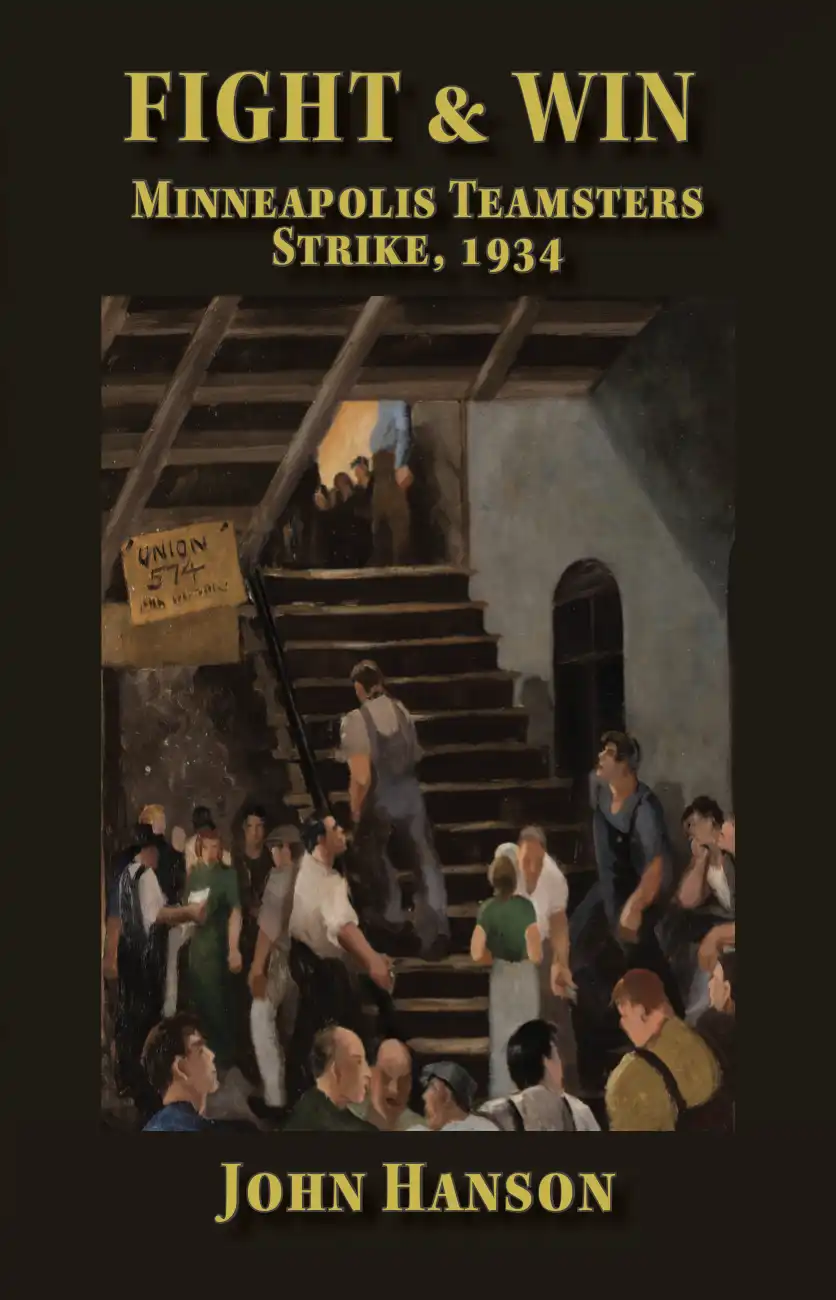
Nearly a century ago, thousands of Minneapolis workers went on strike in the middle of the Great Depression. It turned violent and police shot dozens of strikers, killing two.
Members of a Teamsters local were fighting for union recognition, better wages and limits on their working hours. The strike ultimately helped turn Minneapolis into what was known as a union town.
Now, author John Hanson has written a new book about the strike, called “Fight & Win: Minneapolis Teamsters Strike, 1934." He joined MPR News host Nina Moini to talk about his personal connection to the story.
Use the audio player above to listen to the full conversation.
Subscribe to the Minnesota Now podcast on Apple Podcasts, Spotify or wherever you get your podcasts.
We attempt to make transcripts for Minnesota Now available the next business day after a broadcast. When ready they will appear here.
Turn Up Your Support
MPR News helps you turn down the noise and build shared understanding. Turn up your support for this public resource and keep trusted journalism accessible to all.
Audio transcript
The strike ultimately helped turn Minneapolis into what was known as a union town. Now, author John Hanson has written a new book about the strike called Fight and Win: Minneapolis Teamsters Strike, 1934. Welcome to Minnesota Now, John. Thanks for being with us.
JOHN HANSON: Well, thank you. It's grand to be here.
NINA MOINI: What a great opportunity to get into some of the history here with you. And the history is personal for you, I understand. Your father was a coal truck driver, a member of Teamsters Local 547, a member of the strike committee during that historic strike. Tell me a little bit about how your dad's experience inspired you to want to tell this story to everybody.
JOHN HANSON: It started-- he told me all of these stories over the years as I was growing up and going to college, and we also had friends that had been involved in the strike. During the pandemic, I took a course online led by Peter Radcliffe, a retired professor of history.
And during that time of taking the course and the monthly meetings online, these memories of the strike came up. And I talked to Peter Radcliffe near the end of the pandemic, and he says, you got to write this down. So I started writing.
NINA MOINI: Yeah. Well, it's important, right, to have a record of history and some of the stories that were told, just orally passed on generation to generation. If you could take us back to 1934, for people who are not familiar, can you tell us a little bit about what you've learned about some of the conditions that led these folks to want to strike, despite the danger of doing so?
JOHN HANSON: Well, it was the Great Depression, and people didn't have a lot to eat and rent, and many were homeless and couldn't get food, so they went to food stations.
Well, it turns out that Minneapolis was behind the other cities. Even though the businesses had become more successful in Minneapolis than other cities, the wages were 11% less, and the coal truck drivers worked 60 hours a week, six days a week.
NINA MOINI: Yeah. I mean, it sounds like it was something that came at a time where there were so many different friction points going on, as we so often see throughout history. We hear, though, about worker strikes all the time these days. But what made the strike back then so significant? Can you paint a picture for how it helped to shape the history that would become for Minneapolis in particular?
JOHN HANSON: Well, it ended up being three strikes, but the terminus of the strike came after the police on July 20, 1934, shot, with shotguns, 67 of workers, most of them in the back. There was a governor's commission that found that two of those workers died.
And that shaped the history into today because they won the strike. It was the first that had been won in Minneapolis ever. There was a powerful business association called the Citizens Alliance that paid for suppression of the strikers.
NINA MOINI: And can you tell us a little bit about what they actually won, or what improvements were made?
JOHN HANSON: Well, they were actually going, at the time, for all truck drivers in Minneapolis to be organized into unions and to win contracts. And that's what they got after the deaths of these two men.
And there had been great funeral marches. On the 24th, they had one for Henry Ness. The march had 40,000 workers parade, and over 100,000 joined along the streets.
And because of this, there was a negotiated settlement, and the agreement amounted to recognition of unions in a number of these places, usually in the mid-sized and the larger businesses. And they got recognition, so they got work conditions improved, work hours improved, raises, and they could negotiate.
NINA MOINI: And then I understand that union membership is lower today compared to the flood of union power that came after the 1934 strikes. What do you think people today can learn from what happened in Minneapolis in 1934? Do you see any parallels or any lessons?
JOHN HANSON: I think history always rhymes over the years and reflects itself. And in today, we see right now a kind of a similar condition where the gap between the wealthy and the poor is great, like back at that time. And learning how to protest peacefully, if you're not in a union, is really important.
We had a good example in the Metro Surge this past winter when on-- let's see. January 23, over 100,000 showed up that night in very cold winter, below 0, and marched peacefully.
And then that Sunday morning, if I remember right, there was a large number of clergy that blocked the entrance to the airport early in the morning, and many of them were arrested, but they were doing it peacefully.
NINA MOINI: I wonder, too, just on a personal level, what it was like hearing your father's stories and incorporating your father's stories. What was that for you, just on a familial level?
JOHN HANSON: Well, I think it improved the relationship between the two of us. I was hearing a great story, and different parts of the story would come at different times. I might go downtown Minneapolis. He had to do something at some one of the big buildings there.
And then afterward, he would take me and drive me to the sites or to meet somebody that had protested back then-- one fellow who had been shot and was crippled, and we went to his business. And that kind of thing made a big difference in my understanding of what people go through in situations like that.
NINA MOINI: Putting these stories down and trying to convey to people the significance, I also feel like there's a tie to just the economy and the middle class of some of these labor unions and movements. And I wonder what you hope people could take away from what happened in 1934 and just the power of these organizations to unionize.
JOHN HANSON: Well, the most important thing is that we are stronger together. One person's voice has very little effect. But if it's a group of people, they are stronger, and they can voice their concerns, and they can make them happen.
And we're at an inflection point in what's going on with our international relations, with our economy, and in our society. And this is a time like back then. The situation was different in many ways, but that was an inflection point in society. And the unions, they were successful in '34.
And so by the time the soldiers came back from World War II, they went into factory jobs and jobs that were unionized, which gave them decent pay, so that they could build a home, have a family, and that was the creation of our great middle class. That middle class has been dying.
NINA MOINI: Well, John, thank you so much for coming on the program and telling us about your work. We really appreciate your time. Thank you.
JOHN HANSON: Well, thank you.
NINA MOINI: That was John Hanson, author of the book, Fight and Win: Minneapolis Teamsters Strike, 1934.
Download transcript (PDF)
Transcription services provided by 3Play Media.

