
From rare prose to 'Heated Rivalry,' Quatrefoil Library celebrates 40 years of LGBTQ+ literature
Go Deeper.
Create an account or log in to save stories.
Like this?
Thanks for liking this story! We have added it to a list of your favorite stories.


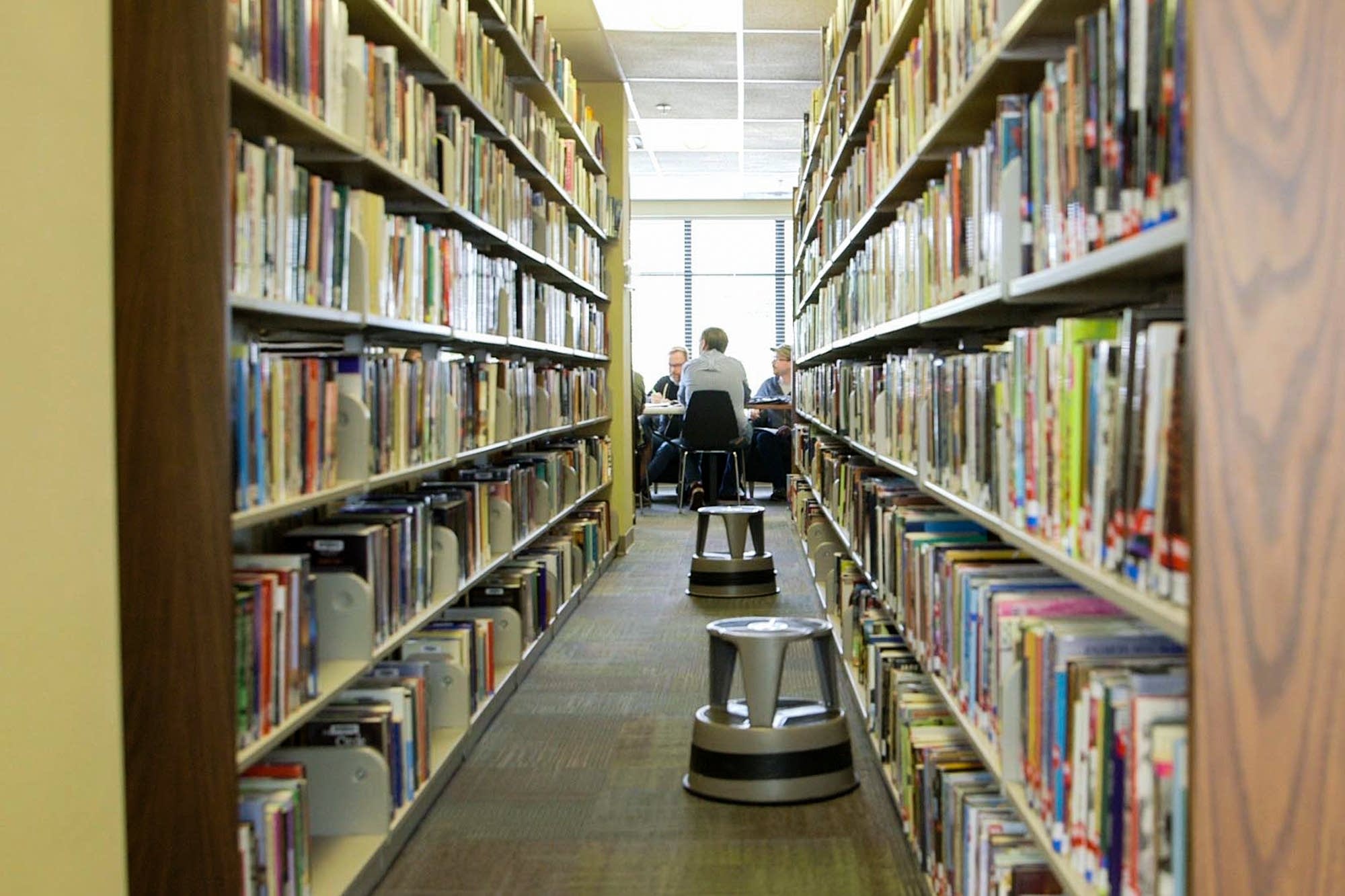
A library in Minneapolis is celebrating 40 years of collecting and lending LGBTQ+ books, movies and other materials.
Quatrefoil Library started in 1986 as a personal collection shared among friends. Today, it has more than 25,000 items and more than 11,000 library card holders. And the library says that number doubled just in 2026.
Iggy Gehlen is the board vice president and programming chair at Quatrefoil. He talked with MPR News host Nina Moini about the importance of the library and its recent enormous growth in members.
Use the audio player above to listen to the full conversation.
Subscribe to the Minnesota Now podcast on Apple Podcasts, Spotify or wherever you get your podcasts.
We attempt to make transcripts for Minnesota Now available the next business day after a broadcast. When ready they will appear here.
Turn Up Your Support
MPR News helps you turn down the noise and build shared understanding. Turn up your support for this public resource and keep trusted journalism accessible to all.
Audio transcript
IGGY GEHLEN: Hi. It's a pleasure to be here. Thank you for having me.
NINA MOINI: Incredible growth. Wow. Congratulations on that. The library's card holding members have more than doubled just this year. What do you think is driving that?
IGGY GEHLEN: Yes. We're very excited and pleased by this increase in access to LGBTQ+ stories and history. And we feel very grateful that a combination of factors led to this sudden increase. Prior to this year, we were at about 4,500 members, and we changed our membership application to be digital, allowing people to access it anywhere.
And unlike a lot of other lending libraries, we do not have a residency requirement. And also, our membership is entirely free. And some of the people on BookTalk and some of the other passionate library advocates online and in our community started sharing that information about our library and others that have a similar amount of free access, of which there are very few, and our website basically crashed overnight once those posts were made, which is a lovely problem to have.
So yes, we've been very excited to welcome in a whole bunch of new people to access these stories from all over the state, all over the nation, and now all over the globe. We have about 900 of these new members who are from different countries all over the world.
NINA MOINI: BookTalk came through for you all. I love that. So 1986 is when all of this began. It was a Twin Cities couple, David and Dick, collecting books for themselves, really, right, and lending them to friends. I love that, just this personal collection becoming a library for the wider community. I haven't heard a lot of stories like that in this area. I mean, how is that to carry on that tradition?
IGGY GEHLEN: Yes. I did not have the pleasure of meeting Dick and David myself, but I feel very honored to be a steward of their story and the legacy that they created in the founding of Quatrefoil Library. They kept their original collection, many of which the pieces were books of queer pulp, in their linen closet in the home that they at that point shared together. So, like so many queer stories, our starts in the closet.
But there was a real community need. The amount of books that were being made that told queer stories, particularly those that told queer stories in a positive light, were few and far between back then. And their friends said that they were a really valuable resource in curating that collection originally. And after the creation of and incorporation of the library as a 501(c)3 nonprofit lending library, then they were also able to lean on the careful care and curation and expertise of professional librarians who volunteered their time after working 40 hours in their library of choice for their day job to then make sure that this community had access to these stories after hours.
Lots of community members it takes to make something last this long, and for you all to be having so much even more success right now is really remarkable. For someone who's never visited, what might they find at Quatrefoil that they wouldn't necessarily expect from a library?
IGGY GEHLEN: Absolutely. So our physical library is located on East Lake Street in Minneapolis, and we have a variety of pieces in the collection there. Our cumulative collection is about 26,000 pieces. So there's lots of stories that you maybe wouldn't be able to find elsewhere. We have publications that are the big, heavy-hitter headlines of the most recent few years, like Heated Rivalry, for example.
But then we also have pieces that are no longer in publication that you might not be able to find in print anywhere else and that don't have a digital component. And so that includes pieces of our queer history, which we have available in our shelves. We also have a queer archive. Those are books that were published and/or printed pre-1969, or pre-Stonewall Some of those books in that archive are from Dick and David's personal collection that started Quatrefoil Library in the beginning. And then there's also lots of other pieces that we have received or collected over the years.
One thing that I think is really fun that doesn't get highlighted very often, but people do come and seek us out for, is a collection of periodicals that we have bound, and those are periodicals such as newspapers or magazines that were by, for, and about the queer community that are on the local level. We have Out to Brunch, which was a lesbian monthly newsletter where you could find all of the social gatherings for you and your lesbian friends to hang out and see each other. And then we also have the entire backlog of Lavender Magazine, which just recently closed its doors, as well as a bunch of national publications as well, such as The Advocate magazine.
NINA MOINI: Wow. I mean, this is a historical record, and that's amazing. And just the fact that it's entirely volunteer run-- I mean, what makes this possible? Are there challenges in keeping a collection this large available to the public?
IGGY GEHLEN: Sure. So we're very fortunate. We are a rare case of a 40-year-old institution that has, in its entire run, been 100% cared for and curated by volunteers.
NINA MOINI: Wow.
IGGY GEHLEN: I was just looking back-- because it's our 40th anniversary-- at some of our historical publications. And when we first started in 1986, we had about 19 volunteers, and today we have about 175 volunteers who have some engagement over the course of the year, making sure that this library can stay open and free and available to the public.
It is sometimes a challenge to get everything done in the limited amount of time that you have. Everybody is volunteering their time and expertise on top of their other responsibilities, be that full-time jobs, children, otherwise enjoying their retirement, friends, family, and other commitments, et cetera.
But the people who are here are so passionate, so dedicated, and really give it their all. And their diverse experiences and their expertise is really something that allows this library to shine. And as a person who has been only in the library for the past four to five years, I've really seen how that passion builds exponentially upon itself when you have all of these people in the room.
And so it's been really lovely to see all of the ways that the library has continued to advance and expand and take more time and care to really ensure that the services that we provide are exactly what the community is asking for and that, within the library space as well as in the digital space, we are doing our best to provide the highest caliber of service and really addressing all of the niches that maybe aren't filled by other nonprofit institutions or by other libraries.
NINA MOINI: Yeah, everyone who wants to be there really wants to be there, and it shows. You also have a community room, though, right, for events. Can you talk a little bit about the community-building side of the library and how that may have evolved, sort of alongside the collection?
IGGY GEHLEN: Absolutely. So we moved into our current brick and mortar location in about 2011, and this was the first time that we had not just a room full of the stacks of books and other materials, but rather an additional room, which we share with the tenants of the building that we exist under, called the Community Room, which allows us to host events in this space.
So it started out, in the earlier days, with predominantly literary-focused events-- author readings, talks, those types of things. And we still do those on occasion, but we have found that the community has been asking for more and more over the years, particularly post lockdown in 2020, an opportunity for connection, whether that is making new friends, sharing new resources, finding out ways to engage in hobbies as a collective, particularly as a place that is not a bar. I feel like the queer community oftentimes is expected to seek its connection exclusively in nightlife, and that's not everybody's cup of tea.
And so the library has really expanded its programming over the past five years to make sure that it includes things like-- we just did a speed friending event. Last weekend, we had a gender expansive clothing swap. It was very warm, but we were, in theory, supposed to be preparing folks for winter--
NINA MOINI: It was warm.
IGGY GEHLEN: --with lots of coats and sweaters. And then, up next, we're going to have a PowerPoint presentation party and then an open mic night where people will be able to share their own poetry, poetry that they love from the community, or poetry that they just discovered from our stacks. And so it's this nice mix of those pieces that really tie us meaningfully to that collection in the library and also meaningfully tie our community more deeply together.
NINA MOINI: Just lastly, Iggy, as you celebrate 40 years, what do you hope Quatrefoil looks like in 10 or 20 years from now? What do you want to make possible for the next generation?
IGGY GEHLEN: That's a really lovely question. Thank you. I love that. We've been looking backwards as a means of looking forwards. And one thing that we've seen is that, more or less, everybody wants the same things that they've wanted the whole time, which is just a meaningful way to find new stories where they can see themselves reflected in those stories or experiences that they wouldn't get to have otherwise and the opportunity to connect with their fellow, local, and now wider LGBTQ+ community.
And so looking forward, I would just like to have the library continue to provide the services it does for free to this community here in Minneapolis and continue to grow in size, whether that be the size of the collection, the size of the space, or the size of the membership, and certainly the size of the volunteer pool after that--
NINA MOINI: Wonderful.
IGGY GEHLEN: --to allow as many people as possible to access these stories.
NINA MOINI: Amazing. Iggy, thank you so much. Congrats on 40 years, and have a great time at the celebration this Friday.
IGGY GEHLEN: Thank you. We look forward to it.
NINA MOINI: Take care. That's Iggy Gehlen, board vice president and programming chair at Quatrefoil Library in Minneapolis.
Download transcript (PDF)
Transcription services provided by 3Play Media.

