
Cool weekend, frosty up north; Memorial Day weekend looking summery
Windy, cooler Friday

Go Deeper.
Create an account or log in to save stories.
Like this?
Thanks for liking this story! We have added it to a list of your favorite stories.


Cooler air is streaming in with blustery west-northwest winds Friday. Highs will be in the 60s and 50s with winds at 10-25 mph.
Frosty weekend north; warmer in time for Memorial Weekend?
Friday will be our warmest day of the weekend with highs in the 60s south and 50s north.
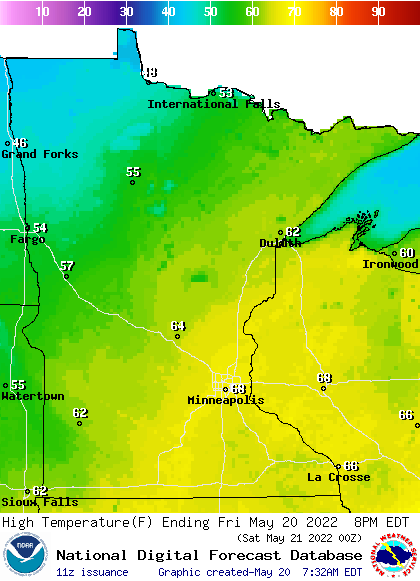
The winds will be gusty from the west-northwest as even more chilly air blows in for the weekend.

A frost advisory is in effect for northern Minnesota both Friday and Saturday nights as temps will dip into the 30s.
Turn Up Your Support
MPR News helps you turn down the noise and build shared understanding. Turn up your support for this public resource and keep trusted journalism accessible to all.
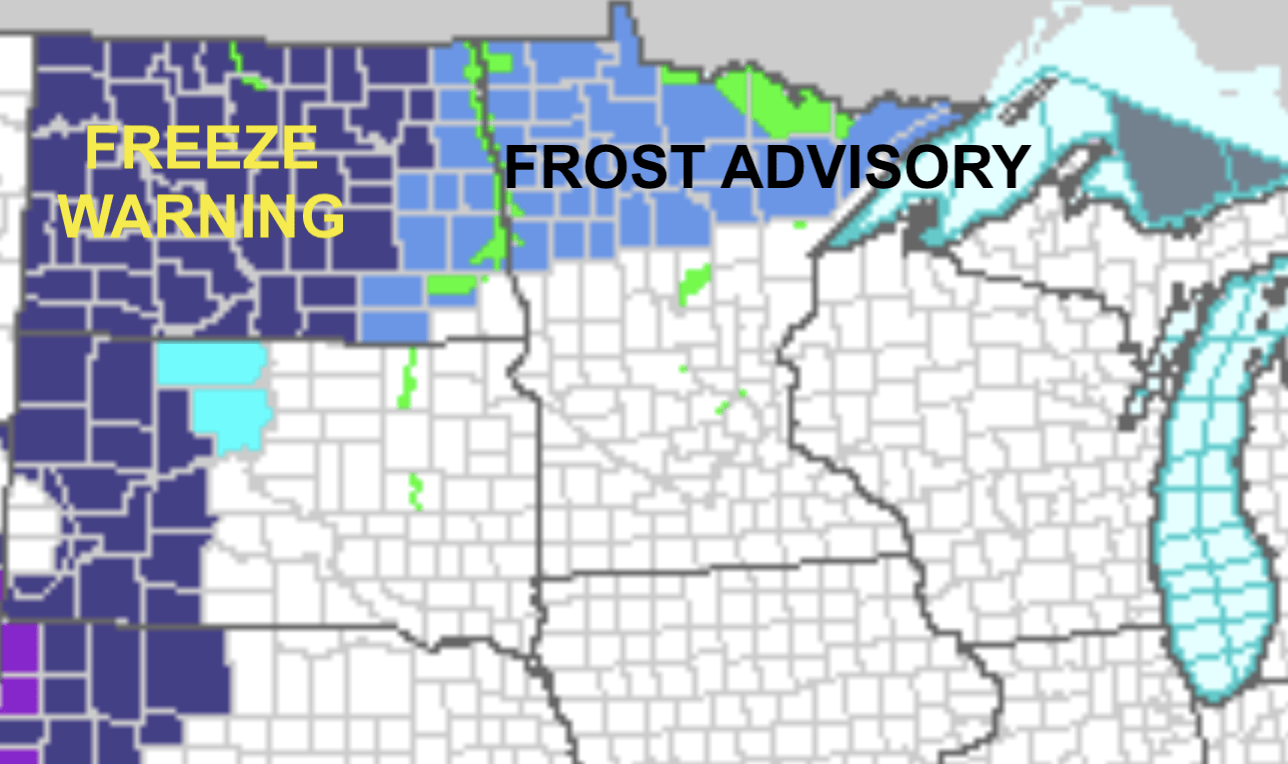
In case you’re curious, the normal last frost date for International Falls on the Canadian border is May 27 and for Hibbing on the Iron Range it’s June 1, so this is very normal for the north.
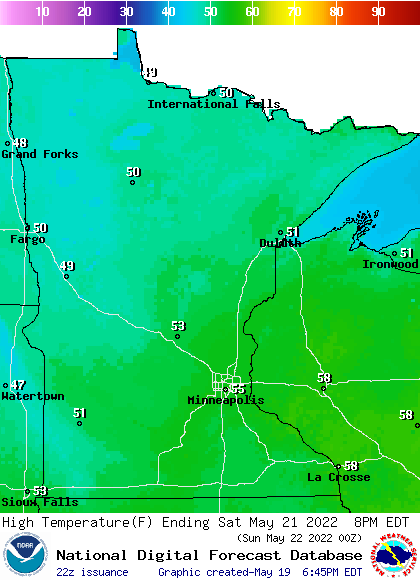
Highs Saturday will be even cooler with 40s to the north and 50s south.
The pattern does look to shift in time for Memorial Weekend. Summer temperatures should again move back into Minnesota by late next week.
The upper-level trough (cool conditions) will move slowly east and an upper-level ridge of high pressure (warm conditions) moves in for next week.

What large hail tells us about storms
There were 26 hail reports Thursday in Minnesota with the largest measurements at 3 inches in Twin Lakes, near the Iowa border in Freeborn County, and 2 inches in Oakdale, east of St. Paul.
That golf ball and baseball-sized hail tells us quite a bit about what’s happening inside a thunderstorm.
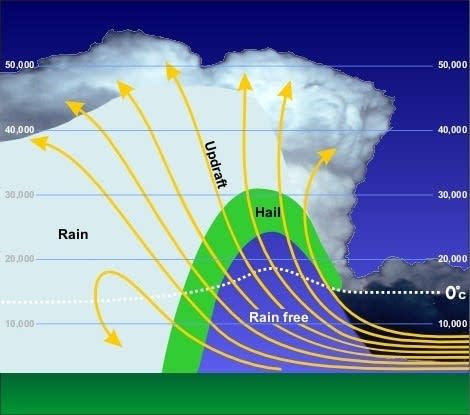
For hail to form, we need a strong updraft, which is upward moving warm, humid air, feeding a thunderstorm. The bigger the hail, the stronger that updraft must be to keep the hail airborne. Global size hail requires a 70 mph updraft speed and baseball size requires about 80 mph.

