
Isolated showers again possible Friday
Better chance of storms late Sunday

Go Deeper.
Create an account or log in to save stories.
Like this?
Thanks for liking this story! We have added it to a list of your favorite stories.


A humid, unstable airmass will again yield a few isolated showers and thunderstorms Friday. Dew points drop for eastern Minnesota late Friday into Saturday. Sunday brings a better chance of storms.
More isolated showers Friday
The same meandering frontal boundary, combined with high dew points will again yield a few isolated showers and thunderstorms. The activity will mainly be from the Twin Cities and points south late Friday afternoon and evening.
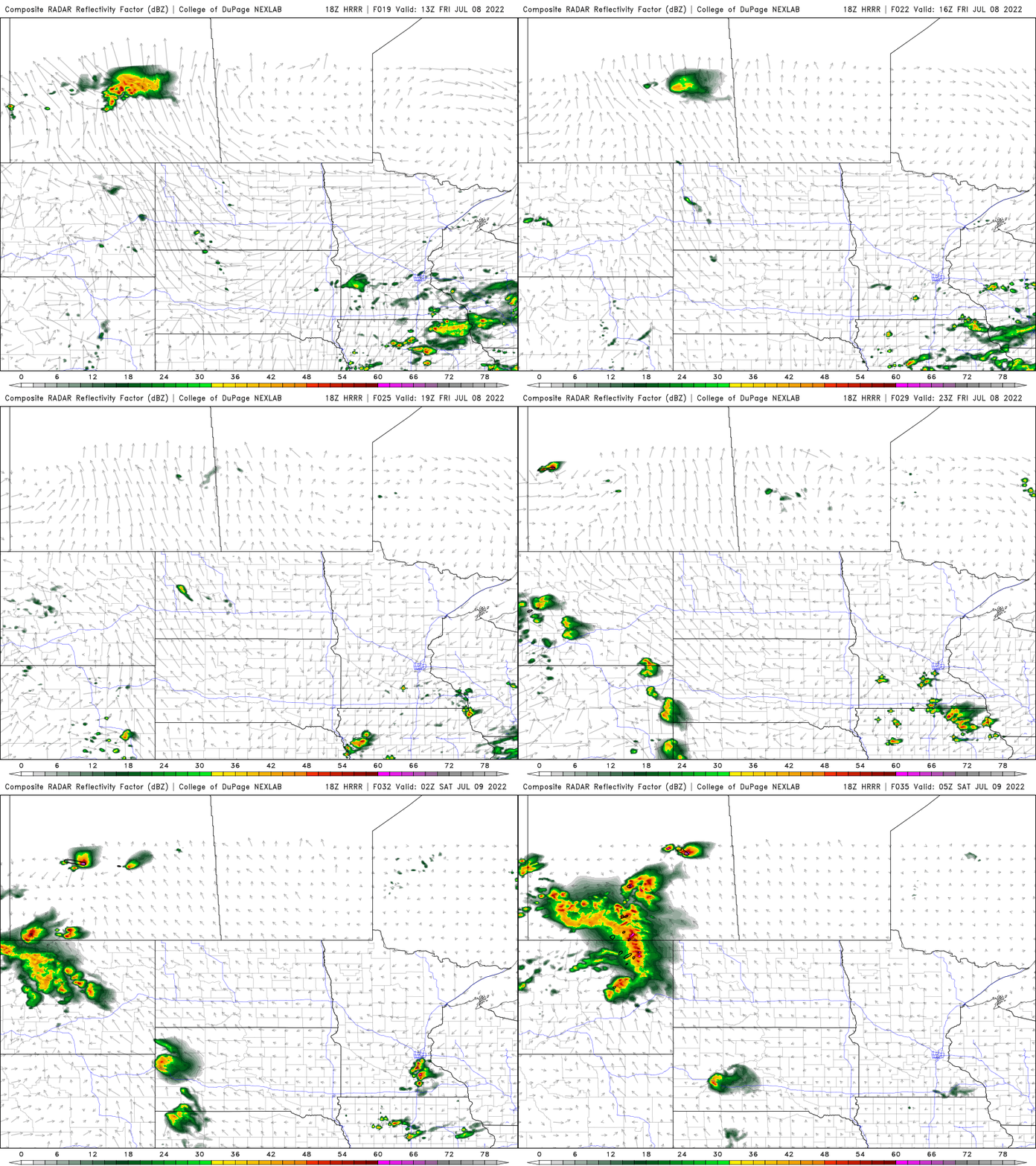
High temperatures will again be well into the 80s for most.

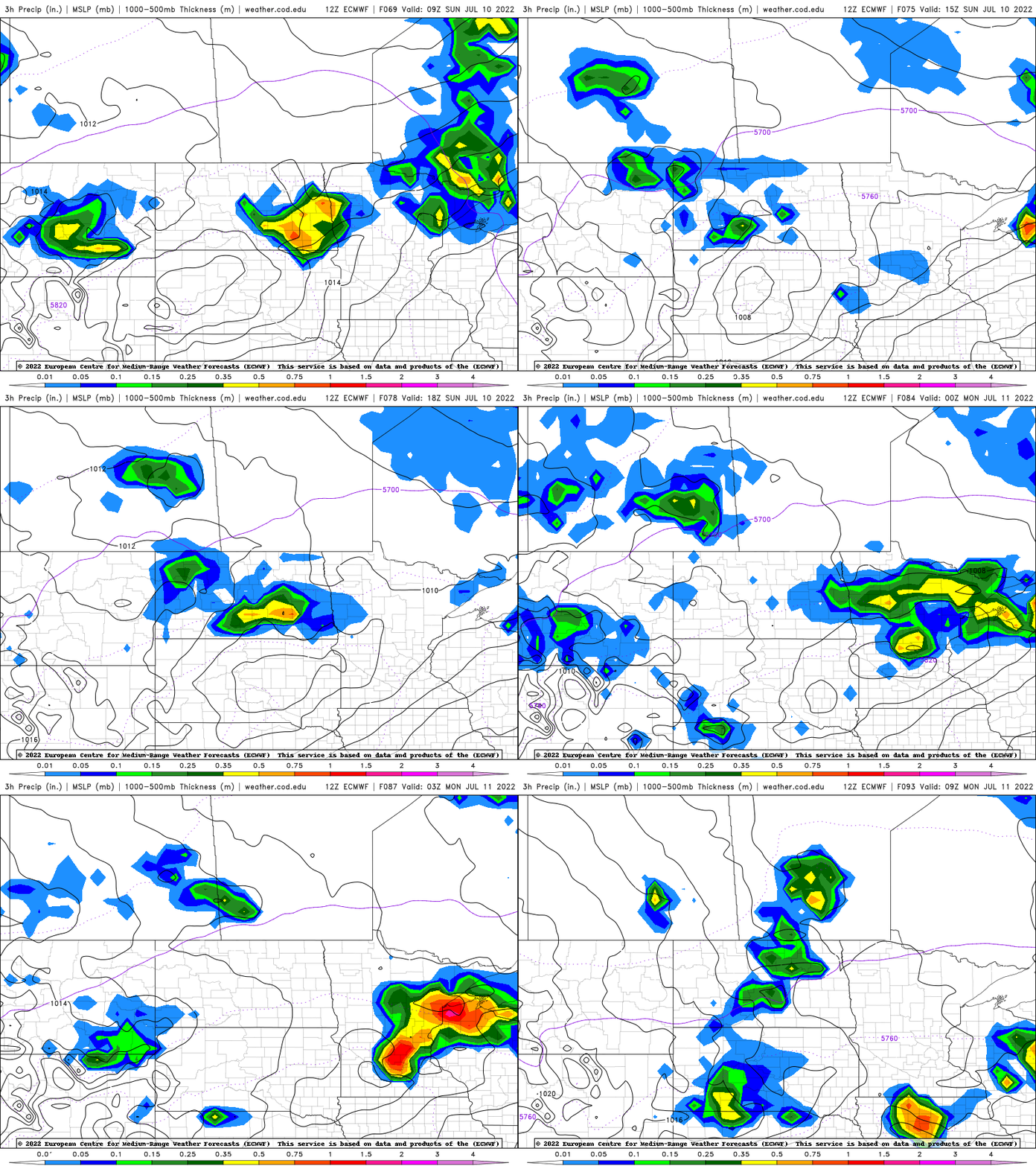
We then get a break from the muggiest air late Friday into Saturday across much of northern and eastern Minnesota as a high pressure area moves over the Great Lakes again, pushing the muggy air just west. That humid air returns quickly Saturday night and will help to fuel potential severe weather late Sunday into Sunday night which will yield our best chance of any significant moisture in any of the coming days.
Turn Up Your Support
MPR News helps you turn down the noise and build shared understanding. Turn up your support for this public resource and keep trusted journalism accessible to all.
It’s looking increasingly likely that a potential heat wave is then developing for late next week into next weekend.
Did you miss it? 99% of humanity saw ‘daylight’ at 6:15 a.m.
A viral internet claim stated that 99 percent of humanity will see daylight at 6:15 a.m. early Friday morning. The folks at TimeAndDate.com fact-checked it and found it to technically be true.

About 3 percent would have been in twilight so dim they may not notice the light however. Time and Date.com calculated 93 percent will have perceived daylight. There are several reasons why July 8 at 6:15 a.m. is the moment.
For one, the northern hemisphere has more landmass and more human population as a result, however, you do need some southern hemisphere population to get to a higher proportion of the global population. This requires it being ‘not quite’ the solstice (June 21). On July 8 some of Indonesia (which has high population centers) and the Philippines get in on the daylight definition.
The reason it’s July and not early June is due to the light landing on those landed areas and not the Pacific ocean. New Zealand and Australia were main areas in the dark. If you missed it, worry not, it comes every year.
You can read the full, original article from Timeanddate.com here:

