
Burning questions: The threat of worsening wildfires on air quality
Go Deeper.
Create an account or log in to save stories.
Like this?
Thanks for liking this story! We have added it to a list of your favorite stories.


Wildfire smoke is becoming an unwelcome part of our already short Midwest summers. When we dive deeper into the issue of wildfires, however, the situation is a bit more complicated than it seems.
Our limited summer months in the Midwest are precious, but recent wildfires in Canada, and the air quality alerts that follow, have put a damper on spending time outdoors. What many of us don’t realize is that wildfires play a necessary role in nature, and that managing them involves challenges we often don’t see.
It’s more complicated than we think
When it comes to fighting wildfires, it is important to understand exactly what firefighters are up against.
Canada is vast, the second-largest country in the world after Russia, covering over 3.85 million square miles. Nearly 40 percent of this enormous landmass is covered by forests, creating a massive fuel source for wildfires.
Turn Up Your Support
MPR News helps you turn down the noise and build shared understanding. Turn up your support for this public resource and keep trusted journalism accessible to all.
Another important factor is the location of the population. Canada has about 36 million people, and most of them are concentrated along the United States–Canada border.
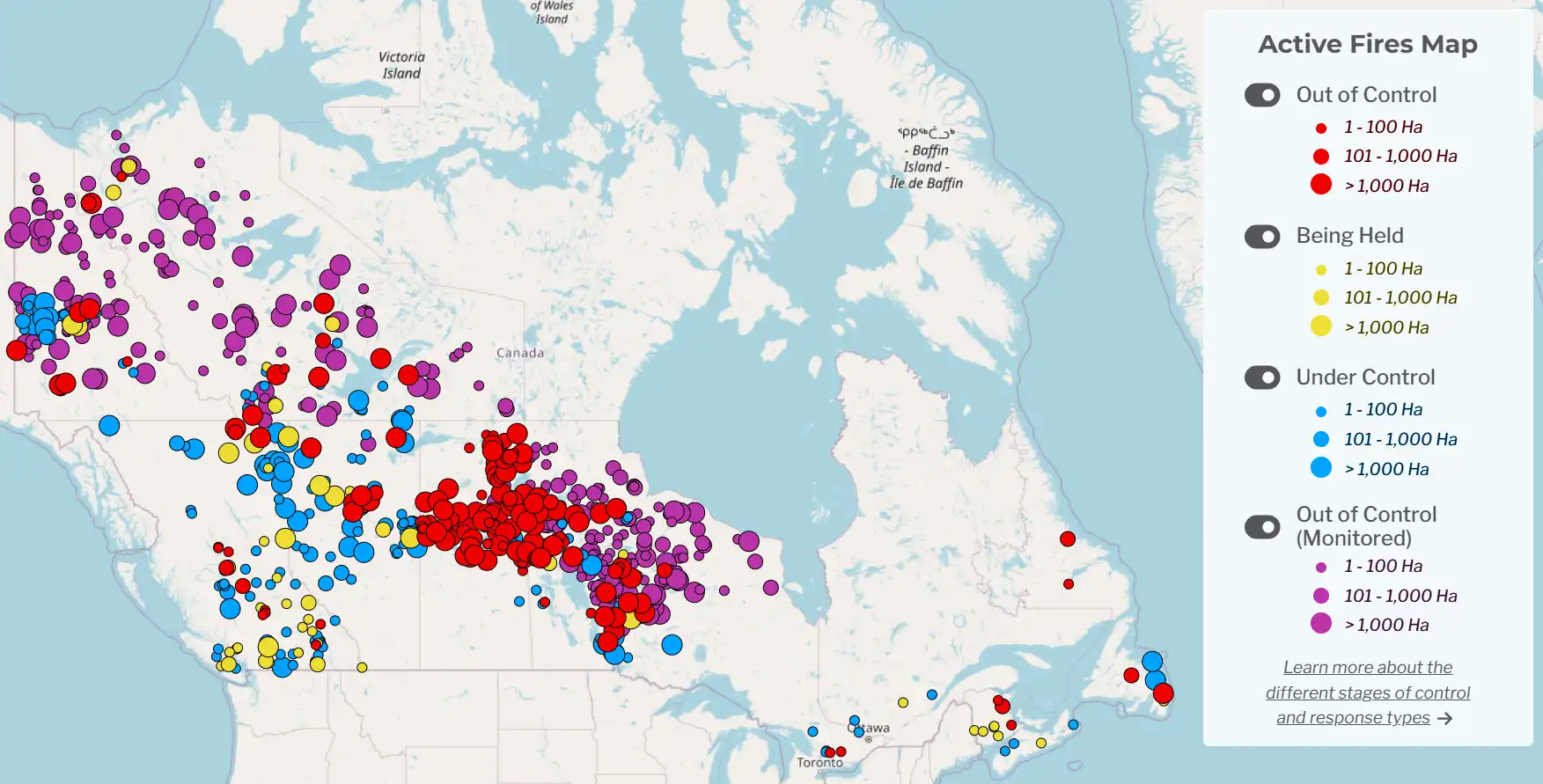
Most of these larger wildfires are burning in uninhabited areas that can only be accessed by helicopter. This limited access poses a significant challenge for wildfire management.
According to Brady Holliday, air operations coordinator for Société de protection des forêts contre le feu (SOPFEU), other factors contributing to a more troublesome fire season include drought, winter snowpack levels, weather patterns and an increase in lightning strikes.
Canada is currently experiencing its second-worst drought season, with 2023 being the worst on record. With less rain and reduced snowpack, forests become drier and more vulnerable to wildfires.
Below is a graphic illustrating how wildfires have increased each week compared to the 10-year average. The data highlights just how unusually intense this fire season has been.

Let it burn
Wildfires are a natural part of our ecosystem, and we need them for several important reasons. When fires occur in hard-to-reach areas, put firefighters’ lives at risk, or serve to prevent even larger fires in the future, they are often allowed to burn. That’s what is happening with most of the fires in Canada.
Resources are another reason firefighters aren’t sent to every wildfire. If too many personnel are dispatched to fight fires in remote, uninhabited areas, there may be limited resources left to respond quickly when a fire breaks out near populated communities — where the risk to people and property is much greater.
Air quality this year in numbers
According to the Minnesota Pollution Control Agency, Minnesota has experienced 18 air quality alerts so far this year, covering a total of 38 days in at least some part of the state. The year 2023 holds the record with 22 alerts and 53 alert days.
Notably, the longest continuous alert ever recorded was this year, from July 29 to Aug. 3. With more than a month of summer still ahead, we may be on track to break the air quality records set in 2023.
Since we can’t control the weather, where lightning strikes, which way the winds blow, or where the rain will fall, wildfire smoke will continue to be a part of our lives. What’s important is that we do what we can to protect ourselves during air quality alerts. You can find a lot of helpful information in this MPR News story.

