
40 years later, and Farm Aid still uses art for change
Go Deeper.
Create an account or log in to save stories.
Like this?
Thanks for liking this story! We have added it to a list of your favorite stories.


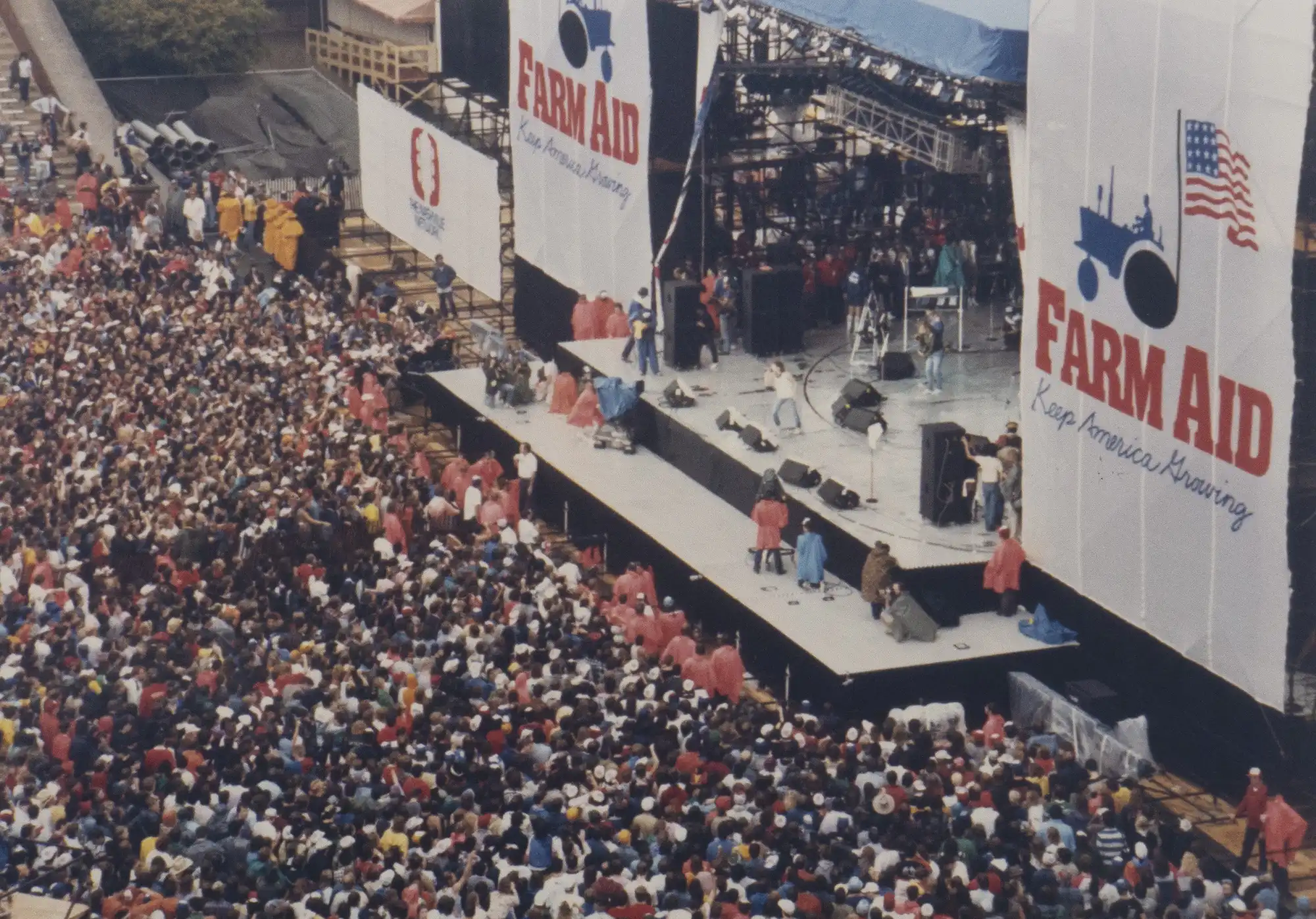
Four decades ago, Willie Nelson and a gathering of music icons set out to solve one problem: How do we support American farmers through crisis?
It was 1985, and there was a farm crisis. Farmers were going out of business and getting foreclosed.
Nelson and other artists were inspired by the impact of “Live Aid,” which raised money and awareness for famine relief in Ethiopia. They turned to the tool they knew best: art. They created Farm Aid, which this year takes place Sept. 20 at Huntington Bank Stadium in Minneapolis.
Alexandria Ward is Farm Aid’s farmer services network manager. She said that art is integral to Farm Aid “from its founding.”
Turn Up Your Support
MPR News helps you turn down the noise and build shared understanding. Turn up your support for this public resource and keep trusted journalism accessible to all.
“It's always been centered around art and the power of art to bring people together around the common cause and inspire people and educate people and inform people and build community,” she said.
Forty years on, the organization has expanded beyond music, weaving in art, education and community projects. With music at its core, the performances remain central to the festival.
This year’s lineup includes performances from Willie Nelson, Neil Young and the Chrome Hearts, John Mellencamp, Dave Matthews & Tim Reynolds, Margo Price, Kenny Chesney, Trampled by Turtles, Eric Burton of Black Pumas, Wisdom Indian Dancers and more.
Nelson, Young, and Mellencamp not only founded the festival but also remain active as members of its board of directors. They are joined by Matthews and Price.
Seeding the festival
This year, the festival’s first in Minnesota, will include an especially Midwestern art project.
Attendees will collaborate on crop art album covers honoring each board member, guided by Marta Shore, who curates crop art at the Minnesota State Fair.
“We're super excited. We're having that really traditional Minnesota activity,” Ward said.
Recent shared art exhibits have included painted planter boxes later donated to community gardens, and last year, bunting made from New York sheep’s wool, now hanging at this year’s festival.
Farm Aid now includes the Homegrown Village, which Ward oversees. It's an immersive experience that educates attendees about farming, rural life and food through demos, talks and crafting.
"It's meant to use all of your senses. So they're really trying to give a full body experience of farming, agriculture, rural culture and Minnesota, in this case,” Ward said.
The Village is organized into three sections: the skills tent, main tent and farmyard stage.
In the skills tent, attendees watch DIY demonstrations about subjects including mushroom foraging, beekeeping and flower pressing. In the main tent, organizations offer trivia, scavenger hunts, screen printing and button making.
Each activity highlights the ties between agriculture and the local community.
These activities are paired with panel discussions where musicians, farmers, and advocates share why farming and agriculture matter to them.
The “homegrown” concept is also embraced in their concessions. Farm Aid takes over the kitchen to control certain requirements like no GMO oil, as well as sourcing food from local farmers.
Planning the event
Once the venue is set, Farm Aid spends months commissioning artists, educators, organizations and volunteers. The festival brings together Minnesota groups alongside regional and national organizations.
“It is a lot of local organizations, which is really cool, because they get to connect with local people in a different way than they normally would,” Ward said.
Organizations include the Wild Farm Alliance, Minnesota Soil Health Coalition, Minnesota Farmers Union and Land Stewardship Project.
Farm Aid itself is a non-profit group of about 20 staff members that creates this festival and oversees support for farmers through emergency funds, hotlines and grants.
“Farm Aid’s work as an organization is like a manifestation of our work of the festival, the way a festival brings people together and builds community and builds bridges. That's what far made as an organization tries to do,” Ward said.
Since 1985, Farm Aid has granted about $31 million to some 300 organizations across the country.

