Northern lights could be visible again Wednesday night
Another coronal mass ejection headed toward Earth

Go Deeper.
Create an account or log in to save stories.
Like this?
Thanks for liking this story! We have added it to a list of your favorite stories.


Many Minnesotans saw a brilliant display of the auroras Tuesday night. It was the most intense activity since May 2024.
Don’t put those cameras away yet. We could see the northern lights again Wednesday evening.
More auroras possible
Many Minnesotans saw one of the most brilliant aurora displays in modern times for the region. The KP index reached 8.67 Tuesday evening, just shy of the May 10-13, 2024 solar storm that was the strongest since 1989.
The times on the chart below are in Greenwich Mean Time, six hours ahead of Minnesota. The peak here was reached at 9 p.m. Tuesday but continued at high levels through midnight.
Turn Up Your Support
MPR News helps you turn down the noise and build shared understanding. Turn up your support for this public resource and keep trusted journalism accessible to all.

On a more typical quiet night, the aurora oval sits over about 60 to 70 degrees latitude — think Hudson Bay, Alaska, or Norway. An average night sees a KP index of 2 to 4:

When the KP index is very intense, like last night, when it’s closer to 9, that oval expands due to the more intense energy:

The other incredible sight with intense geomagentic storms is that we see a variety of brilliant colors. This is due to the more intense energy levels interacting with oxygen and nitrogen at different levels of our upper atmosphere.
The result — different color light shows — is essentially our atmosphere in action protecting Earth’s surface from intense radiation from the sun.

What causes the auroras in the first place? The sun releases a solar flare, or coronal mass ejection, that then flies toward Earth at anywhere from 250 to 3,000 miles per second!
When the activity aligns with earth’s magnetic field the energy enters our upper magnetosphere. The intense energy excites nitrogen and oxygen atoms. When these atoms and molecules return to their normal state, a photon, or light is released.

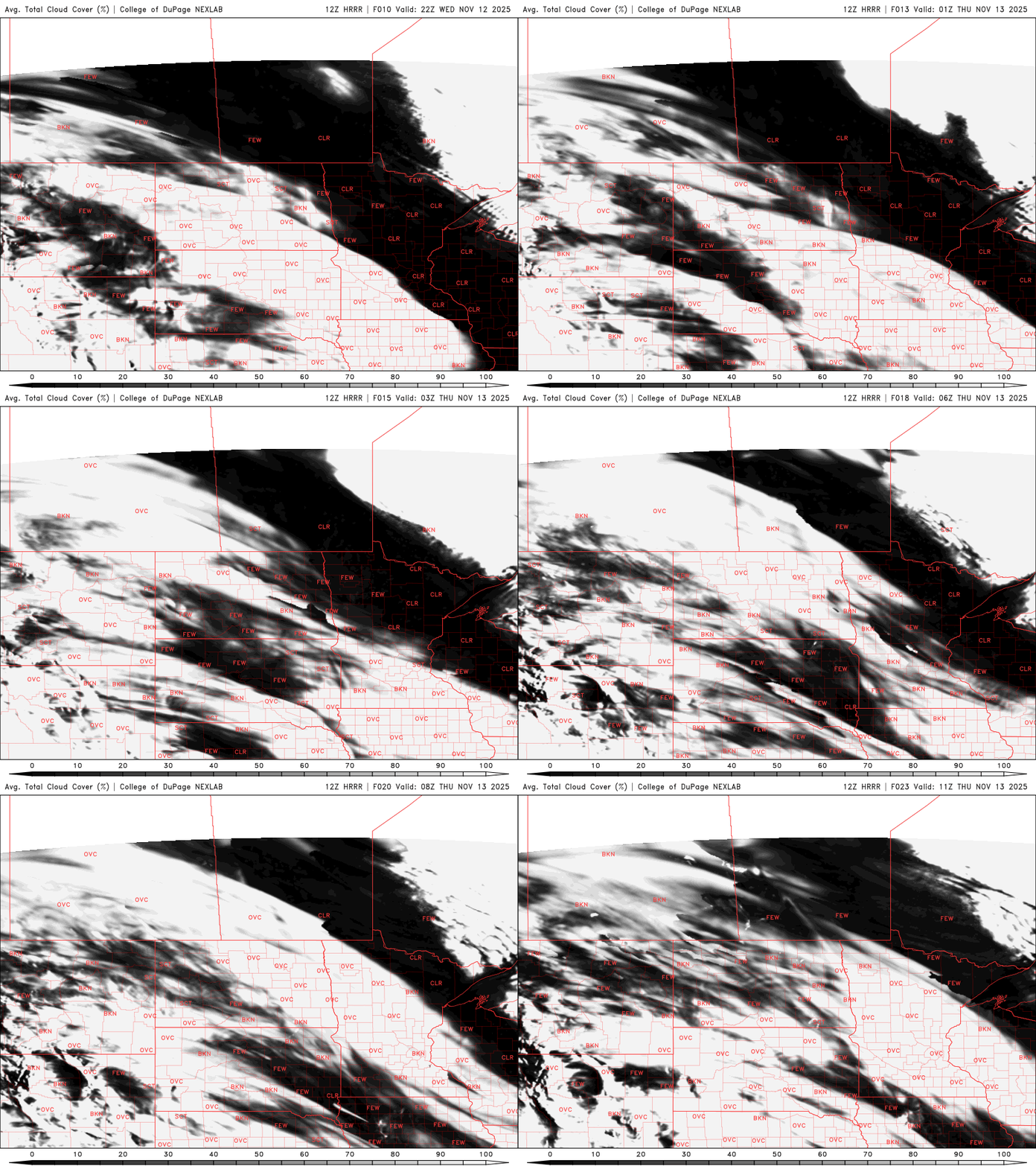
So what about Wednesday night? It’s possible to see the auroras again. A KP index of 6.67 is forecast, which isn’t as intense as last night, but enough to make them visible all across Minnesota, even south.
The one hiccup for southern Minnesota is that we’ll likely see some high cirrus clouds move in. While they won’t obscure the sky completely, given the faint nature of the northern lights it could make them more difficult to see.
Central and northern Minnesota will likely see clear skies.