
Winter Hazard Awareness Week: Understanding winter storms
Knowing the different types of storms can help you prepare

Go Deeper.
Create an account or log in to save stories.
Like this?
Thanks for liking this story! We have added it to a list of your favorite stories.


It’s Winter Hazard Awareness Week in Minnesota and Wisconsin. It serves as a gentle reminder that our cold-season weather brings its own unique set of challenges.
In this post, we’ll focus on key winter storm definitions from the National Weather Service and how to prepare for winter weather.
Winter storm definitions
Winter storms come in many forms, and each type carries its own risks and impacts.
The National Weather Service issues several winter storm products. Understanding the differences between watches, warnings, and other winter weather alerts helps you know when to prepare, when to take action, and when conditions may become dangerous.
Turn Up Your Support
MPR News helps you turn down the noise and build shared understanding. Turn up your support for this public resource and keep trusted journalism accessible to all.
Winter storm watch. Severe winter weather may develop soon—heavy snow, blowing snow, freezing rain, or sleet.
Winter storm warning. Severe winter weather is happening or about to happen. Usually issued for heavy snow and strong winds, but also for significant ice or sleet.
Blizzard warning. Winds of 35+ mph and visibility under 1/4 mile for several hours. Travel can become impossible.
Snow squall warning. A short-lived burst of intense snow with sudden near-zero visibility. Issued for small areas usually lasting an hour or less.
Winter weather advisory. Conditions will cause inconveniences and slow travel, but are not expected to reach warning criteria.
Extreme cold watch. Dangerous cold may develop soon. Temperatures or wind chills could drop to minus 35 to minus 40.
Extreme cold warning. Life-threatening cold is expected. Temperatures or wind chills will fall to minus 35 to minus 40.
Cold weather advisory. Cold conditions that are hazardous but less severe than a warning. Temperatures or wind chills of minus 25 to minus 30 are expected.
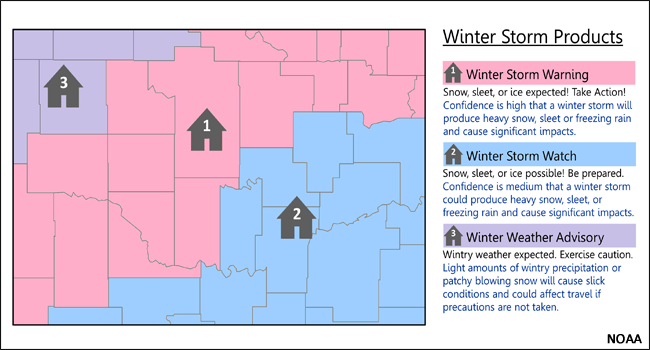 Winter storm productsNational Weather Service

Different types of winter precipitation
Understanding the different types of winter precipitation is key to knowing what kind of impacts a storm may bring.
Snow, sleet, freezing rain, and mixed precipitation all form in different temperature layers of the atmosphere, which is why storms can shift quickly from manageable to hazardous.
Snow forms when the entire atmosphere is below freezing, creating the fluffy flakes we’re most familiar with.
Sleet occurs when snow melts slightly on the way down and refreezes into tiny ice pellets before reaching the ground.
Freezing rain happens when melted snow stays liquid but freezes on contact with cold surfaces, creating a dangerous glaze of ice.
Each type can create very different travel and safety hazards.

How to prepare for winter storms
Being ready for a winter storm can make a huge difference in both safety and comfort. The first step is to stay informed.
Weather alerts from the National Weather Service, media outlets, and phone apps can keep you updated on watches, warnings, and advisories, helping you know when to take action and adjust your plans.
Getting your home ready is just as important. Make sure you have plenty of essentials on hand like food, water, medications, and batteries, so you’re not scrambling if the storm hits.
Keep extra warm clothes and blankets nearby, and make sure you have enough heating fuel or other ways to stay warm.
Your car needs a little prep too. Try to keep your gas tank at least half full, and put together a simple emergency kit with blankets, snacks, water, a flashlight, and a phone charger.
Check that your tires, brakes, and windshield wipers are in good shape, and whenever possible, avoid driving during the storm, roads can get dangerous fast.

Winter storms are a part of Minnesota life, but staying informed and prepared at home and on the road can help you stay safe when they hit.

