
Federal court opts not to restrict federal agents’ actions against protesters
Go Deeper.
Create an account or log in to save stories.
Like this?
Thanks for liking this story! We have added it to a list of your favorite stories.


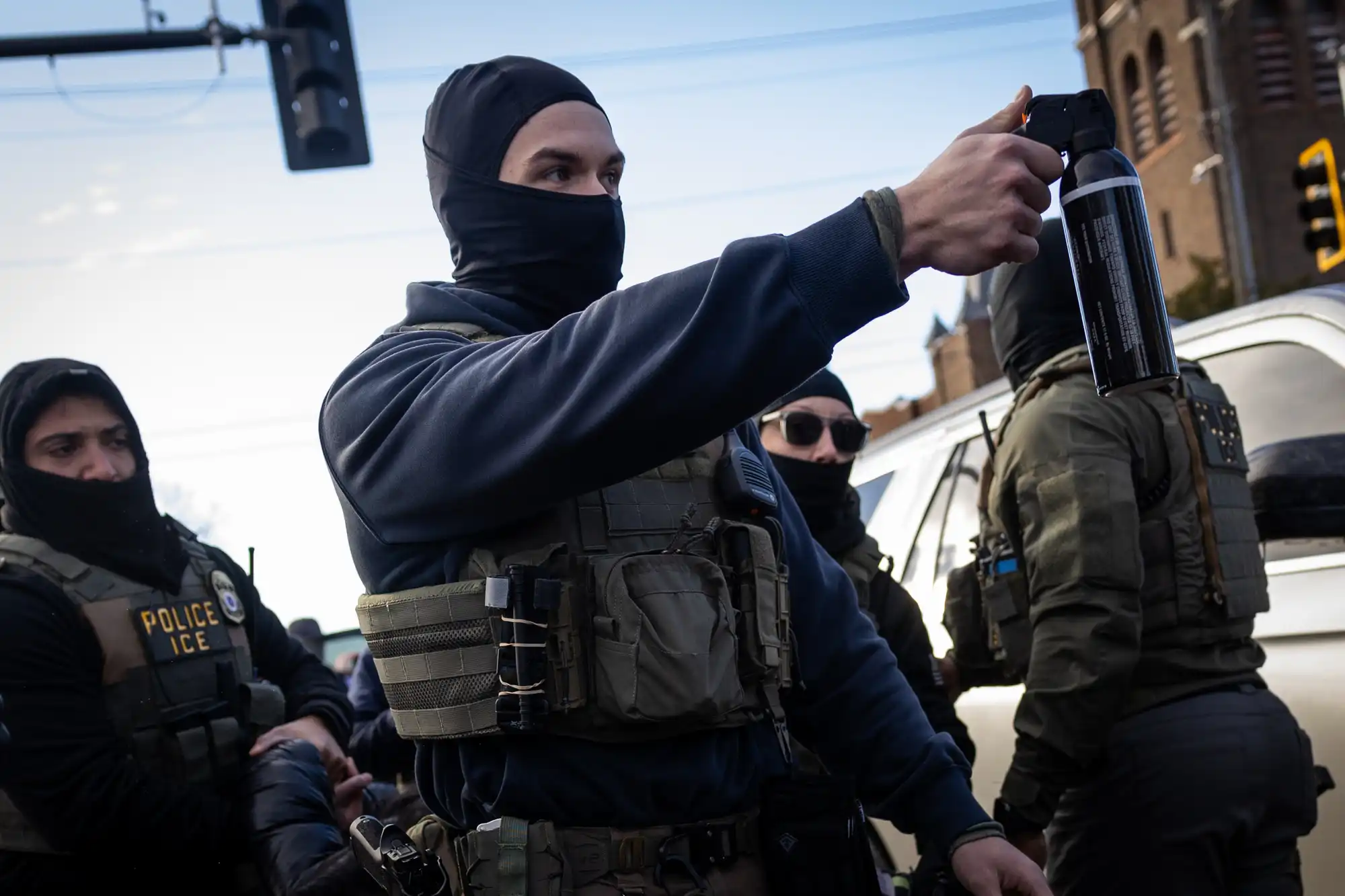
A federal appeals court on Monday left in place its ruling against limiting federal agents’ actions against protesters and observers in Minnesota.
It’s the latest in a lawsuit brought by the American Civil Liberties Union alleging that federal agents are violating protesters’ and observers’ rights amid the ongoing surge of federal immigration agents to Minnesota.
A federal judge had issued an earlier injunction in the case, barring agents from interfering with peaceful protesters. That included detaining protesters and observers who had not committed a crime, and using crowd control methods like pepper spray and nonlethal munitions.
But the Eighth Circuit Court of Appeals put that injunction on hold shortly after. The court said the order was too vague, after attorneys for the federal government argued that the injunction could limit agents’ ability to defend themselves and control crowds.
Turn Up Your Support
MPR News helps you turn down the noise and build shared understanding. Turn up your support for this public resource and keep trusted journalism accessible to all.
The ACLU asked the court to reconsider after the fatal shooting of Alex Pretti by federal agents on Saturday, citing “escalating, imminent risks” to protesters and observers. Attorneys for the ACLU submitted statements from two witnesses to that shooting, alleging that Pretti did not pose a threat to agents.
In its ruling Monday, the appeals court declined to reinstate the order limiting agents’ responses to protesters and observers. In their opinion, the judges wrote that the category of protesters and observers that the initial injunction seeks to protect is too broad, as protesters behave differently toward federal agents.
The judges also wrote that the injunction’s requirements for federal agents “are simply commands to ‘obey the law,’ which are ‘not specific enough.’”
The case will continue through an appeals process.
— Estelle Timar-Wilcox, MPR News

