
Crime novel author says fictional Iowa hit man 'Gerry Sass' is just doing the best he can
Go Deeper.
Create an account or log in to save stories.
Like this?
Thanks for liking this story! We have added it to a list of your favorite stories.


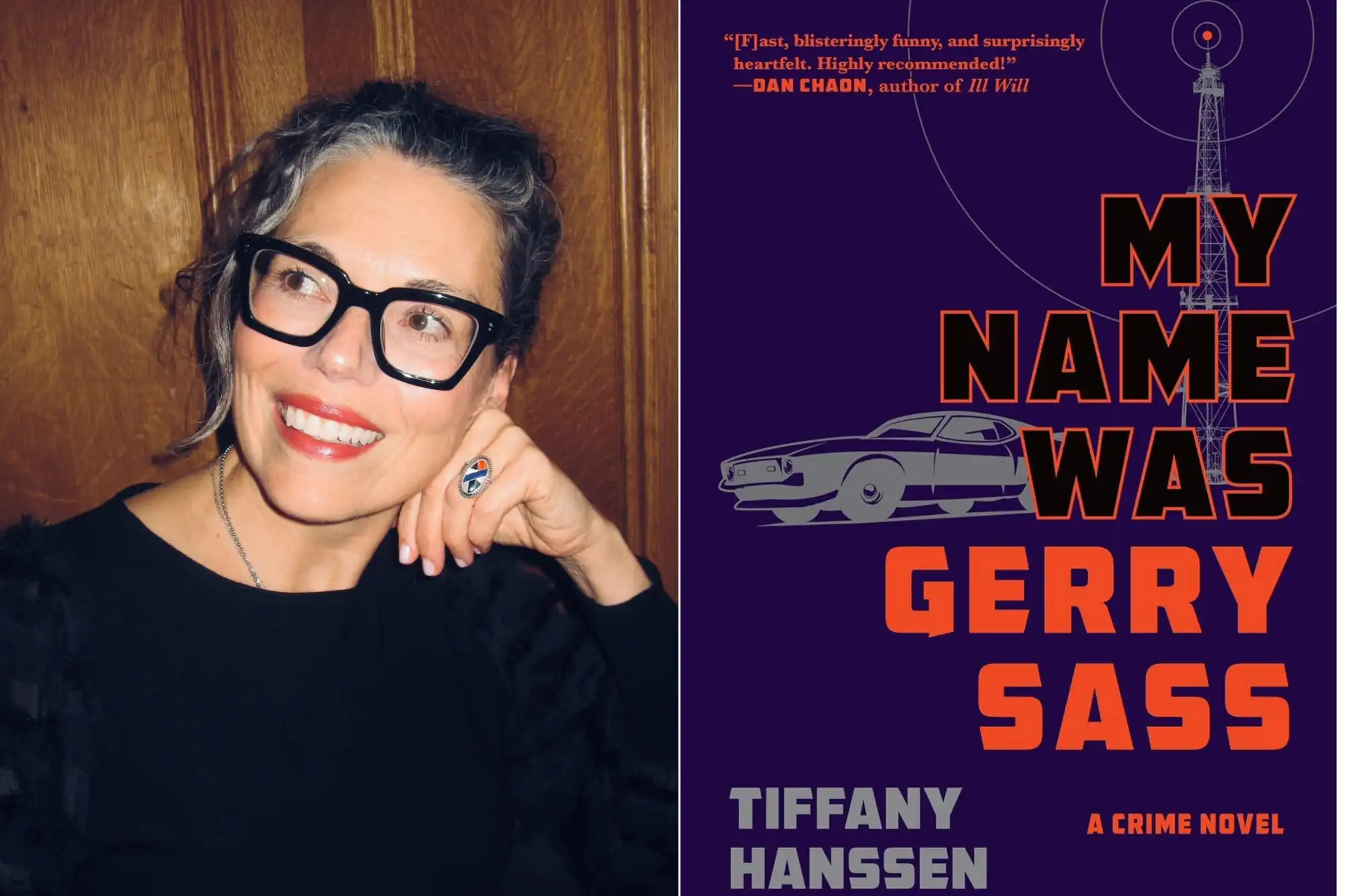
Tiffany Hanssen's debut novel "My Name was Gerry Sass" reads like a nod to a Coen Brothers’ movie. The novel is a stream of big crime, vengeance and car chases streaking across 1980s Iowa, with a dash of dark humor.
As the past-tense title indicates, Gerry Sass doesn’t survive the first chapter. He still manages to be a main character as he spends the rest of the book in purgatory, reliving his actions as a hit man, while his adult daughter sets out on a drug-fueled car chase to avenge his murder.
Hanssen will read from her novel Thursday at Once Upon a Crime Bookstore in Minneapolis.
And while the story is fictional, Hanssen pulled from a grain of truth.
Turn Up Your Support
MPR News helps you turn down the noise and build shared understanding. Turn up your support for this public resource and keep trusted journalism accessible to all.
“Gerry is based very, very, very, very, very loosely on my own father,” Hanssen said. “He was just not a very good person, and that’s kind of putting it generously.”
Hanssen didn’t grow up with her father, but she’d always invented stories about him. A DNA test during the pandemic connected her with half-siblings, and from them she gathered additional bits of his information. They weren’t flattering.
“No one had a full picture of him, and so what that allows for is a lot of speculation. In that way, the details were just enough to spark some fun,” she said.
Part of the fun is the novel’s Iowa setting. The story opens in a small farm town at the start of deer hunting season, as Gerry is heading to oversee the classic country AM radio station he owns in order to launder dirty money. Hanssen enjoyed pulling details from her own experience working at a similar — albeit above-board — family-owned radio station.
She grew up in Davenport, Iowa, and later moved to Minnesota, where she spent 15 years working on Garrison Keillor’s “Prairie Home Companion.” She’s now a radio host in New York City. She said she looked back longingly at the Midwest as she wrote.
“The rural farm stuff was just so meaningful for me. I just wanted to throw it all in and go buy a farm again,” Hanssen joked.
Being a crime novel, we know from the opening moment, as Gerry revises the obituary he habitually carries pre-written in his pocket, that things are going to go south fast. Readers alternate among the viewpoints of Gerry, his daughter and the soft-hearted Father Dan who witnesses Gerry’s murder outside a deer stand. Each choice they make brings them deeper into trouble.
Hanssen said writing this novel was “less about creating complicated characters and more about creating characters who have to reckon with something. Each of them is now in a situation where they are dealing with the hand that they’ve been dealt. Gerry is having to come to terms with that, and he’s having to maybe make amends. It’s unclear whether he does or will or could—or even thinks he should. These are characters who just do the best with what they have, and I think that that's really all that we're all trying to do anyway.”

