
Dust devils vs. landspouts: Twisting columns of air that confuse everyone
Go Deeper.
Create an account or log in to save stories.
Like this?
Thanks for liking this story! We have added it to a list of your favorite stories.


On warm, windy days you might spot a spinning column of dust dancing across a field, parking lot or prairie. At first glance, it can look like a tornado, but not every spinning vortex is created equal.
Two of the most commonly confused phenomena are dust devils and landspouts. While both involve rotating columns of air, they both form in very different ways and carry very different levels of danger.
Here’s how to tell them apart.
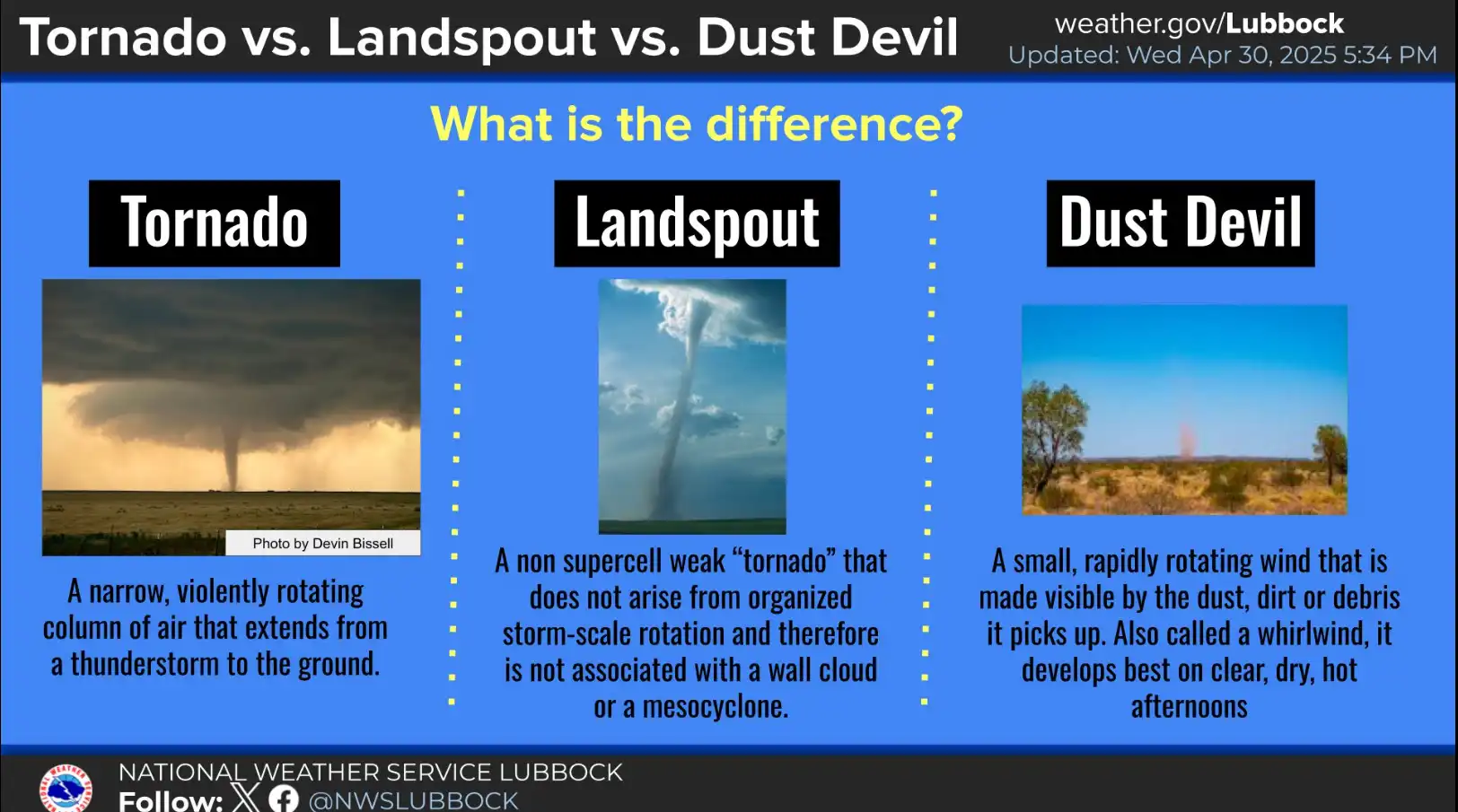
Dust devil
A dust devil is a small, short-lived rotating column of air that forms on hot, sunny days when the ground heats unevenly.
Turn Up Your Support
MPR News helps you turn down the noise and build shared understanding. Turn up your support for this public resource and keep trusted journalism accessible to all.
Dust devils form when the sun intensely heats the ground, causing pockets of hot air near the surface to rise rapidly.
As that warm air shoots upward, surrounding air rushes in to replace it. Small changes in wind direction, uneven terrain, or obstacles on the ground can then introduce rotation into the rising column of air.
If the spinning motion tightens and strengthens, a visible vortex forms, often picking up dust, dirt, leaves, or debris along the way.
Unlike tornadoes, dust devils form under clear skies and are not connected to thunderstorms. They are usually harmless and are short-lived.

Landspout
A landspout is technically a real tornado, but it forms a lot differently than the large tornadoes most people picture during severe weather outbreaks.
Instead of forming from a powerful rotating supercell thunderstorm, landspouts develop when spinning air that already exists near the ground gets stretched upward into a growing thunderstorm. Because of that, they can sometimes appear quickly and with very little warning.
Most landspouts form underneath growing cumulus clouds or developing thunderstorms and usually don’t require a rotating supercell to develop.
They’re often thinner, weaker and shorter-lived than classic tornadoes but they can still produce strong enough winds to knock down trees, damage roofs or toss around debris.

The biggest difference between dust devils and landspouts is what’s happening overhead. Dust devils form under sunny, fair-weather skies with little to no cloud cover while landspouts develop beneath growing thunderstorms.
There have been a lot of fascinating videos on social media lately showing large, intense dust devils spinning across dry landscapes.
One video was taken May 27 near the South Dakota, Minnesota and Iowa border.
Another intense dust devil was captured at a baseball game in New Mexico as it rapidly swept across the field.

