Ragweed rinsed by rain: Minnesota forecast

Go Deeper.
Create an account or log in to save stories.
Like this?
Thanks for liking this story! We have added it to a list of your favorite stories.


Hey, hay fever! The ragweed pollen had the MPR newsroom talking Monday morning. Plus, I spent the weekend pulling ragweed and breathing in the pollen over in Minneapolis. Or, wait, was I accidentally pulling goldenrod, a great pollinator, mistakenly thinking it was the ‘evil' ragweed?

What’s the difference?
Goldenrod and ragweed are mainstays of August and September and are almost always spotted at the same time. Both are pollinators, both look similar to each other, but only ragweed is likely to make you sneeze. Experts say you can be allergic to goldenrod but it’s less common. Let’s defer to the plant experts over at Friends of the Mississippi River:
“Goldenrods are primarily insect-pollinated — their flowers attract bees and other pollinators. The pollen grains they produce are large and heavy, so they stay near the plant. They also produce less pollen because they don’t have to rely on wind to carry it to other far-off plants.
In comparison, ragweed (of which we have three species in Minnesota) is primarily wind—pollinated, meaning the plants rely on wind to disperse their pollen. As a result, they produce massive amounts of tiny pollen grains that the breeze then carries every which way and beyond. Also telling: many allergy sufferers here in Minnesota tend to find relief in the northern part of the state, where goldenrods are plentiful but ragweeds are uncommon.
Turn Up Your Support
MPR News helps you turn down the noise and build shared understanding. Turn up your support for this public resource and keep trusted journalism accessible to all.
Ragweed’s small flowers are not showy or brightly colored (those characteristics attract pollinators) when compared to goldenrods. The flowers are also produced both at the stem tips and at the upper leaf bases: the male flowers — located at the tips of the stem — produce copious pollen, while the female flowers are small, greenish and non-descript.”
So, unfortunately, I did end up pulling the goldenrod out of my own flower bed, thinking it was the dreaded ragweed that’s given me an itchy throat.
Little data to rely on
One of the first things I was told by Minnesota weather lovers was this: there’s basically little-to-no real-time pollen data for Minnesota, at least that’s publicly available. Sure, there are guesstimates by weather apps and blogs, plus we know generally the time of year that things like alder or ragweed pop up.
But, according to Minnesota’s Department of Health: “Note: Due to limitations in collection resources and impacts of the COVID pandemic, there is very limited pollen data collected for 2021 and pollen was not collected in 2022. As of 2022, no more pollen data is being collected in Minnesota.”

More pollen days ahead
The hundreds of farm stands across the North Star State are full of peppers, tomatoes, beets, and herbs. The growing season has, well, grown, by weeks and weeks, and just over the last 55 years.
Of course, that’s great for farmers, this sign of climate change at our latitude. That also corresponds to a lot more days for weed, grass, and tree pollen, given the early ending to frost and freezes, and the corresponding lack of fall freezes until later.


Ragweed gets a rinse
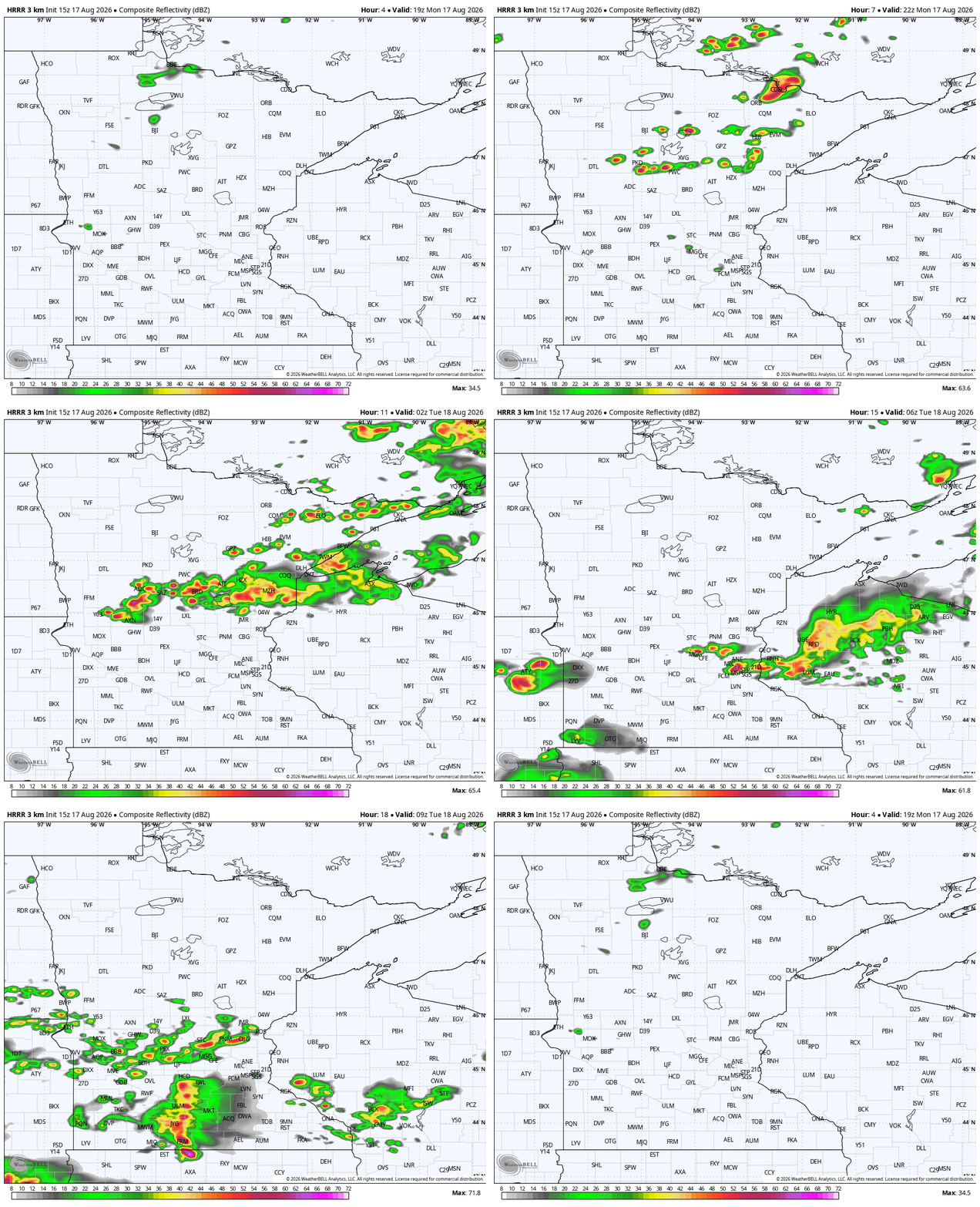
Rain is coming in Monday afternoon and evening. For the Twin Cities — which has a lot of both plants sprouting up now — that rain will come a little before midnight. A second wave arrives before dawn on Tuesday.
The rain will be helpful but clearly won’t totally solve the pollen issues. I plan on watering my lawn regardless, and perhaps that will help tame the pollen.
Clearly, the MPR weather team is not composed of medical doctors. Your best option may be talking with an allergy provider or your general practitioner. We’d be willing to bet that both are getting lots of calls now!