
How Minnesotans are helping Ukrainian refugees settle in their new communities
Go Deeper.
Create an account or log in to save stories.
Like this?
Thanks for liking this story! We have added it to a list of your favorite stories.


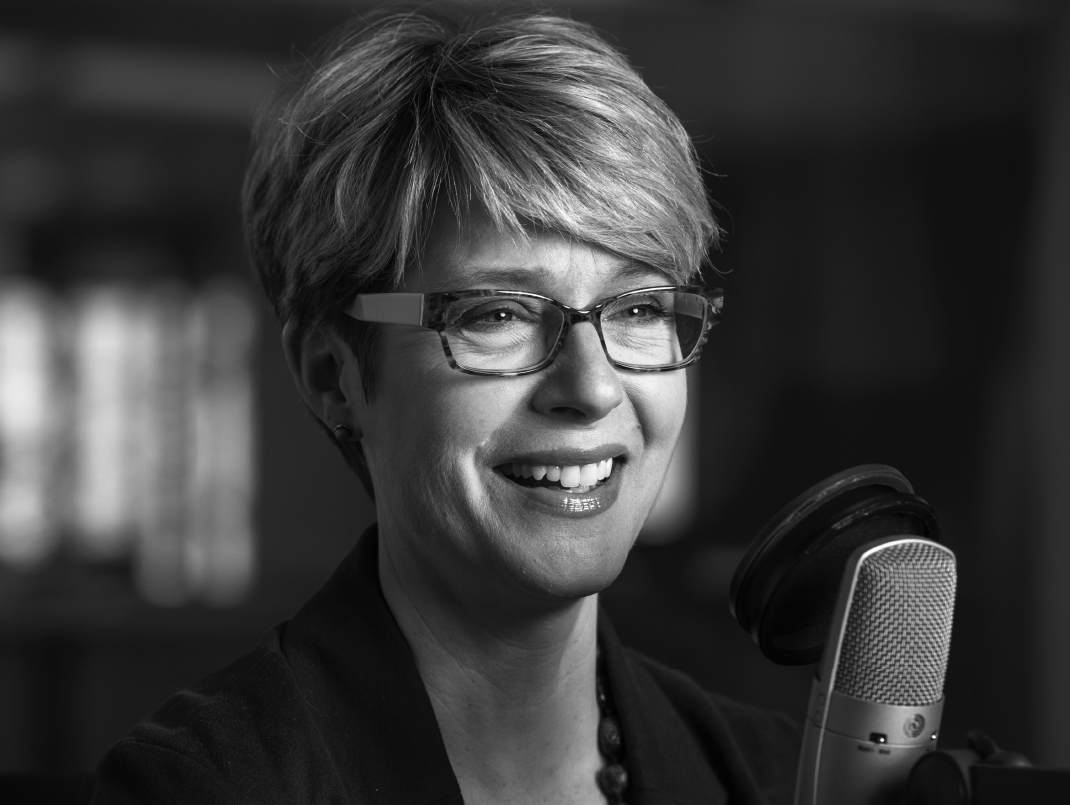
As the unrest in Ukraine nears the nine-month mark, Minnesotans continue to work to help refugees find places to live. MPR News host Cathy Wurzer spoke to Sharon Norlander, a Minnesotan who is sponsoring a Ukrainian refugee family. She also spoke to Andezu Orionzi, who works for Alight, a Minneapolis nonprofit.
Use the audio player above to listen to the full conversation. Subscribe to the Minnesota Now podcast on Apple Podcasts, Google Podcasts, Spotify or wherever you get your podcasts.
We attempt to make transcripts for Minnesota Now available the next business day after a broadcast. When ready they will appear here.
Turn Up Your Support
MPR News helps you turn down the noise and build shared understanding. Turn up your support for this public resource and keep trusted journalism accessible to all.
Audio transcript
Joining us right now is one of those Minnesota sponsors, Sharon Norlander. We're also joined by Andezu Orionzi, who works for Alight and is on the ground in Warsaw, Poland, right now. Sharon and Andezu, welcome.
SHARON NORLANDER: Thank you so much for having us, Cathy.
CATHY WURZER: Andezu, I know that you're in Warsaw. I'm going to get to you in just a moment. Sharon, I'm going to begin with you. Gosh, how did you decide to help?
SHARON NORLANDER: My husband had been working with Afghan refugees and setting up their homes. And that's how we heard about Alight seeking sponsors for Ukrainian refugees, and we jumped right in.
CATHY WURZER: How did you get connected to this specific family you've been working with?
SHARON NORLANDER: We signed up through a government agency. We filled out a form. And there were criminal background checks done on us. The same types of vetting was done and with the families in Warsaw that had fled from Ukraine.
And it's like a dating service. You swipe left and right, looking at different profiles of families. And they do the same. So they saw the profile of my family, which included me and my husband, my two daughters, and their husbands and two grandchildren. So they saw our profile of eight, and we saw their profile of five. And we had a family meeting and looked at several profiles. And we chose the [INAUDIBLE] family.
CATHY WURZER: As you know, life is busy. You could have done anything, right, but you decided to help this family. So what's the personal motivation?
SHARON NORLANDER: We have always worked with international students. My husband and I were both French teachers. And I was a teacher at the French immersion school in Edina. So I work with their interns very closely. This opportunity came forward, and it just seemed right.
It just seemed like we couldn't do anything about the war in Ukraine. And what we are seeing on TV was absolutely horrible. But we knew that we could help one family. And our philosophy in life has always been that we can change the world one relationship at a time.
In this case, we've got one relationship with one family. And it has been incredibly powerful to understand what's going on in Ukraine and to have a personal connection and to know that this family can go to bed at night knowing they're safe, that they can develop their own dreams and hopes for the future, and that life is wonderful.
CATHY WURZER: What was the Ukrainian family's experience in Ukraine before they left? Tell me about them.
SHARON NORLANDER: Well, Vadim, the father of the family, talks about the fact that the children were scared, and they were crying all the time because of planes going over and bombs falling. They left their hometown. And the following day, their workplace was flattened by a bomb that both mom and dad of our family worked for the railroad.
They took a train then to Warsaw, not knowing what would happen on the other end. They stayed in a large gathering place and slept on the floor for two days with several thousand other people, moved into a school where they slept with 20 other people in a school room for several months. They had three mattresses for the five of them. Then they moved into a very small apartment. And then they took a plane for the first time and came to our house.
CATHY WURZER: Andezu, I know that in Warsaw right now, where you've seen tens of thousands of refugees coming through that area, the story that we just heard, have you heard this prior? Is this something that rings true?
ANDEZU ORIONZI: Yes, so unfortunately, Cathy, as Sharon was describing the journey of Vadim and his family leaving Ukraine but then transiting through neighboring countries and large cities like Warsaw, right away after the conflict began in February, large European cities were completely saturated with people looking at how to navigate now a journey into displacement. So as Sharon described, there are large transit centers that were erected, hopefully to provide a short-term stay, a safe place over people's heads after they had just fled their country. But at that point, people are also looking to the future. What's next?
CATHY WURZER: I'm going to guess, Andezu, that what you were doing in the early days has changed a little bit. I mean, these many months have gone by now. So how has the aid that Alight has provided changed over these months?
ANDEZU ORIONZI: So Alight as an organization, again, when we say unfortunately, humanitarian crises have continued to persist. And with the different sectors that Alight operates in, one of those sectors is emergency response. So when the invasion took place 24th of February 2022, we sent our first emergency responder who arrived to Poland, actually at the border of Poland and Ukraine, a region called Przemysl. And she arrived on the 27th of February.
At that point, it is complete assessment. And there is general chaos, confusion, panic can be observed, not only from community members who are fleeing in mass, as you had mentioned earlier, the largest exodus from a European country in modern times. And you're trying your very best to provide emergency support.
So at that time, if we look at the first weeks, we look at things that change like weather. This is a region of Central and Eastern Europe that is in the mountains. It was cold. The temperatures were subzero. And as many of us observed on the news, because there were so many people leaving, there were oftentimes queues for hours as people waited on foot to exit out of Ukraine into neighboring countries like Poland. There was a very, very large emphasis on keeping people safe through keeping them warm.
The other characteristic of this displacement that sometimes people may lose sight of is because men aged 18 to 60 are required to stay in Ukraine and join the armed forces and defend the country. This has also been a mass displacement of primarily women, children, and the elderly. So the first days of emergency response for Alight really meant continuing to show up directly to the border and providing front line response. So that's handing out thousands upon thousands of blankets, hats, jackets, mittens, scarves to keep people warm.
But it was also supporting the other responders and volunteers who flocked to the border to receive and hopefully support displaced Ukrainians. So if there were medics from Red Cross, there were Boy Scouts of Poland, there were firefighters. But with supply chain issues, it was really difficult to get the things that we needed to support displaced population. So Alight was consistently providing medics with things like tourniquets, bandages, burn cream for people who had just survived recent attacks.
CATHY WURZER: Wow, it's a lot.
ANDEZU ORIONZI: It is a lot, yes.
CATHY WURZER: It's a lot. What are you doing now to help refugees?
ANDEZU ORIONZI: We have been developing programs and really putting down roots to work with local governing bodies in Poland and neighboring areas and also to work with other community-based organizations who are already providing really contextually appropriate humanitarian aid. So those are shelters that have been opened by community-based organizations. Those are the people who are providing vat after vat of hot soup for people who have just crossed the border and are looking for a warm meal and a roof over their head.
So part of our programming, we've partnered with some really amazing other organizations, such as Airbnb.org. We've provided over 27,000 safe nights in Airbnb stays across Europe and the entire world, as a matter of fact, to Ukrainians who have come and said, "We don't know where to go." So while Alight will always try and push that grain of salt by saying if a little one needs a hat, we'll go get them a hat. We're also working with communities and local governments to build structure to continue to meet the needs as displaced community members arrive.
CATHY WURZER: Say I want to get back to Sharon Norlander here for a moment because Sharon, you have the family from Ukraine with you at this point, right? I mean they're here. How are they doing? What have you done with the family so far?
SHARON NORLANDER: Well, first off, we had to take care of their physical needs. And we made sure that there was food and clothing and a warm bed and a place for them to have some privacy within our home, but also a place to share. We had to go through a lot of government bureaucracy, for example, Social Security cards and health examinations. So we took care of that.
But we also did a lot of things just to teach them about Minnesota and show them around our neighborhood, around our cities. We visited Como Zoo and attended a Sparky show, and that just brought so much joy. And the kids started school for the very first time. And I put them on the school bus. So it's a mix of what we have to do, what we want to do, what we need to do, and just enjoying life together.
CATHY WURZER: This sounds as though the family you're working with is going to try to settle here permanently. Is that right?
SHARON NORLANDER: Well, the visa that they came with is a special visa for the Ukrainian refugees, and it only lasts two years. We want to help them settle and feel like they're at home here. And we don't know how long the war will last. We don't know if that visa will be extended or not. But I know that the people in my Ukrainian family have a lot of hopes and dreams for the two years to come. And hopefully, that will launch them on an amazing future.
CATHY WURZER: Would the family want to go back to their home country?
SHARON NORLANDER: Well, there's a lot that's still back in their home country. Their parents are still their. Their siblings and their families are still there. They talk to their family every day. I think they miss their family. Their family misses them.
But then again, there's so many opportunities that may come their way once they settle here. I think it'll be a long process. And some days, they think that they'll be dreaming of returning home. Some days, they may be thinking of dreaming for a long-term future here. It's hard to tell.
CATHY WURZER: And how long will the family stay with you?
SHARON NORLANDER: Well, we really had a rough time deciding how to do things and in what order because we were the first family that accepted Ukrainians working with Alight. We didn't know whether we would find a house first, or settle the kids in school. It finally got to the point where we settled them in school. And now, we're looking for a house.
So as soon as we can find a house and we have many people helping us look in the area of our school, we will help them move into the house. Many people have stepped forward to supply furniture, to supply everything they need for their kitchen, their bathroom. So I know they're going to be well taken care of once they move in.
CATHY WURZER: Say, Andezu, as I listened to Sharon talk about how her family is helping this Ukrainian family, I understand this is kind of a new model to help with growing refugee crises. Is that right?
ANDEZU ORIONZI: Absolutely, yes. So Sharon and Mark are wonderful pioneers of what is a process to not only help new arrivals from different countries, new immigrants from different countries, like the Afghan families that we've spoken about. But it's also the process of preparing a local or host community, like the Twin Cities, for welcoming new arrivals. Sharon and Mark are part of what we call Uniting for Ukraine, the program from the US government that has said that the US has opened its doors to about 125,000 Ukrainians. And about 60,000 have actually already arrived. So what Alight aims to do with the amazing compassion and outreach from people like the Norlanders is to match them with families who need the guidance of navigating what life in the US might be like.
CATHY WURZER: So this is an interesting sponsorship program, focusing on individuals and businesses rather than say relying on government agencies to take the lead on helping these refugees.
ANDEZU ORIONZI: It does really pull into the deep roots and the hearts of a community. So with the sponsors, what Alight is doing right now, we are actually hoping to be the bridge and also a resource point, not only for people who might be refugees or previously displaced from Ukraine or another country, but we are being a point of information or somebody that Sharon and Mark can hopefully come to for information on how to sponsor and guide and truly welcome a family. Because there is a lot of red tape, as Sharon described.
It's getting people from point A to point B. So having an amazing community member to be able to be there and just answer the phone, even when you think of the first snowfall that I think it's actually already happened lightly in Minnesota. But we know more is coming, how people should respond and where they can go for some, not only security but just a listening ear and comfort.
CATHY WURZER: Say, Sharon, Andezu just outlined a lot of what you are doing. It's a lot of work. And I'm wondering, what has been the biggest joy in doing this so far?
SHARON NORLANDER: Oh, we have dinner together every night. And we talk about the best part of our day and the hardest part of our day. Just that sharing time together has been really wonderful. There is a language barrier to a certain degree. Vadim and Lyubov took high school English, and they're relying on their high school English in order to communicate that with us.
We also use Google Translate quite a bit. But we can't use a lot of fluff in our conversation. And we can't spend too much-- we can't use a lot of words to express what we need to express. And because we have to cut right to the chase and just use the most simplest forms of the language, that has helped us build an incredible bond together. And I have to say that this family really is part of my family now. And it's just beautiful. Sharing in their day-to-day joy has been amazing.
CATHY WURZER: Thank you so much both of you for what you're doing. Thank you for telling us what's happening, and thank you for the work that you're doing.
SHARON NORLANDER: You're welcome.
ANDEZU ORIONZI: Thank you so much for having us. It was lovely to speak with you both.
CATHY WURZER: We've been talking to Sharon Norlander, whose family is sponsoring a Ukrainian refugee family here in Minnesota, as well as Andezu Orionzi, who works for the Minneapolis-based international aid organization Alight.
Download transcript (PDF)
Transcription services provided by 3Play Media.

