
New story collection 'Har Mar' explores identity, migration and Minnesota
Go Deeper.
Create an account or log in to save stories.
Like this?
Thanks for liking this story! We have added it to a list of your favorite stories.


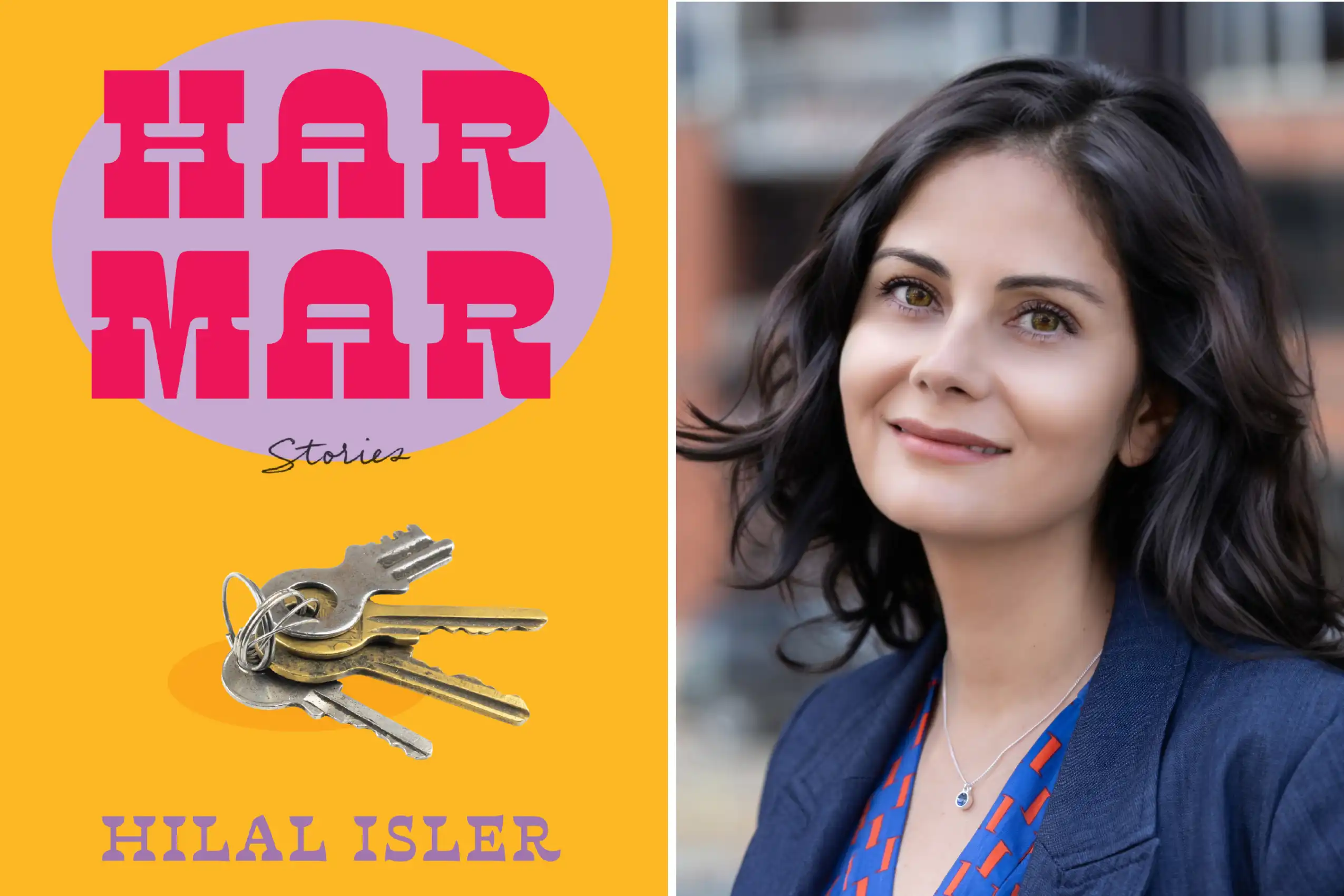
A once-iconic shopping center in Roseville serves as the backdrop for a new short story collection exploring migration, identity and belonging.
“Har Mar,” released in July, is the debut collection from author Hilal Isler. The interconnected stories follow women whose lives span Turkey and Minnesota as they navigate family, grief, love and the challenges of building a life between cultures.
From a nanny hoping to leave her life in Istanbul behind to a bookseller coping with loss through an unlikely relationship, each character searches for connection while confronting uncertainty.
MPR News host Kelly Gordon spoke with Isler about the inspiration behind “Har Mar,” why she chose the Roseville shopping center as the book's title and setting, and what she hopes readers take away from the collection.
Use the audio player above to listen to the full conversation.
Subscribe to the Minnesota Now podcast on Apple Podcasts, Spotify or wherever you get your podcasts.
We attempt to make transcripts for Minnesota Now available the next business day after a broadcast. When ready they will appear here.
Turn Up Your Support
MPR News helps you turn down the noise and build shared understanding. Turn up your support for this public resource and keep trusted journalism accessible to all.
Audio transcript
From a nanny trying to escape her life in Istanbul, to a bookseller trying to escape her grief through dating a wig seller, the women are all, in their own imperfect ways, figuring things out. Har Mar the book, was released last month, and the author of the book, Hilal Isler joins me now from Turkey to tell me more about it. Welcome, Hilal.
HILAL ISLER: Well, thank you very much, Kelly.
KELLY GORDON: We're so glad you're here, especially since it's evening there. The back cover, when somebody picks up this book and looks at it, what did you want them to know when they read that, they say, OK, here's Har Mar. I recognize the name-- in fact, Hilal, I have to tell you, my very first job was at Har Mar Mall. So I would pick this book up and go, oh, tell me what you're saying about. What do you want people to know?
HILAL ISLER: Well, obviously, it's named after the strip mall. And I love the idea of naming a literary book after a suburban Minnesotan shopping mall, because I feel like literature, literary fiction especially, is traditionally privileged certain kinds of places. We hear about the Paris cafes, and the grand cities, and even kind of private enclaves and family homes. But I feel, especially as a first generation American, that a lot of contemporary life happens in places just like Har Mar. And they are these hidden little gems in our cities.
We fall in love there, we work there, we get our first jobs there, we grieve there, we become ourselves there. We figure out what it means to be American there. And I wanted to suggest just off the bat from the cover, from the title, that those ordinary places are just as worthy of literature.
KELLY GORDON: I love that. So what led you to start writing this collection, which, we'll say, is set both in Minnesota and in Turkey. So it's got kind of already that international, like you said, this immigrant story experience to it. What led you to want to write this?
HILAL ISLER: Well, you're right, I did live in Minnesota for 17 years. And it is where I became a writer. It's also where I kind of became an adult, I feel. I built a life and a family there. And I think that something very interesting happens when you live somewhere like in the Midwest, like Minnesota, long enough, that you stop noticing it.
The winters aren't as precious and as magical, and the snowfall gets a little dull after a while-- tedious. And then when you leave, suddenly, all these tiny details become so precious, so valuable. And then you realize-- in my case, I realized that the Twin Cities, especially, had entered my imagination without my even knowing it. I moved away from Minnesota about a year ago, and I live in Austin, Texas with my family now. And I find myself, through my fiction, still returning to places like Har Mar and the Twin Cities, especially.
But, yeah, why did I start writing a story collection? That's an interesting question to me. And you're not the first person to ask it. The truth is, I didn't actually set out to write a collection at all. I was just interested in exploring the same questions from different kinds of angles. And it ended up being a story collection instead of a novel, because each story became another way of asking what it means to belong to a place, or to leave a place, or to love someone across cultures and expectations. And eventually, I just realized, oh, I have a story collection here. And all these stories are kind of speaking to each other.
KELLY GORDON: Yeah. Well, and I love that you named this book Har Mar, and you're setting it in a place, many times, something like that, it's a changing place. It's an ordinary place. And it is the backdrop-- it becomes that symbol for the themes that you're exploring. It's really interesting.
HILAL ISLER: Yeah. I love that places like Har Mar, I feel like they're so profoundly American. And they're also a place where so many different types of people and communities come together and overlap. And it might even be one of the few places that this happens. At a mall, everyone is there with different kinds of people for a different reason. It's one of the few places-- Mall of America is like this too-- where lives intersect without requiring anyone to explain where they come from or anything like that. And my stories are very much interested in those kinds of moments, when people from very different backgrounds, and religions, and worlds unexpectedly kind of occupy the same space for a moment.
KELLY GORDON: Yeah.
HILAL ISLER: Har Mar, I don't know, this is something that a lot of folks from the Middle East, in particular, have struggled against, and that's kind of Orientalization and exoticism. And I love that the title resists that. When people hear that a book is about Turkish characters, or Muslim, or Middle Eastern characters, they might have certain expectations or certain things that come to mind-- a certain kind of font is used or the imagery for the cover. Maybe it's a stumble or the Bosphorus.
Instead, I wanted, very purposefully, to name it after a shopping mall in suburban Minnesota. It is deliberate. It is an American book. And these are American lives that I'm writing about. And they're unfolding in very ordinary places.
And I wanted to make the larger point, I think, that immigration doesn't just happen at borders and in the headlines. It happens in grocery stores, and places like Har Mar, and in parking lots.
KELLY GORDON: Tell me about the characters. Because since this is a collection of short stories, it's all sorts of different women. But how did you hope that they would be perceived by people?
HILAL ISLER: Yeah. That's a great question. I want to say, first of all, that even though the stories are all kind of emotionally autobiographical, they're not factually autobiographical. I've borrowed feelings, and places, and moments, and memories, and conversations, but the women are all fictional.
And I feel like once I begin writing, they become their own people. And I wanted women to be central. I wanted the stories to explore the forces that quietly shape a woman's life.
Migration can be one of them. But even if you aren't an immigrant and that isn't part of your experience, class can shape a life-- family, friendship, love, religion, whatever that looks like for you-- spiritual practice, gender, memory. So I wanted the stories to explore those rich spaces and those moments that seem ordinary, again, when we're living them, but looking back, you notice, oh, these are exactly the moments that made me who I am. And I wanted each story to ask what made this woman? And could she have become someone else?
KELLY GORDON: OK, so this feels like maybe an unfair question, but since it is a collection of stories, is there one that you now look back on and say, that one really hits? That one really means a lot to me? Even though they're all special. It's like picking your favorite child.
HILAL ISLER: Yes. Well, that's a great question. I think the story that I lead the collection off with, it's definitely one of my favorites. It's called "Khadijah Number Two." And I wrote it during the pandemic when I was living in the Twin Cities. But this was the time, of course, you remember Black Lives Matter, and people were taking to the streets, and George Floyd.
And there was this rise in awareness around the inequities that are built into some of our industries and some of our institutions, including publishing. And I remember reading in the New York Times. There was this very long feature published about statistical differences in the types of demographic kind of breakouts of editors, and agents, and writers, and who gets published, and, demographically, what these institutions look like.
And then a few days after that, again, in the New York Times, there was this wonderful piece on Octavia Butler-- and this I didn't know-- but she didn't become a New York Times bestseller until the Black Lives Matter movement. I think it was something like that. So people started saying, well, we need diverse books. We need to read about experiences that aren't our own so that we can-- I don't want to say develop an empathy or even humanize different people, because that should be just a given at this point-- but to develop that sort of awareness and ability to expand a conversation about what it is to be American, what it is to be American now in this together here.
And so I wrote that story, which is about a young Turkish American. She's just free falling, and she doesn't really have a life plan or much of an education-- or, foundationally, there's a lot missing. And this Black American woman, whom I fashioned after Octavia Butler, comes in and says, given the way the landscape is, I feel like people won't buy my book unless I'm this pretty white-presenting debut author.
And so she hires this Turkish American young woman to pose as her. And she coaches her. And she tells her what to say. And the book does become this best selling hit. And I did that specifically because of Octavia Butler.
And while I was writing it, I spoke to her ghost, and I was like, this is for you. Because I didn't know this-- she would wake up every morning at 2:00 or 3:00 AM to write for two hours before she reported to her job. She took a bus to her job, which was at a potato chip factory inspecting potato chips. That's what she did for a lot of her life before she was able to write more consistently.
And I thought, gosh, how many Octavia Butlers, how many Khadijahs are there out there that are just lost in the system? And what can we do about it? So I do love that story. And I wrote it very much in a Minnesota mindset because it was a very unique, I think, I feel like, inflection point for the state. And I was glad to be part of it in some way or thinking about it, along with other Minnesotans.
KELLY GORDON: Yeah. And it's just those ordinary people in those ordinary jobs at an ordinary place in an ordinary city that is the magic of life, right? So, Hilal, thank you so much for joining us today from Turkey. So good to talk to you.
HILAL ISLER: Yes, likewise. I really appreciate your time. Thank you so much, Kelly.
KELLY GORDON: That was Hilal Isler, the author of the new book, Har Mar, which you can get now.
Download transcript (PDF)
Transcription services provided by 3Play Media.

