
Auroras dazzle over Minnesota, repeat performance possible tonight
Go Deeper.
Create an account or log in to save stories.
Like this?
Thanks for liking this story! We have added it to a list of your favorite stories.


An impressive display of auroras dazzled onlookers in the northern latitudes overnight.
The show was visible in much of Minnesota in the predawn hours today. I spoke with storm chaser and photographer Doug Kiesling today about the show last night. Doug captured some remarkable photos and video near St. Cloud overnight, including this image of a green aurora and a meteor fireball.

A so called 'G-class' solar storm is buffeting earth. Astronomy watchers at spaceweather.com describe the impact, and the prospects for more auroras tonight.
Turn Up Your Support
MPR News helps you turn down the noise and build shared understanding. Turn up your support for this public resource and keep trusted journalism accessible to all.
CME IMPACT, GEOMAGNETIC STORM: An interplanetary shock wave, possibly the leading edge of a CME, hit Earth's magnetic field on October 8th at approximately 2015 UT (1:15 pm PDT). The impact sparked a G1-classgeomagnetic storm (in progress) and bright auroras around the Arctic Circle.
Earth is passing through the wake of the CME where a region of high-speed solar wind continues to buffet our planet's magnetic field. NOAA forecasters, who suspect that a second CME might arrive on Oct. 9th, estimate a 65% chance of polar geomagnetic storms during the next 24 hours. High-latitude sky watchers should remain alert for auroras.
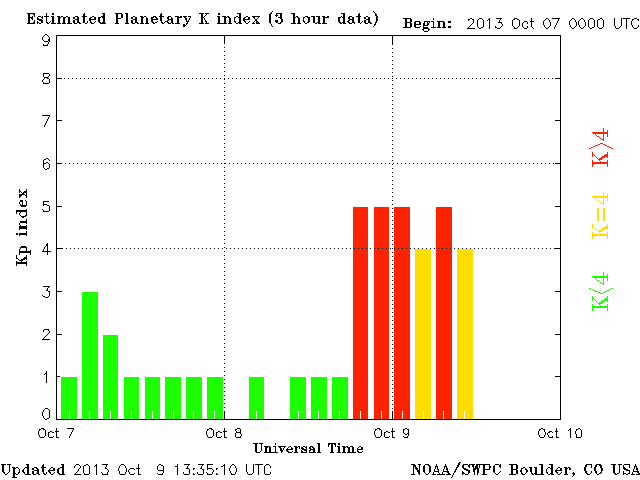
The auroras were visible over much of the northern hemisphere overnight. You can see more great photos at spaceweather.com.
There is a chance for another show tonight. Here's the discussion from NOAA's Space Weather Center.
2013-10-09 01:05 UTC Minor Geomagnetic Storm Occurring
A shock in the solar wind passed earth late on October 8 (UTC) bringing unanticipated G1 (Minor) Geomagnetic Storm activity. The brunt of the disturbance is expected through the early hours of October 9 (UTC), then followed by a second pulse later on October 9. Watch for updates here.
Best viewing is away from city lights in the northern sky. Keep you eyes in the sky!

