The AWSSI quantifies the severity of the winter season by assigning points to various winter weather parameters.
Turn Up Your Support
MPR News helps you turn down the noise and build shared understanding. Turn up your support for this public resource and keep trusted journalism accessible to all.
Subzero temperatures? Add seven or more points. Minus 20 this morning? Another 15 points. A fresh foot of snow? Another eight points for what fell; tack on another 20 or more each day for having that much snow depth on the ground.
Here’s more detail on how the AWSSI accumulates points during the winter season.
Daily scores are calculated based on scores assigned to temperature, snowfall, and snow depth thresholds. The daily scores are accumulated through the winter season, allowing a running total of winter severity in the midst of a season as well as a final, cumulative value characterizing the full season. Accumulations of the temperature and snow components of the index are computed separately and then added together for the total index. This allows comparison of the relative contribution of each to the total score.
Accumulated Winter Season Severity Index (AWSSI) points threshold
Midwest Regional Climate Center
Twin Cities: An average winter so far
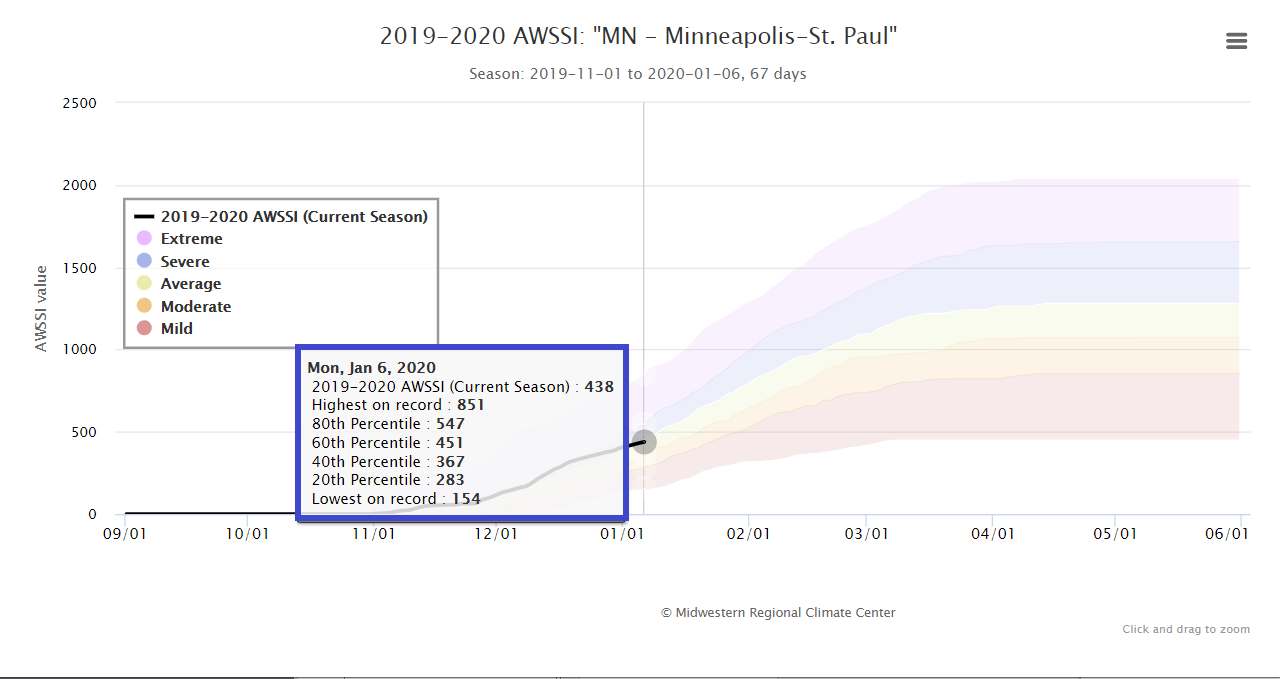
The Twin Cities AWSSI number of 438 through Jan. 6 shows an average winter so far.
Accumulated Winter Season Severity Index (AWSSI) for the Twin Cities
Midwest Regional Climate Center
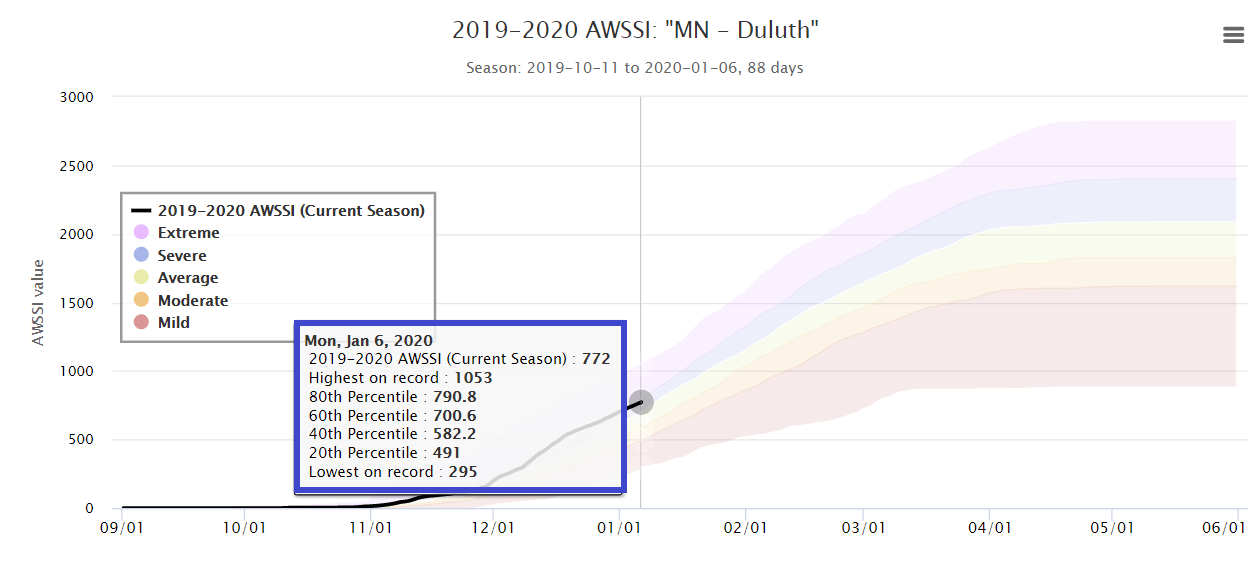
Winter has been more severe in Duluth (722) and the Red River Valley. (758)
Duluth Accumulated Winter Season Severity Index (AWSSI)
Midwest Regional Climate Center
Minnesota DNR Snow and Cold Index
If one winter index is good, two is better right? Like many things, winter severity depends on how you measure.
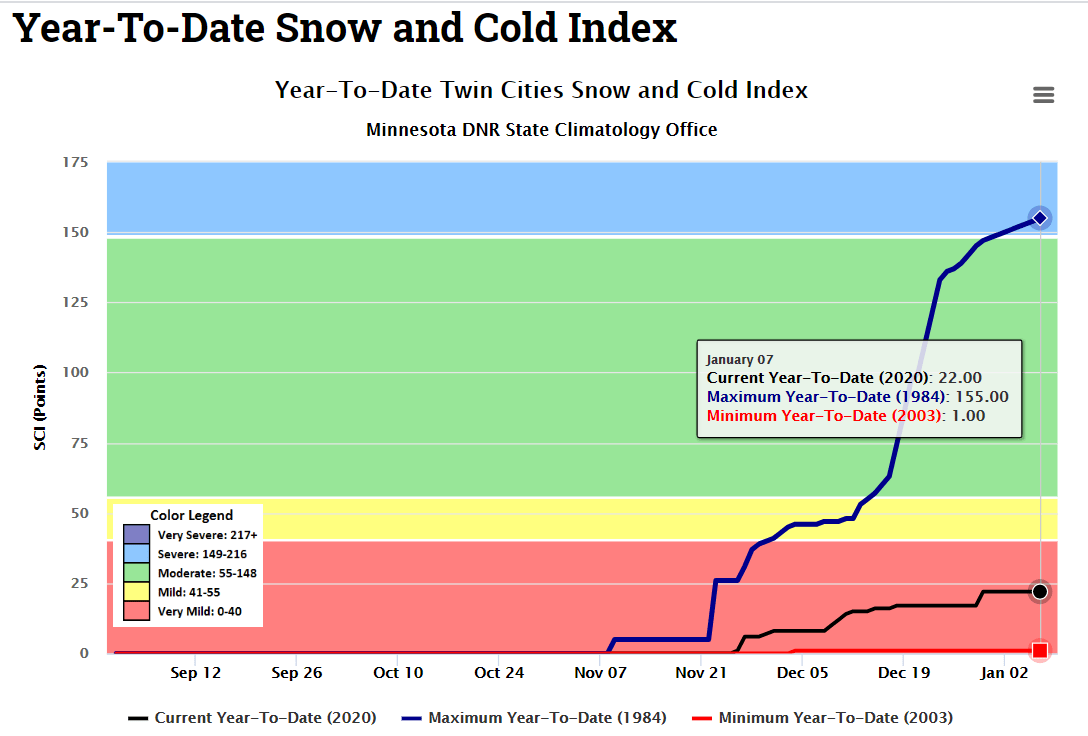
The Minnesota DNR’s Snow and Cold Index for the Twin Cities calculates a much milder winter so far. The accumulated value of just 22 points puts this winter solidly in the very mild category so far.
Minnesota DNR Snow and Cold Index
Minnesota DNR Climate Working Group
Why the difference? The points systems for snow, snow depth, and cold on the two indexes differ.
So depending on how you measure, it’s been a mild to moderate winter in Minnesota so far.
News you can use in your inbox
When it comes to staying informed in Minnesota, our newsletters overdeliver. Sign-up now for headlines, breaking news, hometown stories, weather and much more. Delivered weekday mornings.