
From skid row to folklore: Remaking the lumberjack

Go Deeper.
Create an account or log in to save stories.
Like this?
Thanks for liking this story! We have added it to a list of your favorite stories.


The lumberjack most Americans recognize never actually existed. That realization sent historian Willa Brown digging through overlooked archives to uncover who 19th-century loggers really were.
“When I started learning about who lumberjacks were, it was so different from what I thought I knew about lumberjacks that I began to wonder where what I thought I knew came from,” she said.
Lumberjacks throughout the 19th and early 20th century were “pariahs of society,” she said.
They were largely kept apart from other groups and seen as dangerous. In fact, the term “skid row” originates from where lumberjacks used to work. A skid row was an ice road used to get logs to the river.
Turn Up Your Support
MPR News helps you turn down the noise and build shared understanding. Turn up your support for this public resource and keep trusted journalism accessible to all.
“The idea was that if you could kind of keep all the sin together in one part of the city, that it wouldn't be as much of a moral contagion to everyone else,” she said.
Due to their forbidden status, they were widely excluded from records and archives.
Brown turned to unconventional sources like folk songs, short handwritten memoirs and oral histories at local county historical societies and smaller archives across Minnesota, Wisconsin and Michigan.
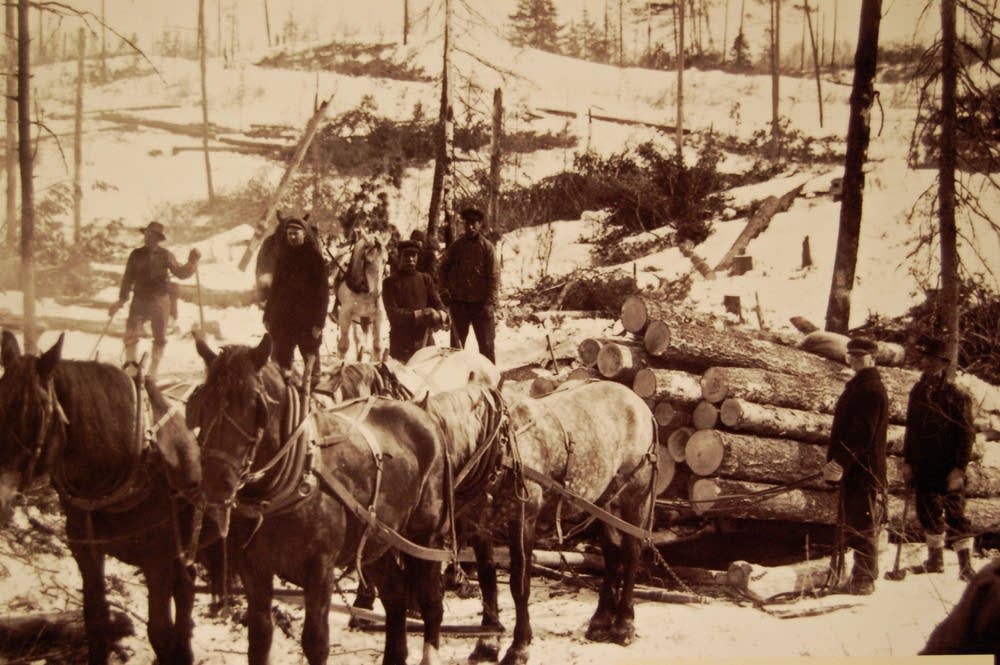
“This is part of the reason that we tend to think great men did everything in history,” she said. “It is great men who are recorded, and men like this (lumberjacks) just really don't show up in the archives.”
Over time, lumberjacks persona had been rewritten, Brown found.
Today, they are thought of as part of the woods and working with the woods. Like sailors working with the ocean, Brown compared. But in all actuality, that wasn’t what their job was like.
"We think of them not as industrial workers who, on an industrial scale, were cutting down trees and creating what was really one of the biggest environmental transformations in American history,” she said.
Redefining who lumberjacks were didn’t happen accidentally. It was sparked largely by the industry to control a narrative that carried a history complicated by land theft, land degradation and discrimination.
In part, capitalism was responsible for selling this certain version of history, she said. It offered a reshaped narrative that served interests historically and in real time.
Brown said it is also an example of how history and a sense of self are intertwined. In this case, the lumberjack played a role in shaping the identity of the upper Midwest.
"We really form our identity based on our history, and we form our identity based on what our group thinks our past is, whatever in-group or out-group, that might be what they think their past is,” she said.
Willa Brown’s new book is out now: “Gentlemen of the Woods: Manhood, Myth, and the American Lumberjack.”

