
Judge orders feds to provide court with evidence in Good killing, as part of separate case
Go Deeper.
Create an account or log in to save stories.
Like this?
Thanks for liking this story! We have added it to a list of your favorite stories.


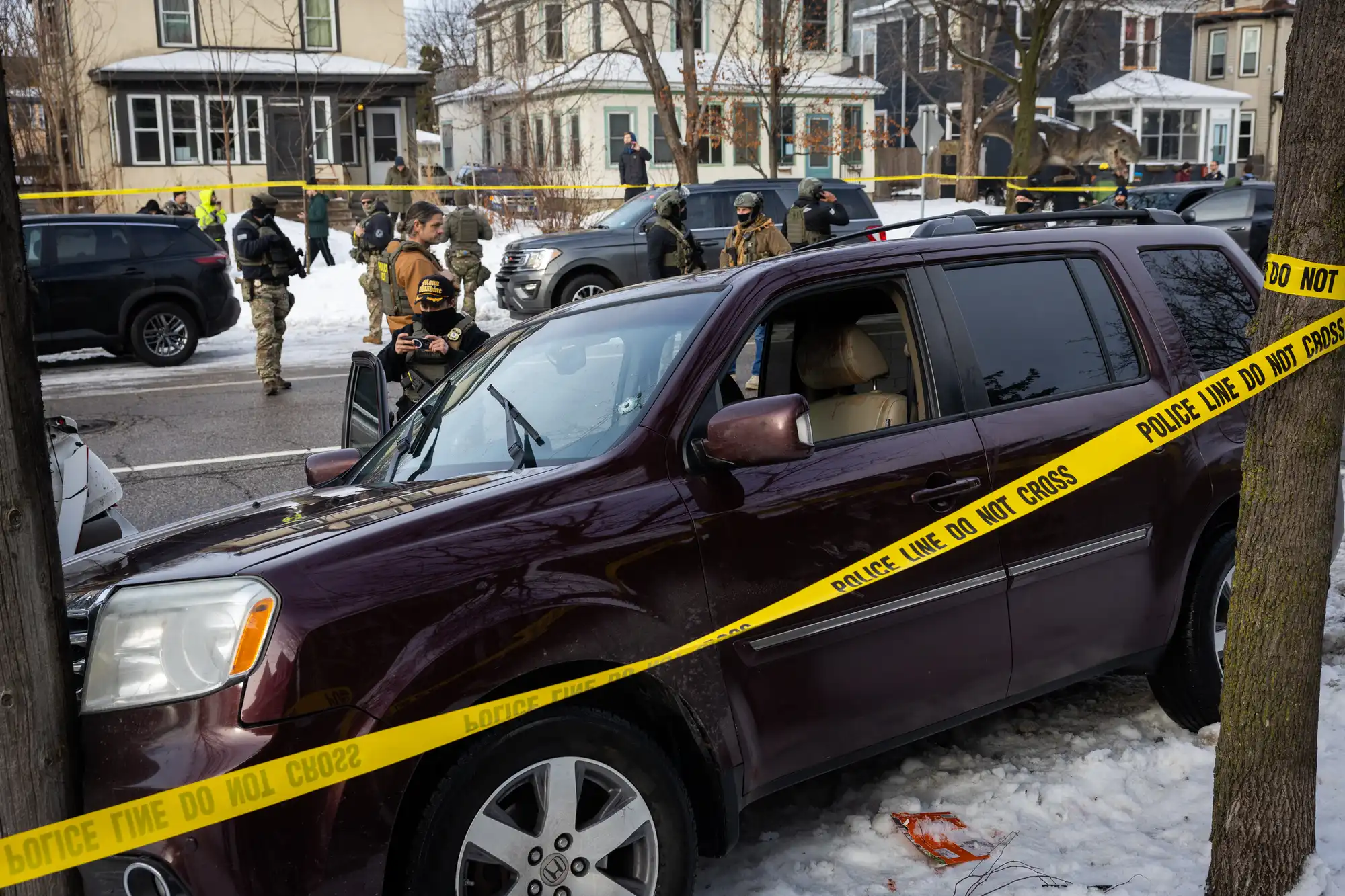
A federal judge in St. Paul on Thursday gave the Justice Department and the Department of Homeland Security until May 1 to provide the court with evidence related to the Jan. 7 killing of Renee Good. The decision does not make the material public.
The order from U.S. District Judge Jeffrey Bryan stems from the case of Roberto Muñoz-Guatemala, an undocumented immigrant whom a jury convicted of using his vehicle to drag and injure ICE agent Jonathan Ross in Bloomington on June 17, 2025.
Immigration authorities had sought to deport Muñoz-Guatemala, 40, after he pleaded guilty in 2023 to repeatedly sexually assaulting his 16-year-old stepdaughter. In a criminal complaint affidavit, federal prosecutors said that local authorities did not honor an immigration detainer request for Muñoz-Guatemala.
Prosecutors said that Muñoz-Guatemala dragged the agent about 100 yards in the course of about 12 seconds. Ross suffered a “substantial wound” on his right arm that required dozens of stitches.
Turn Up Your Support
MPR News helps you turn down the noise and build shared understanding. Turn up your support for this public resource and keep trusted journalism accessible to all.
Nearly seven months later, Ross killed protester Renee Good in Minneapolis. Trump Administration officials have claimed that Ross fired in self-defense, but video shows Good turning her vehicle as she drives away from him.
Over prosecutors' objections, U.S. District Judge Jeffrey Bryan ordered the government to turn over unredacted investigative materials from the Good shooting as well as Ross' personnel file to a magistrate judge. The magistrate judge is expected to review the evidence to determine if Muñoz-Guatemala can use any of it for his defense at sentencing or to request a new trial. Muñoz-Guatemala is being held in the Sherburne County Jail.
In a February motion to request the evidence, defense attorney Eric Newmark writes that any interview that investigators may have conducted with Ross after the Good killing “could have bearing on Ross’ motive or intent when he approached [Muñoz-Guatemala’s] vehicle and escalated the situation using force and could potentially form the basis for a new trial.”
In his order, Bryan notes that the U.S. Sentencing Commission Guidelines provide that if a “victim’s wrongful conduct contributed significantly to provoking the offense behavior,” a defendant could be eligible for a reduced sentence.
In March, Hennepin County Attorney Mary Moriarty and Minnesota Attorney General Keith Ellison sued the federal government in an effort to force the Trump Administration to share evidence with state investigators related to the killings of Good and Alex Pretti, and the nonfatal shooting of Julio Sosa-Celis.

