
Cold winter no great help to melting Arctic
Go Deeper.
Create an account or log in to save stories.
Like this?
Thanks for liking this story! We have added it to a list of your favorite stories.


Somewhere in the back of my non-scientific mind, I've come to the point of accepting our never-ending winter by telling myself that at least -- probably -- the Arctic sea ice will be restored to some of its previous glory.
Now, apparently, I don't even have that.
LiveScience.com reports that the Arctic ice, which you may have heard is melting thanks to climate change, reached its peak two weeks ago, covering 5.84 million square miles
That's the sixth-lowest amount of ice since 1979, and it's not even quality ice.
Turn Up Your Support
MPR News helps you turn down the noise and build shared understanding. Turn up your support for this public resource and keep trusted journalism accessible to all.
Most of the ice was young, first-year ice, freshly frozen. The Arctic also has multiyear ice, frozen year-round, which is stiffer and thicker, and contains much less brine than first-year ice does. However, its slice of the total ice pie has been shrinking in recent years.
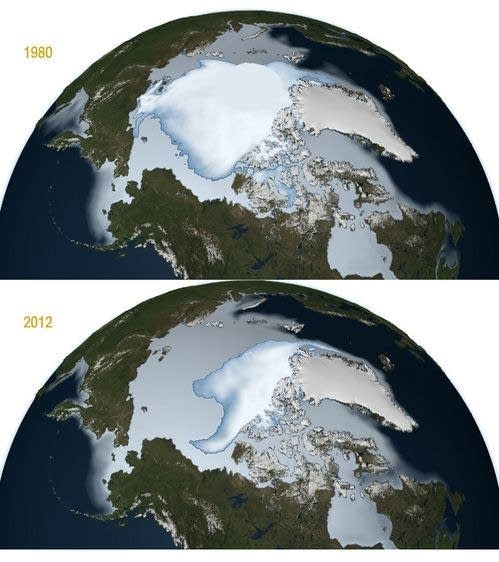
The situation, thus, isn't getting any better, this comparison from NASA shows. The white is the sea-ice that survives summer. The blue area is the sea ice that forms in the winter.
Meanwhile, in our corner of the ice world, the Madeline Island "ice road" is melting fast and today was closed to light cars.

