
Youth leaders take down prayer camp at sacred Dakota site
Go Deeper.
Create an account or log in to save stories.
Like this?
Thanks for liking this story! We have added it to a list of your favorite stories.


A controversial prayer camp in south Minneapolis was taken down by camp leaders following several days of interrupted prayer.
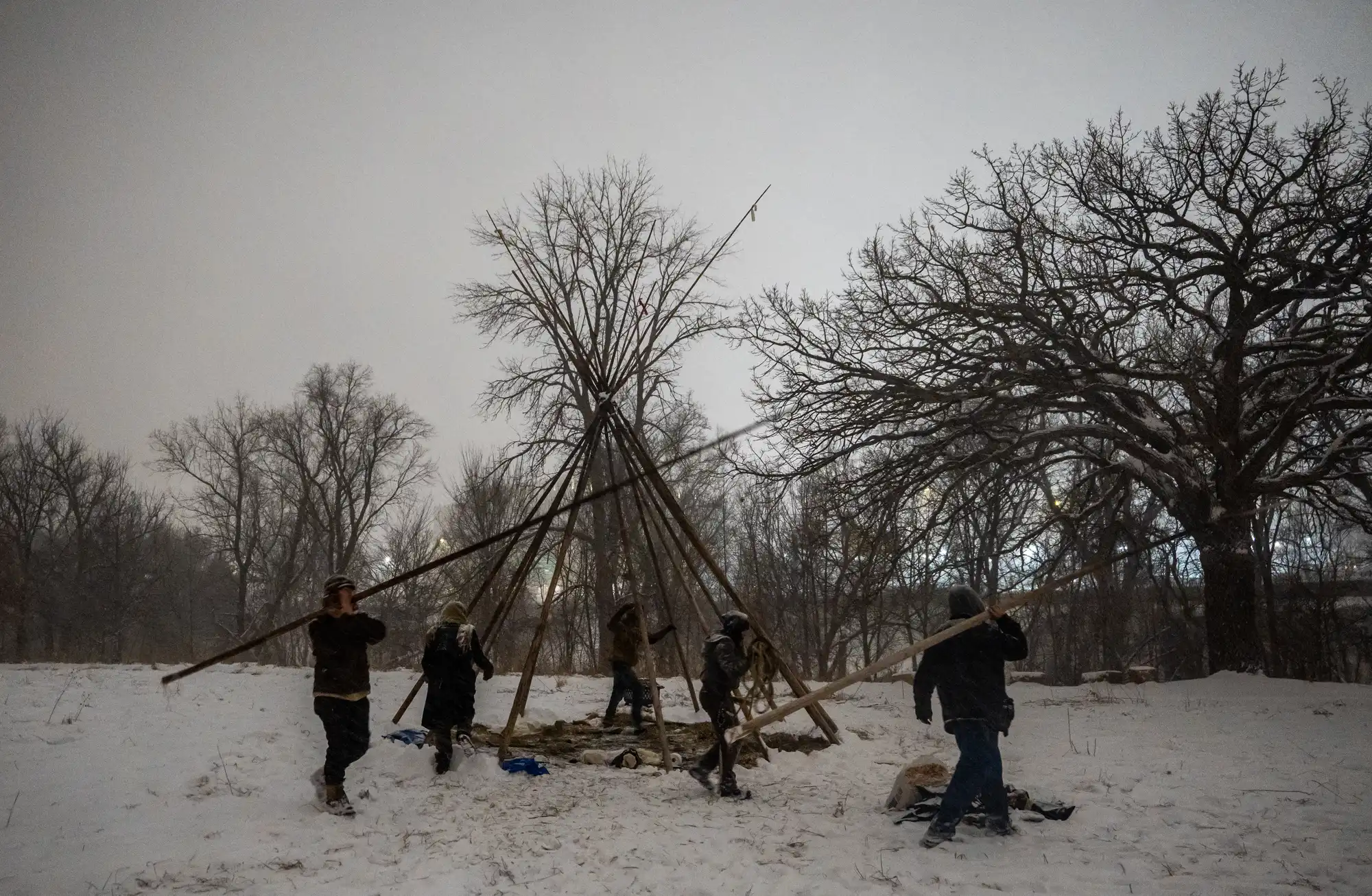
The Dakota prayer camp at the sacred Dakota site Mni Owe Sni closed as youth leaders took down two white canvas tipis Saturday evening, according to independent visual journalist John Stegenga. Stegenga is one of a small handful of independent journalists who have helped to document life at the camp for the past month.
Two other tipis had blown down during intense windstorms at the end of last week, according to Stegenga.
Youth leaders had agreed to bring the camp to a close just over a week ago after talking with Arvol Looking Horse, a Lakota elder and spiritual leader, for almost four hours on Sunday, March 8.
Turn Up Your Support
MPR News helps you turn down the noise and build shared understanding. Turn up your support for this public resource and keep trusted journalism accessible to all.
Youth leaders Joe Crow Shoe, Allen Michael Owen and Nina Bergland worked to take down the camp with the aid of more than a dozen friends and supporters after the close of prayer ceremonies at the camp.


The camp went up on Feb. 9 just across from the Whipple Federal Building in protest to recent federal immigration operations in Minnesota.
Located on land co-managed by the National Park Service and four Dakota tribal nations, the camp had become the center of intense debate among Indigenous communities about who is granted access to land and the appropriate uses of the sacred site.
For the past two decades, Dakota tribal nations in Minnesota have worked with the federal government to gain recognition of the site as a Traditional Cultural Place.
In 2023, Mni Owe Sni was added to the National Registry of Historic Places.
The camp’s youth leaders have said repeatedly that over the past month the camp served as a safe place for people to gather, recover, and provide mutual aid was open to anyone in the wake of the ICE surge.

