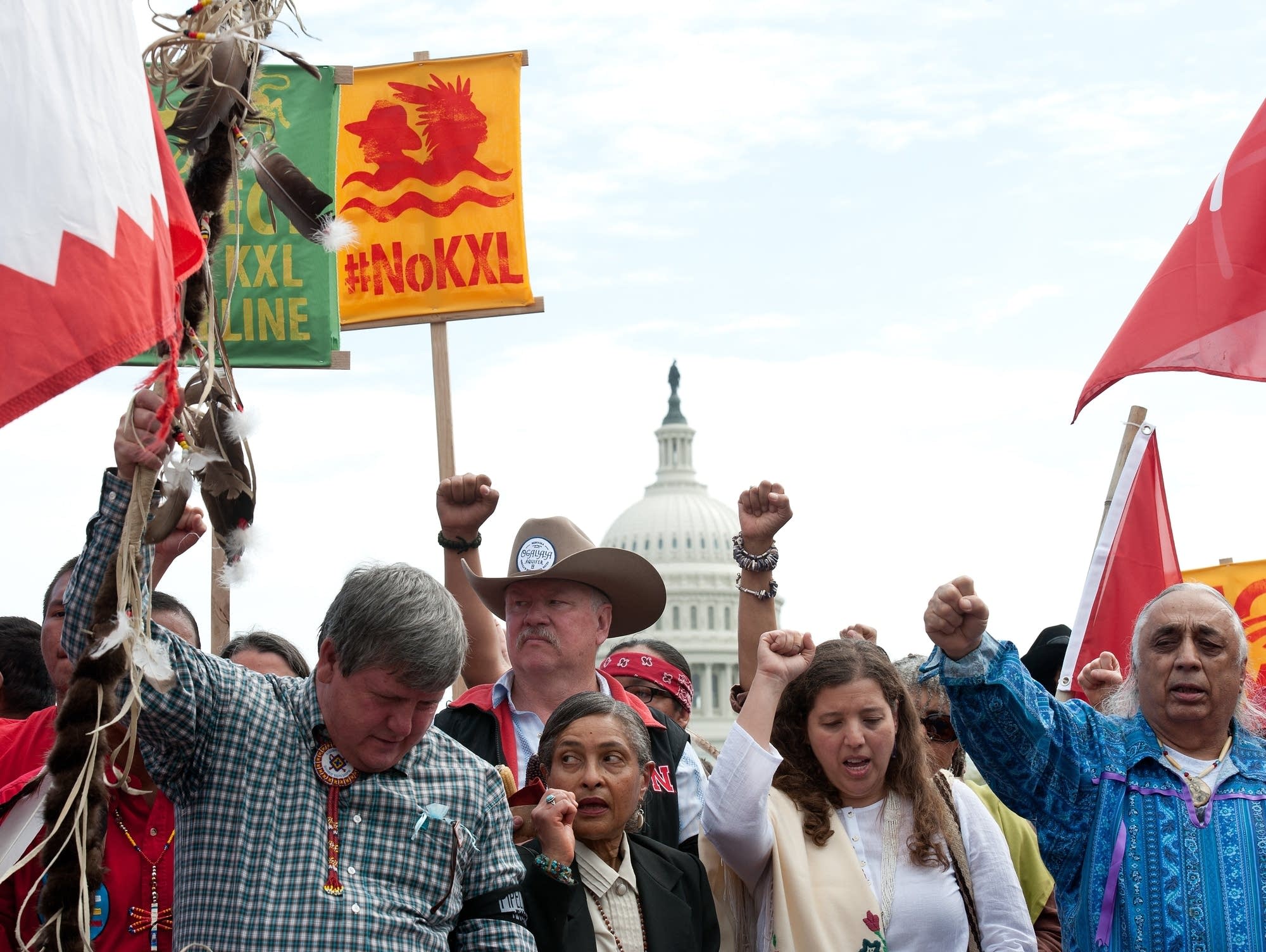

In the early 2000s, the Keystone XL oil pipeline became one of the most powerful symbols in the fight against climate change. And since then, it's not just local landowners fighting pipelines in their backyards anymore. It's environmental groups, Native Americans tribes, farmers and ranchers, and a crucial addition to the alliance -- climate change activists. But how did it begin?
Pipelines have become a potent issue for Native American and indigenous people, who are fighting them across North America. Part of the fight is over culture and identity. But it also involves a messy history of land and treaties, and a long, complicated -- and often adversarial -- relationship with the U.S. government.
The Minnesota Public Utilities Commission worked through questions of Enbridge Energy and opponents of the Line 3 oil pipeline project on Tuesday, hinting that it might take them longer than expected to discuss the matter.
Pipelines are everywhere, 2.5 million miles of them, forming a web under our feet, our rivers, our roads. And today, nearly every time a new pipeline is proposed, it's met with protest. Now, the battle over those pipelines -- with all its costs and its chaos -- looks to be headed for Minnesota.
State regulators are holding hearings this week as they make final decisions on whether to let Enbridge Energy build its controversial oil pipeline replacement.
Minnesota has nearly 1,800 townships. And by law, every one of them has to hold a public meeting on the second Tuesday of March, every year. It's called Township Day, and it happened Tuesday night.
The band is retaking control of hundreds of lakeshore lots it owns and leases in northern Minnesota. That's forcing cabin owners to move their structures or sell them to band members.
When it comes to staying informed in Minnesota, our newsletters overdeliver. Sign-up now for headlines, breaking news, hometown stories, weather and much more. Delivered weekday mornings.