The Supreme Court says government workers can't be forced to contribute to labor unions that represent them in collective bargaining, dealing a serious financial blow to organized labor.
In a move that could harm public labor unions, the high court decided that government employees represented by unions are not required to pay union fees.
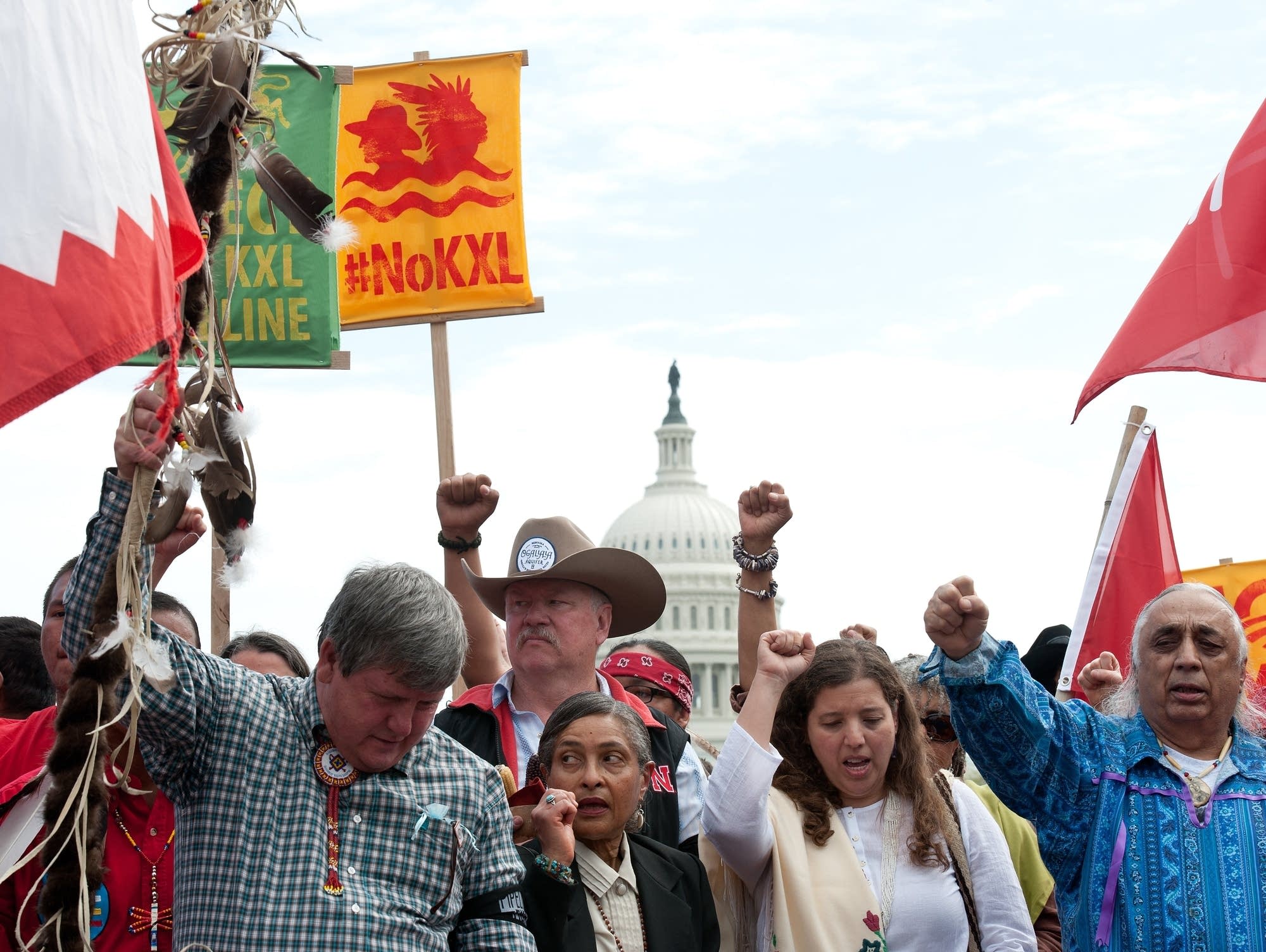
In the early 2000s, the Keystone XL oil pipeline became one of the most powerful symbols in the fight against climate change. And since then, it's not just local landowners fighting pipelines in their backyards anymore. It's environmental groups, Native Americans tribes, farmers and ranchers, and a crucial addition to the alliance -- climate change activists. But how did it begin?
The Minnesota Public Utilities Commission will decide this week whether to grant a "Certificate of Need" to Enbridge Energy for a new Line 3 oil pipeline. Here's a look at who these commissioners are and what other decisions they make for the state.
Pipelines have become a potent issue for Native American and indigenous people, who are fighting them across North America. Part of the fight is over culture and identity. But it also involves a messy history of land and treaties, and a long, complicated -- and often adversarial -- relationship with the U.S. government.
Harley-Davidson, up against spiraling costs from tariffs, will begin shifting the production of motorcycles headed for Europe from the U.S. to factories overseas.
When it comes to staying informed in Minnesota, our newsletters overdeliver. Sign-up now for headlines, breaking news, hometown stories, weather and much more. Delivered weekday mornings.